
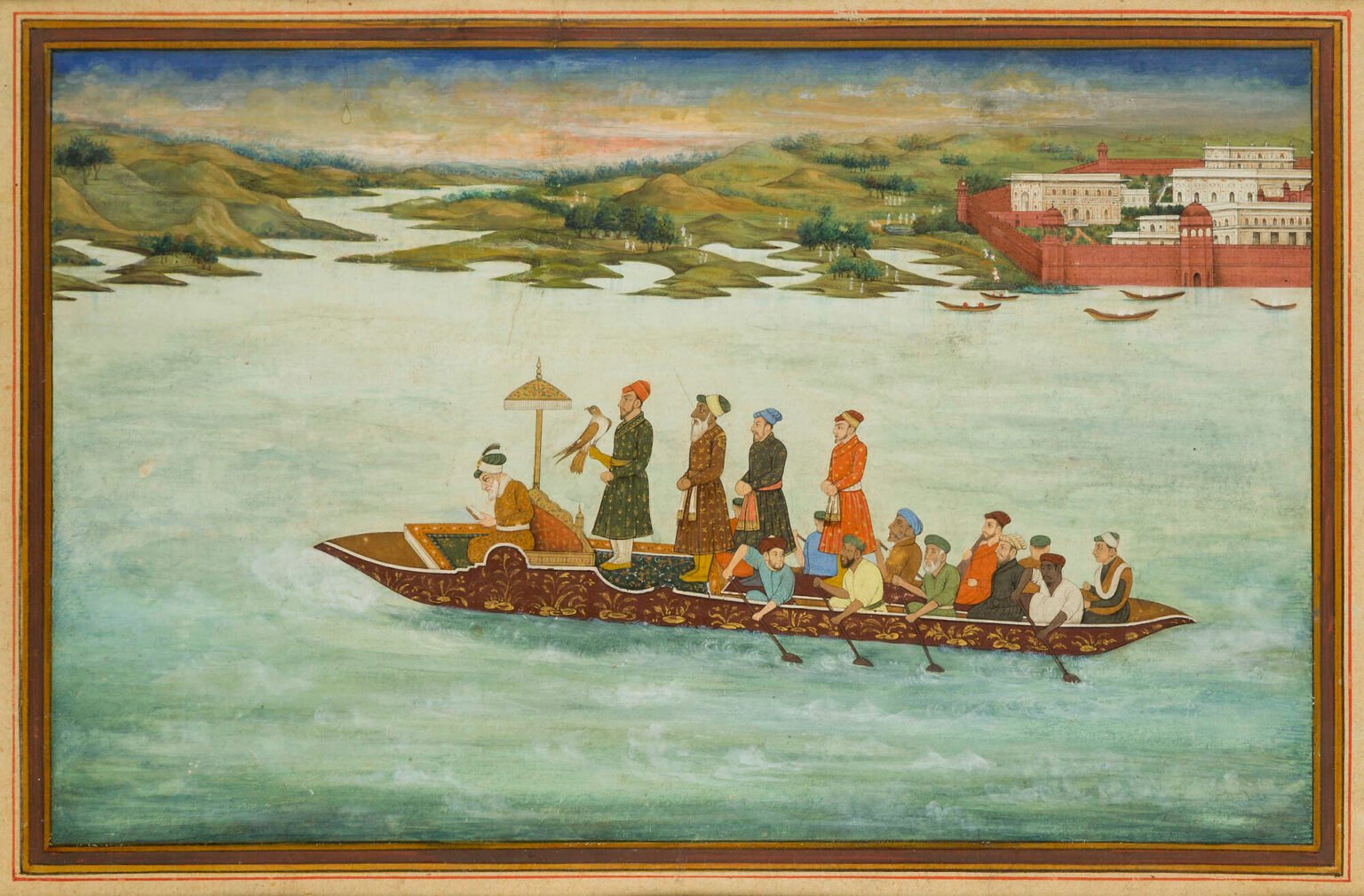
Karachi before the British: Aurangzeb’s maritime legacy
KARACHI (TKP Feature): To the modern commuter stuck in traffic on the Mai Kolachi Bypass, the sea is often little more than a backdrop — a grey-green expanse glimpsed between high-rises, shipping containers and the growing concrete landscape of Karachi. Few pause to consider that these waters were once part of a much larger imperial story, connecting the coastline of Sindh to the commercial ambitions of the Mughal Empire.
Karachi is commonly remembered as a city shaped by the British Raj or transformed by the creation of Pakistan in 1947. Yet its maritime history stretches much further back, through centuries of fishing settlements, trading networks, regional powers and the changing course of the Indus River.
Among the Mughal rulers whose policies influenced Sindh’s maritime economy was Emperor Muhi-ud-Din Muhammad Aurangzeb Alamgir, whose reign lasted from 1658 to 1707. Although there is no established evidence that he directly developed Karachi as a port, his earlier administration of Sindh offers an important connection between the Mughal Empire and the region’s maritime past.
The Mughal Prince and Sindh’s Maritime Economy
Long before becoming emperor, Aurangzeb served as a Mughal prince and provincial governor. During the early 1650s, he was associated with the administration of Multan and Sindh, a period when the commercial importance of the Indus region was undergoing significant changes.
Thatta, then one of the major commercial centres of Sindh, depended heavily on maritime trade through Lahari Bandar. The port connected the Indus region with overseas markets, facilitating the movement of textiles, indigo and other merchandise.
However, the changing course of the Indus and the accumulation of silt gradually affected the navigability of Lahari Bandar, creating difficulties for ocean-going vessels.
Historical accounts record that Aurangzeb responded by encouraging the development of another port, Auranga Bandar, near the Indus delta. The initiative was intended to revive maritime commerce, improve access for shipping and protect commercial activity.
Historian Jadunath Sarkar, in History of Aurangzib, describes Aurangzeb’s efforts to develop a new port, including the construction of a fort and dock and the offer of customs concessions to attract merchants.
The episode demonstrates that Aurangzeb’s relationship with Sindh was not confined to military administration. Maritime trade, revenue generation and the commercial importance of the Indus were also part of his provincial responsibilities.
Auranga Bandar was not Karachi, but its development illustrates the importance the Mughal administration attached to Sindh’s coastal and riverine economy.
The Arabian Sea and the Pirate Crisis
During Aurangzeb’s reign, maritime commerce faced considerable challenges from piracy and European competition. Mughal trading vessels carried valuable merchandise, pilgrims and passengers across routes connecting western India with the Red Sea, Persian Gulf and Arabian Peninsula.
One of the most dramatic episodes occurred in 1695, when English pirate Henry Every attacked the Ganj-i-Sawai, a heavily armed Mughal vessel returning from the Hajj pilgrimage.
The ship carried pilgrims and valuable cargo. Its capture became a major diplomatic crisis between the Mughal authorities and the English East India Company.
Research published by historian Tyler Joseph Kynn in the Journal of the Economic and Social History of the Orient examines the attack through both English and Mughal Persian accounts, highlighting the seriousness with which the Mughal administration viewed the incident.
Aurangzeb’s government held the English Company responsible and imposed severe pressure on its commercial operations. Company personnel faced restrictions and detention, while the Mughal authorities demanded accountability for the attack.
The episode exposed an important weakness in the empire. Although the Mughals possessed enormous territorial power, protecting commercial shipping across the Arabian Sea presented a different challenge.
The crisis also demonstrated how closely maritime security was connected to imperial revenue, international trade and religious travel.
There is, however, no established evidence that the attack triggered a specific naval-security operation at the small fishing settlement that would later become Karachi. Its significance lies in the wider maritime environment of which Sindh’s coastline formed a part.
From Kolachi to a Trading Settlement
While the Mughal Empire was confronting maritime insecurity, the coastline around present-day Karachi continued to develop through local fishing and trading communities.
The origins of Kolachi-jo-Goth are associated with a small fishing settlement traditionally linked to Mai Kolachi, whose name survives in the city’s geography, particularly in the Mai Kolachi area.
The precise chronology of the settlement’s earliest development remains debated. Historical accounts, including those based on Seth Naomal’s writings, describe its transformation into a fortified settlement during the early eighteenth century.
By the late 1720s, Kolachi was developing commercial connections across the Arabian Sea, including with Muscat and the Persian Gulf.
Local merchants and seafarers played an important role in this transformation. A small fort was constructed to protect the settlement, with cannons brought by Sindhi sailors from Muscat.
Its two principal entrances became known as Kharadar, or the Brackish Gate, and Mithadar, or the Sweet Gate. Their names survive in two of Karachi’s oldest neighbourhoods.
These developments reflected the growing importance of regional maritime commerce, rather than a documented continuation of a specific Mughal military policy.
As the older ports of the Indus delta faced changing river channels and declining navigability, Karachi’s natural harbour gradually acquired greater commercial importance.
Beyond the British Narrative
The British conquest of Karachi in 1839 marked a decisive turning point in its history. Under colonial administration, the settlement developed into a major port, supported by infrastructure, railways, shipping facilities and expanding commercial institutions.
But British rule did not create the coastline’s maritime history.
The foundations of Karachi’s identity were shaped by much older networks involving fishing communities, Sindhi and Baloch seafarers, merchants and regional trading centres. Its connections with Muscat and the Persian Gulf existed before the colonial transformation of the city.
Aurangzeb’s maritime policies in Sindh belong to this broader history. His efforts to establish Auranga Bandar demonstrate that the Mughal administration recognised the economic significance of the Indus and its access to the Arabian Sea.
Karachi itself emerged as a distinct fortified trading settlement later, through the efforts of local communities and changing regional commercial networks.
The distinction matters. Historical connections should not be mistaken for direct causation, and Karachi’s pre-colonial past deserves recognition without attributing every development to a single emperor.
The next time a commuter travels along Mai Kolachi Bypass, passes the crowded approaches to Karachi Port or looks towards the Arabian Sea from Clifton, the coastline can be seen differently.
These waters witnessed the movement of Mughal-era merchandise, the anxieties of imperial maritime trade, the growth of local fishing settlements and the gradual emergence of a trading town that would eventually become Pakistan’s largest port city.
Karachi was not born with the British, nor did its maritime identity begin in 1947. Its story is considerably older — written across the shifting channels of the Indus, the trading routes of the Arabian Sea and the lives of the communities that made this coastline their home.
Today’s 3 November, 408th birthday of Emperor Aurangzeb.
A wonderful article explaing Karachi how it’s maritime trade in pre and post colonial period worked and to protect it from the east India company. Colonizers connected Karachi with the international sea routes.