
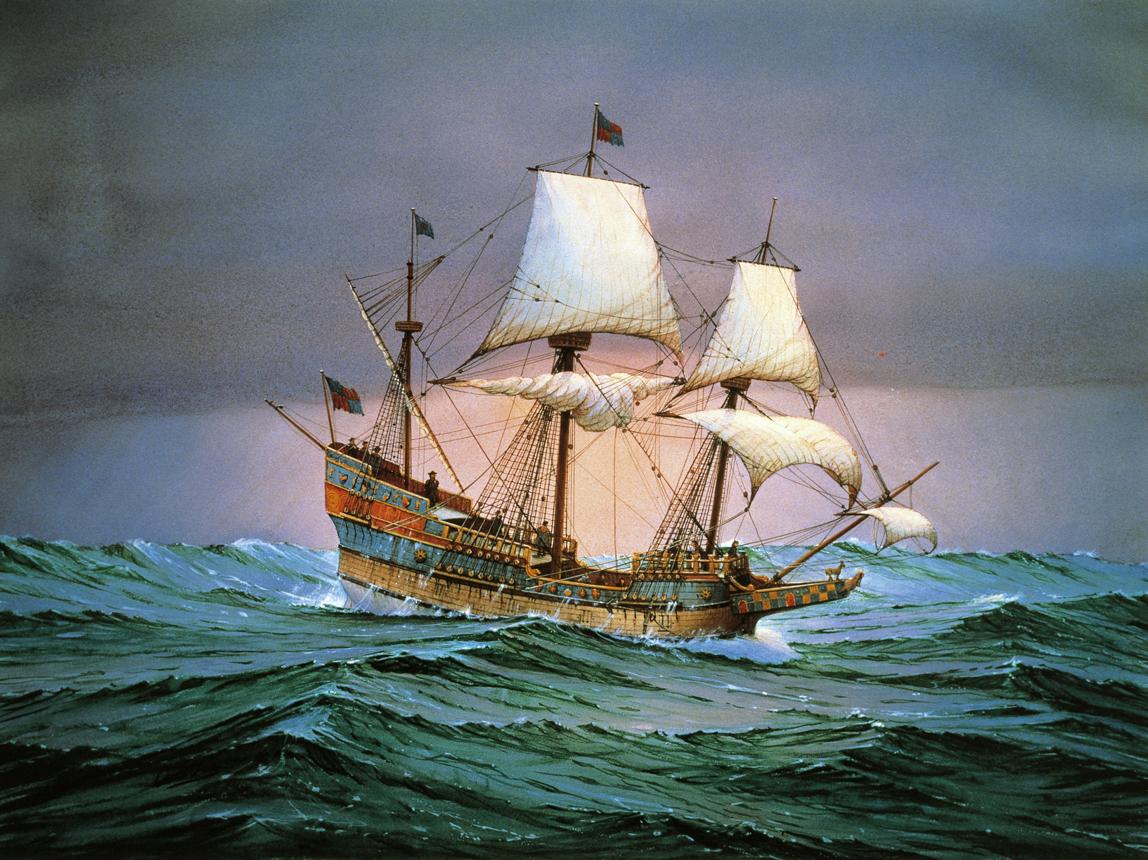
Francis Drake: When maritime adventure became an economic enterprise
KARACHI (TKP Feature): On November 15, 1577, English sailor Francis Drake departed Plymouth with five ships and 164 men, beginning an expedition that would become one of the most consequential maritime ventures of the sixteenth century. However, the journey did not proceed as planned. A violent storm forced the fleet into Falmouth the following day, damaging its vessels and compelling Drake to return to Plymouth for repairs. On December 13, he set sail again, beginning the successful expedition that would eventually take him around the world.
More than a geographical adventure, Drake’s voyage represented the growing relationship between maritime power, international commerce and geopolitical ambition. It challenged Spain’s dominance over important sea routes and demonstrated how control of the oceans could become a source of wealth and national influence.
The ambition behind the voyage
In the late sixteenth century, Spain dominated much of the European colonial presence in the Americas and controlled valuable commercial routes carrying precious metals and other resources across the Atlantic. England, under Queen Elizabeth I, was increasingly determined to challenge Spanish influence.
Drake’s expedition was supported by wealthy investors and influential figures connected to the English Crown. Queen Elizabeth herself secretly invested in the venture. Its objectives combined exploration, commercial ambition and military action against Spanish interests.
The expedition was presented as a trading voyage to Alexandria, although its actual intentions were considerably more ambitious. The fleet consisted of the Pelican, Elizabeth, Marigold, Swan and Benedict, with Drake commanding the Pelican.
The early setbacks demonstrated the enormous risks associated with sixteenth-century navigation. Ships depended on unpredictable weather, limited geographical knowledge and the physical endurance of their crews. Nevertheless, Drake continued.
A dangerous passage into the Pacific
After crossing the Atlantic and navigating along the South American coastline, Drake reached the Strait of Magellan, the narrow passage connecting the Atlantic and Pacific oceans at the southern tip of South America.
The crossing in 1578 exposed the expedition to severe weather and dangerous waters. Several ships were lost or separated, while the Elizabeth eventually returned to England. Drake continued aboard the Pelican, which he renamed the Golden Hind in August 1578.
Entering the Pacific was a major achievement. Spanish authorities had largely regarded the ocean as an area under their commercial and colonial influence. The arrival of an English expedition threatened that established position.
Drake subsequently attacked Spanish settlements and captured valuable cargoes along the western coast of South America. His most significant prizes included Spanish treasure shipments carrying precious metals.
The voyage had become a direct challenge to Spain’s maritime and commercial interests.
When the oceans became instruments of economic power
One of the most important lessons of Drake’s expedition was the economic value of maritime access.
During the sixteenth century, sea routes connected European markets with the resources of the Americas and the commercial networks of Asia. Control over shipping passages offered access to precious metals, spices and emerging markets. It also provided opportunities to disrupt competitors and influence international trade.
Drake’s journey demonstrated how maritime capability could serve both commercial and strategic objectives. His expedition combined navigation, intelligence gathering, armed operations and international trading contacts.
In 1579, Drake reached the Pacific coast of North America and claimed territory for England, naming it New Albion. However, this was an English territorial claim over a region already inhabited by Indigenous communities, not the discovery of an uninhabited land. The precise location of his landing remains a subject of historical debate.
On July 23, 1579, the Golden Hind began crossing the Pacific. Drake reached the Philippines before arriving at Ternate in the East Indies on November 3. There, he established an agreement with the Sultan and acquired a cargo of cloves.
This episode illustrated the wider commercial significance of the expedition. Drake was no longer operating exclusively within the Spanish sphere of influence but had entered the established trading networks of Southeast Asia.
He subsequently crossed the Indian Ocean, sailed around the Cape of Good Hope and returned to England.
On September 26, 1580, the Golden Hind arrived at Plymouth, completing the circumnavigation.
Drake became the first English commander to sail around the world. The first circumnavigation in history, however, had been completed in 1522 by Juan Sebastián Elcano, following Ferdinand Magellan’s death during the expedition.
The wealth and the darker legacy
The financial returns from Drake’s expedition were extraordinary. The captured treasure reportedly generated enormous profits for its investors, including Queen Elizabeth I. Historical accounts have cited returns of approximately 4,600 per cent, although such figures should be treated as reported estimates.
On April 4, 1581, Elizabeth knighted Drake aboard the Golden Hind.
Yet the expedition’s wealth cannot be separated from its violent methods. Drake was celebrated in England as a national hero but regarded in Spain as a pirate who attacked settlements and seized commercial cargoes.
His earlier involvement in slave-trading expeditions alongside John Hawkins also complicates his legacy. His achievements formed part of a wider period of European expansion associated with colonial conquest, slavery and the exploitation of overseas populations.
The distinction between explorer, privateer and pirate often depended on national allegiance and political interests. What one country celebrated as an achievement, another experienced as aggression and plunder.
A legacy that extends into the modern maritime economy
More than four centuries later, the strategic importance of maritime routes remains central to international commerce. The Strait of Hormuz, Suez Canal, Strait of Malacca and Cape of Good Hope continue to influence shipping costs, energy supplies and global trade.
For Pakistan, with its Arabian Sea coastline, major ports and ambitions to expand maritime infrastructure, the relationship between geography and economic power remains particularly relevant.
Drake’s expedition belongs to a different historical era, but its broader lesson survives: access to the oceans alone does not guarantee economic influence. Countries must develop ports, shipping capabilities, trade infrastructure and international commercial relationships to translate geographical advantages into tangible benefits.
The voyage that began with five ships departing Plymouth on November 15, 1577, ultimately became a landmark in the history of global navigation and maritime competition.
It was not simply a journey around the Earth. It demonstrated how the oceans could become instruments of wealth, strategic influence and national power, helping shape the foundations of an increasingly interconnected global economy.