
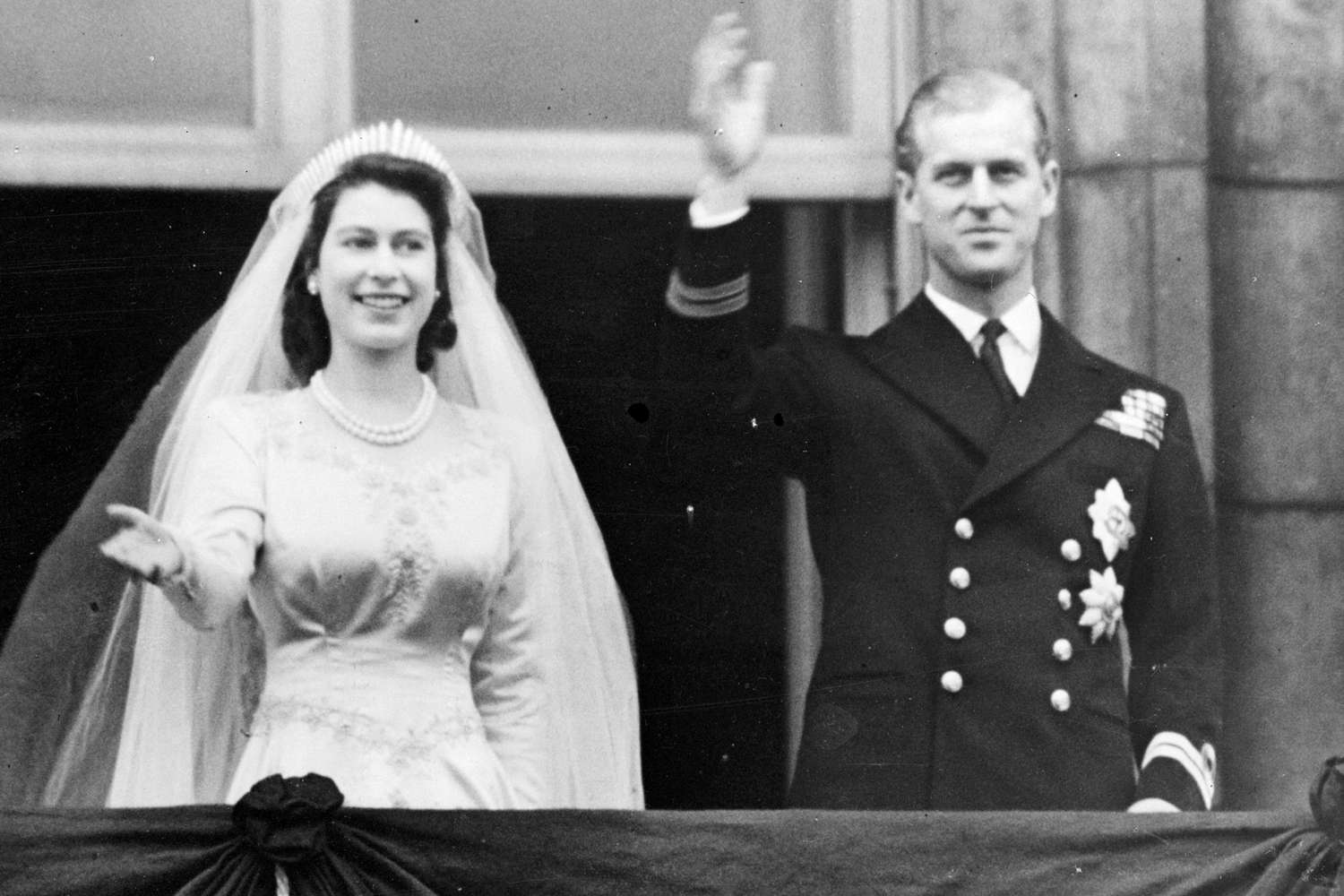
The Royal Marriage that witnessed the decline of an empire
Queen Elizabeth II and Prince Philip’s 73-year partnership unfolded alongside Britain’s transformation from an imperial power into a modern state
KARACHI (TKP Feature): When Princess Elizabeth married Lieutenant Philip Mountbatten at Westminster Abbey on November 20, 1947, Britain was still recovering from the devastation of the Second World War. The country faced economic austerity, food rationing and mounting pressure to reconsider its position in a rapidly changing international order.
The wedding, celebrated amid the hardships of postwar Britain, marked the beginning of a marriage that would last more than seven decades. But it also placed the couple at the threshold of a historic transformation: the gradual dismantling of the British Empire and the emergence of a new international relationship between Britain and its former colonies.
Their marriage would span 73 years, from 1947 until Prince Philip’s death in April 2021. During that period, they witnessed the independence of dozens of former British territories, the transformation of the Commonwealth and Britain’s changing economic and political influence.
An Empire Already Changing
The wedding took place just three months after British India was partitioned into India and Pakistan in August 1947. The independence of the two countries represented a major turning point in Britain’s imperial history.
For generations, the Indian subcontinent had been central to British imperial power. Its departure from colonial rule carried enormous political, economic and strategic consequences for Britain.
However, the retreat from the empire was not a single event. It was a prolonged process shaped by nationalist movements, demands for self-government, changing international attitudes towards colonialism and Britain’s diminished capacity to maintain its former imperial system.
In 1957, Ghana became independent, followed by Nigeria in 1960 and Sierra Leone in 1961. During the subsequent decades, numerous other territories across Africa, Asia, the Caribbean and the Pacific achieved independence.
The map of Britain’s global influence was being redrawn.
The Queen’s Accession and a Changing Commonwealth
Elizabeth’s position changed dramatically in February 1952, when King George VI died and she became Queen at the age of 25.
The transition transformed her from a young naval officer’s wife and mother into Britain’s constitutional Head of State.
It also brought new responsibilities for Prince Philip, whose naval career had been interrupted by the demands of his wife’s position. He increasingly devoted himself to supporting the monarchy and accompanying the Queen on official engagements.
Meanwhile, another important transformation was taking place within the Commonwealth.
Following independence in 1947, India wanted to become a republic while retaining its membership of the Commonwealth. This presented a constitutional challenge to an organisation historically associated with allegiance to the British Crown.
The solution came through the London Declaration of 1949. It established that republics could remain members of the Commonwealth, with the British monarch recognized as a symbol of the free association of independent member nations and as Head of the Commonwealth.
This was a significant departure from the imperial relationship. The organisation was increasingly becoming an association of sovereign states rather than a structure based on colonial authority.
When Elizabeth became Queen in 1952, she also became Head of the Commonwealth. The position was not automatically hereditary, and its continuation under King Charles III was agreed by Commonwealth leaders in 2018.
During Elizabeth’s reign, the organisation expanded to 56 member countries, representing different political systems, cultures and economies.
Britain’s Changing Economic and Global Position
The decline of the British Empire also reflected a wider change in the country’s international position.
The Second World War had left Britain with substantial financial obligations, damaged infrastructure and an economy requiring reconstruction. Maintaining a worldwide imperial presence became increasingly difficult.
At the same time, the United States and the Soviet Union emerged as the dominant superpowers of the postwar period, changing the balance of international influence.
Britain had to redefine its economic and diplomatic priorities.
Its entry into the European Economic Community in 1973 illustrated an important shift towards deeper European economic integration. Decades later, the 2016 Brexit referendum and Britain’s departure from the European Union in 2020 demonstrated how its relationship with Europe remained a defining political and economic question.
The Queen did not formulate these policies. Britain’s elected governments made those decisions. Her significance lies in providing institutional continuity through successive administrations, political disputes, economic difficulties and changes in international relations.
From Imperial Authority to Diplomatic Influence
One of the most visible aspects of Elizabeth’s reign was her commitment to the Commonwealth.
She undertook more than 200 visits to Commonwealth countries during her reign, meeting political leaders and engaging with societies that had experienced very different relationships with British colonial rule.
These visits helped maintain diplomatic and symbolic connections between Britain and its former territories.
The monarchy’s influence was no longer based on direct imperial administration. Instead, it increasingly depended on public diplomacy, historical connections and the personal relationships maintained by the sovereign.
Prince Philip supported much of this work while also developing his own public interests.
In 1956, he founded the Duke of Edinburgh’s Award, a youth development programme designed to encourage confidence, practical skills, physical activity, community service and personal achievement. The initiative eventually expanded internationally, reaching young people well beyond Britain and the Commonwealth.
His contribution demonstrated that his public role extended beyond accompanying the Queen at ceremonial events.
A Marriage Behind a Changing Monarchy
Elizabeth and Philip’s partnership also reflected the personal adjustments required by a monarchy undergoing institutional change.
Philip was the husband of a reigning queen, but he did not become king. His position required him to support the sovereign without sharing her constitutional authority.
For decades, he accompanied Elizabeth through overseas tours, state visits, official ceremonies and family responsibilities.
Their relationship provided a degree of personal continuity during a period when the institution they represented was adapting to a very different world.
In 1997, during their golden wedding anniversary, Elizabeth publicly described Philip as her strength and stay throughout their marriage.
His death in April 2021 ended a partnership that had begun in the difficult years immediately following the Second World War.
The Crown Remained, but the Empire Changed
The historical significance of Elizabeth and Philip’s marriage extends beyond royal celebrations.
They married when Britain was beginning to confront the consequences of the war and the loss of its colonial dominance. They witnessed the emergence of dozens of independent nations, the transformation of the Commonwealth and the changing economic and diplomatic priorities of the British state.
The British Empire did not simply disappear because of one monarch or one political decision. Its transformation was driven by the struggles of colonized peoples, political negotiations and the changing realities of international power.
Yet Elizabeth’s reign became closely associated with Britain’s adjustment to that new reality.
The monarchy survived by adapting its role, moving further away from the imperial authority of the past and towards a constitutional and symbolic institution.
On the anniversary of their wedding, the story of Elizabeth and Philip offers a reminder of how dramatically the world can change within a single lifetime.
Their marriage began in an age of empire but endured into an age of independent nations, global institutions and a very different Britain.
The crown remained. The world around it was transformed.