
Fisherfolk oppose offshore drilling, demand 35 MAF water release to restore Indus Delta
KARACHI (Staff Report): The Pakistan Fisherfolk Forum has opposed offshore oil and mineral exploration projects, warning that drilling activities could damage marine ecosystems and threaten the livelihoods of fishing communities, while demanding the release of at least 35 million acre-feet (MAF) of freshwater downstream of Kotri Barrage to restore the Indus Delta.
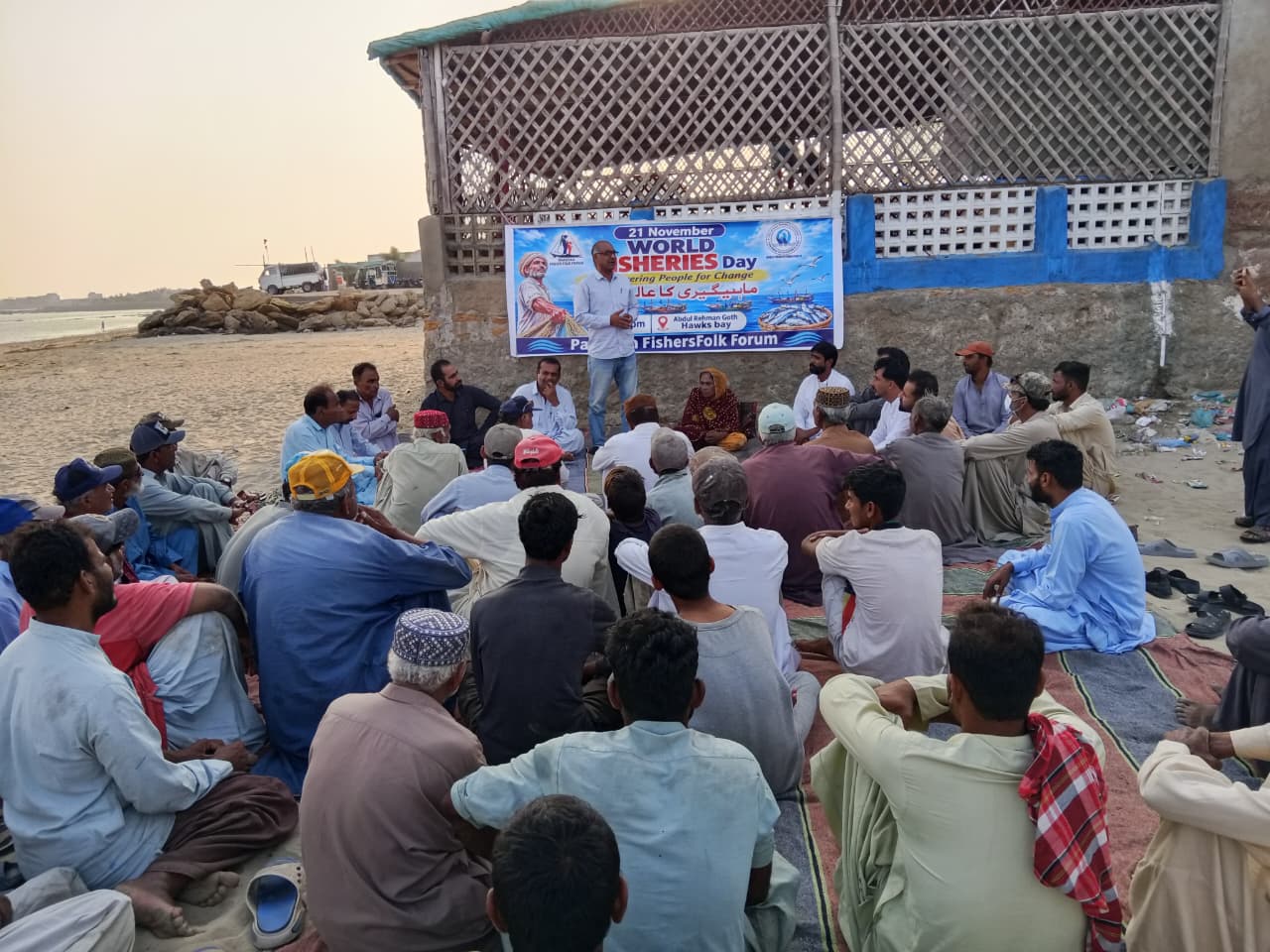
The demands were raised at a gathering organized by the Pakistan Fisherfolk Forum in Abdul Rehman Goth on November 21 to mark World Fisheries Day, which was attended by a large number of fishermen and civil society representatives.
Addressing the gathering, Forum General Secretary Saeed Baloch said fishing communities across the world were struggling against the occupation and control of rivers, seas and other water resources.
He said the forum opposed projects involving offshore drilling for oil and seabed mineral exploration, arguing that such activities could disrupt the marine ecosystem and adversely affect fishing resources.
Baloch demanded that the federal and provincial governments abandon projects that could threaten marine life and the environment. He called for the protection of coastal resources and the rights of communities dependent on fishing for their livelihoods.
The forum also called for the release of at least 35 MAF of water downstream of Kotri Barrage to support the ecological restoration of the Indus Delta and protect millions of people living in delta communities.
The demand was linked to concerns over environmental degradation, declining freshwater availability and the future of fishing-dependent communities along the coast.
The gathering also highlighted the need for a sustainable fisheries policy, better economic protection for fishermen and an end to alleged interference in their traditional fishing activities.
Baloch said the forum had been struggling for the rights of fishing communities for the past 28 years, raising issues including environmental justice, sustainable fisheries management, better prices for fish, social security, pensions and subsidized fuel.
He alleged that influential individuals continued to occupy rivers, lakes and other fishing grounds despite the abolition of the formal fishing-contract system. He said fishing communities would continue their struggle against attempts to restrict their access to traditional fishing resources.
The forum demanded that fishermen be recognized as labourers and provided with pensions and social security benefits. It also called for subsidized fuel to reduce operational costs and better prices for their catch.
Another concern raised at the gathering was the alleged collection of money from fishermen under the PC system. Forum leaders claimed that fishermen were being harassed by government institutions in the name of security and demanded an immediate end to such practices.
The participants also called for the transfer of fishing boat registration responsibilities from the federal government to the Sindh government following the 18th Constitutional Amendment.
Highlighting the living conditions of fishing communities, Baloch said many settlements lacked basic facilities, while children in fishermen’s villages remained deprived of adequate educational opportunities.
The forum also demanded the construction of jetties in fishing communities to improve infrastructure and facilitate fishing activities.
Earlier, central leader Kausar Sadiq welcomed participants and recalled the establishment of the World Forum of Fisher Peoples following an international meeting in New Delhi in 1997, attended by more than 100 representatives from 32 countries.
He said the international forum was established to strengthen global representation and advocacy for sustainable fishing practices and the rights of fishing communities.
At the conclusion of the gathering, forum leader Sikandar Baloch thanked participants and reiterated the need to address the environmental and economic challenges confronting fishermen.
He said World Fisheries Day, observed annually on November 21, was an opportunity to highlight the importance of sustainable fisheries, the working conditions of fishing communities and threats to their traditional settlements.
The gathering concluded with resolutions demanding the implementation of a sustainable fisheries policy, better fish prices, pensions and social security for fishermen, subsidized fuel, construction of jetties, an end to alleged exploitation under the PC system and a halt to offshore oil and mineral exploration projects.