
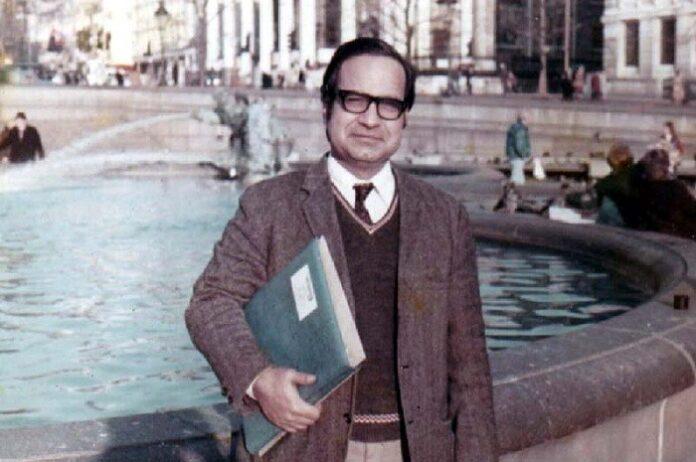
Waris Mir: A Gen Z before Gen Z
KARACHI (TKP Feature): Long before hashtags became instruments of protest and social media gave young people a platform to challenge established narratives, Professor Waris Mir was raising questions that made powerful people uncomfortable.
He defended freedom of expression when censorship restricted public debate. He challenged political conformity when questioning authority carried consequences. He wrote about women’s rights when discriminatory laws were shaping the national debate. And he criticized the relationship between power and journalism when independent voices faced pressure.
Born on November 22, 1938, Waris Mir belonged to a generation far removed from today’s digital culture. Yet many of the questions he raised remain familiar to a generation that values self-expression, challenges conventional thinking and increasingly demands accountability. He was, in that sense, a Gen Z before Gen Z.
The comparison is not about age or technology. It is about an attitude: the willingness to question authority, examine accepted beliefs and resist conformity.
Before hashtags, there was the power of the pen
Mir studied at Murray College in Sialkot before completing his master’s degree in journalism at the University of the Punjab in 1964. He joined the university’s journalism department as a lecturer in 1965 and later earned an MPhil in journalism from City University, London, in 1976. He taught at Punjab University for approximately 25 years and was appointed chairman of its Mass Communication Department on three occasions.
Alongside his academic career, he wrote columns for Urdu newspapers, including Daily Jang. His writing became particularly significant during General Zia-ul-Haq’s military rule, when censorship and restrictions on political expression narrowed the space for public debate.
The difference between his era and ours is the platform. Today, a young person can publish an opinion to thousands of followers within seconds. In Mir’s time, newspaper columns were among the principal channels through which an intellectual could participate in national discussion.
But the underlying question remains unchanged: how much freedom does a citizen have to disagree with those who hold power?
Mir’s writings defended democracy and freedom of thought and expression. He challenged the idea that public institutions and powerful individuals should remain beyond criticism.
The problem with agreeing too easily
One of Mir’s important works, Hurriyat-e-Fikr Ke Mujahid, brought together columns published in Daily Jang between 1985 and 1987. The collection explored intellectual freedom and the historical struggle of thinkers who challenged established authority.
His criticism extended beyond political rulers to the behaviour of journalists and commentators.
This concern is reflected in Falsafa-e-Khushamad, or The Philosophy of Flattery. Published as a collection of his writings in 2017, the book examined excessive praise and the culture of sycophancy in Pakistani politics and journalism.
Mir’s concern was that journalism could lose its professional purpose when it became more interested in pleasing influential people than questioning them.
The subject has acquired a different setting in the digital age. Social media has expanded the number of voices in public discussion, but it has also created new forms of conformity. Online popularity can become a substitute for credibility, while people can face pressure to agree with their own political or social groups.
A person may have thousands of followers and still hesitate to question the opinions of their own community.
Mir’s work invites a difficult question for today’s generation: is expressing an opinion enough, or does independent thinking also require the courage to challenge one’s own side?
A voice for women’s rights
Another important dimension of Mir’s intellectual work was his writing on women’s rights.
His book Kya Aurat Aadhi Hai? challenged arguments used to justify discriminatory treatment of women. His writings engaged with the social, legal and religious debates surrounding the policies of the Zia era, including the proposed Law of Evidence.
At a time when women’s rights were the subject of intense political and social controversy, Mir used his writing to argue against discrimination and question the assumptions behind unequal treatment.
For today’s generation, which discusses women’s education, workplace opportunities, representation and equal rights across digital platforms, his work offers a historical perspective.
These debates did not begin with social media. Pakistani intellectuals were raising questions about women’s status and equality decades before today’s online campaigns.
Mir’s contribution is a reminder that the struggle for equality has its own history within Pakistan’s intellectual and journalistic traditions.
Challenging uncomfortable history
Mir’s intellectual independence was also reflected in his opposition to the 1971 military action in East Pakistan.
He was among the Pakistani writers who spoke against the military operation and the treatment of the civilian population. His position was later recognized by Bangladesh, which honoured him posthumously in 2013 for his contribution and opposition to the military action.
This part of his legacy raises a question that remains relevant: can a country understand its history if its citizens are discouraged from examining its most difficult chapters?
For young Pakistanis encountering the events of 1971 through documentaries, historical archives and online discussions, Mir’s example highlights the importance of independent thought and the willingness to confront uncomfortable facts.
What would Mir ask Gen Z today?
Today’s generation has tools Mir could hardly have imagined. A smartphone can function as a newsroom, publishing platform, research library and space for political discussion.
But access to information does not automatically produce knowledge. Nor does the ability to speak guarantee the willingness to listen.
The digital environment brings its own challenges: misinformation, echo chambers, online harassment and the tendency to judge arguments by popularity rather than evidence.
Mir’s emphasis on intellectual freedom offers a useful standard for navigating these challenges. Questioning authority should involve research rather than simply replacing one unexamined opinion with another. Freedom of expression also carries a responsibility to distinguish facts from assumptions. That is perhaps the most important connection between Mir and Gen Z.
A legacy beyond anniversaries
Waris Mir died on July 9, 1987, aged 48. Pakistan posthumously conferred the Hilal-e-Imtiaz on him in 2013 in recognition of his contribution to journalism and democracy.
Nearly four decades after his death, many of the questions he raised remain part of Pakistan’s public debate: freedom of expression, democratic accountability, women’s equality, the independence of journalism and the relationship between state authority and individual thought.
Remembering him should therefore involve more than sharing his photograph or marking his birthday. It should mean reading his work, examining his arguments and allowing his questions to enter contemporary conversations.
Gen Z did not invent the courage to question. Long before the generation had a name, Waris Mir was practicing it through his journalism and intellectual work.
He belonged to another century, but the questions he left behind are still waiting for answers.