
From Iqbal to Saadi: Iranian artists celebrated shared heritage in Karachi
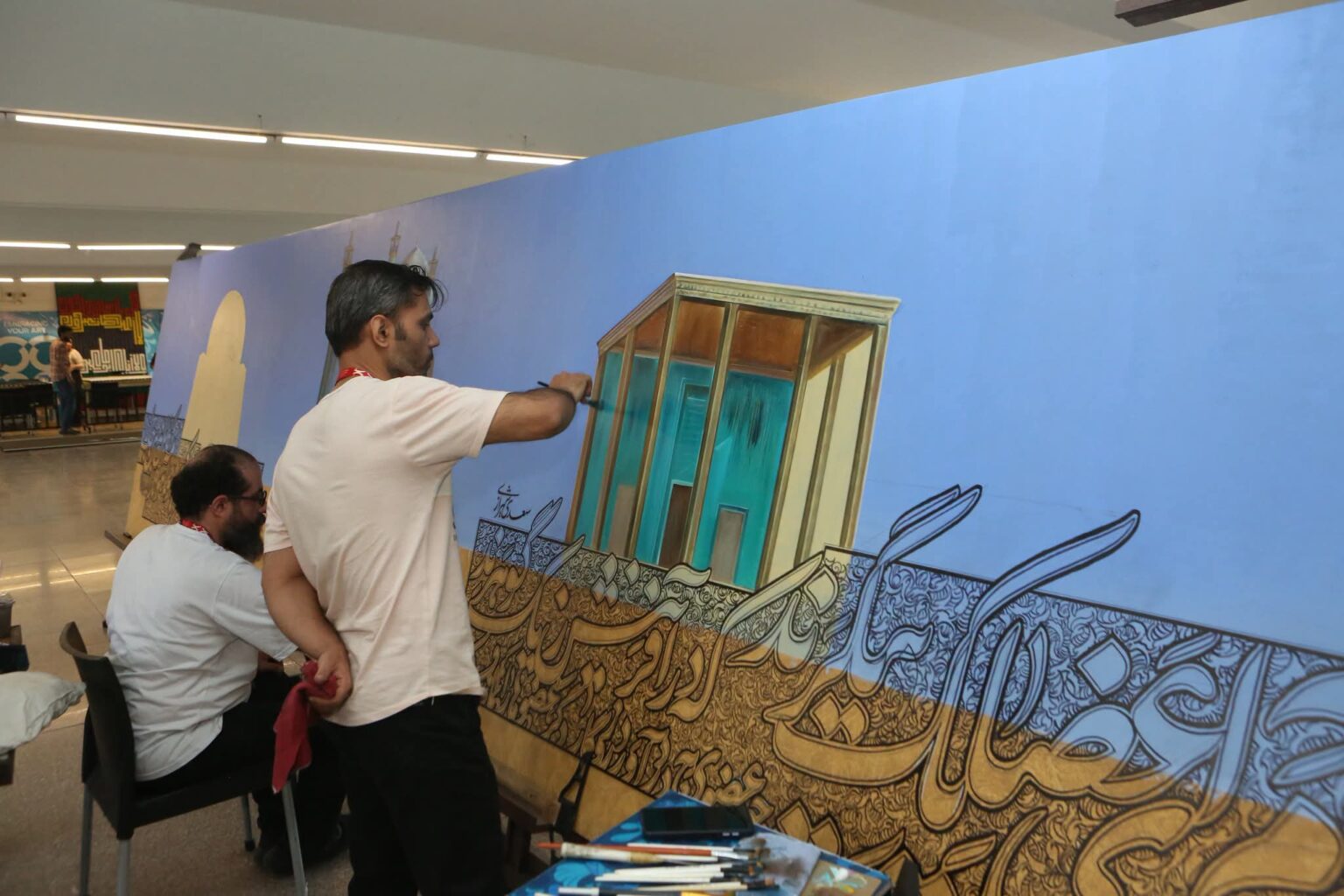
KARACHI (Staff Report): The poetry of Allama Muhammad Iqbal and Persian literary icon Sheikh Saadi Shirazi found an artistic expression through a grand calligraphic mural created by Iranian visual artists at the World Culture Festival – Karachi 2026.
Artists Mohammad Saeed Naghashiyan and Hussain Eini Bakhsh from Iran brought the verses of the two celebrated poets to life through traditional calligraphic art, attracting the attention of visitors at the Arts Council of Pakistan.
Among the featured works was a famous couplet by Allama Iqbal:
“عروجِ آدمِ خاکی سے انجم سہمے جاتے ہیں
کہ یہ ٹوٹا ہوا تارا مہِ کامل نہ بن جائے”
The verses reflected Iqbal’s philosophical vision of human potential, suggesting that even the stars appeared apprehensive at the possibility of an ordinary human rising to extraordinary heights.
Iqbal was also widely referred to in Persian literary circles as Iqbal Lahori, associating the poet with Lahore, the city closely connected with his life and legacy.
The artists also incorporated the celebrated poetry of Sheikh Saadi Shirazi, including his famous lines:
“بنیآدم اعضای یک پیکرند
که در آفرینش ز یک گوهرند”
The couplet conveyed the idea that humanity was like one body, with all human beings sharing a common origin. Saadi further explained that when one part of the body suffered, the other parts could not remain unaffected.
The message of shared humanity gave the calligraphic presentation significance beyond its artistic appeal, connecting literature with universal values of compassion, solidarity and human dignity.
The use of Nastaliq calligraphy added another cultural dimension to the presentation. The artistic tradition has deep roots in Persian and Urdu literary heritage, making it an appropriate medium for presenting the poetry of both Iqbal and Saadi to a Pakistani audience.
The live mural also offered festival visitors an opportunity to witness the creative process rather than simply view completed artworks. The combination of poetry, lettering and visual composition demonstrated how traditional artistic practices continued to engage contemporary audiences.
The Iranian artists’ participation highlighted the historical cultural connections between Pakistan and Iran, where literature and poetry have long provided common ground.
Through the verses of Iqbal and Saadi, the mural brought together two literary traditions and presented a shared message: art and poetry can transcend geographical boundaries and connect people through ideas that remain relevant across generations.