
Can FoodAg 2026 convert international interest into actual export growth?
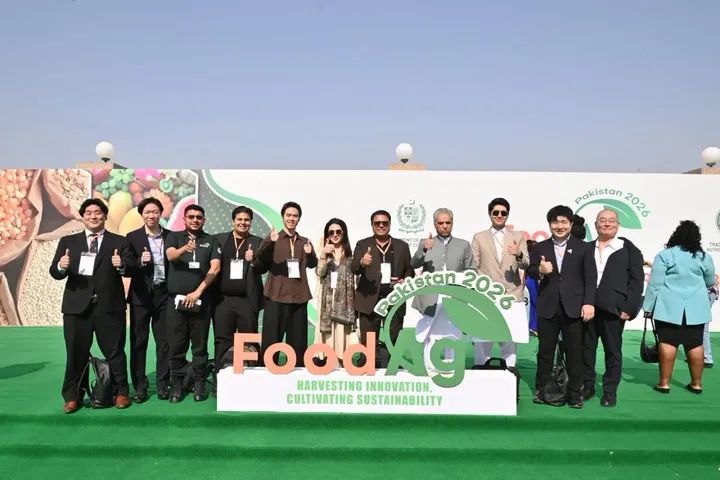
KARACHI (News Desk): Pakistan is looking to turn international interest in its food and agricultural products into tangible export opportunities as the fourth edition of FoodAg Pakistan 2026 opened at the Karachi Expo Centre on Monday, bringing together 400 Pakistani exhibitors and 850 international delegates from 72 countries.
Organized by the Trade Development Authority of Pakistan (TDAP), the four-day exhibition, running from November 23 to 26, aims to connect domestic producers and exporters with international buyers, develop commercial partnerships and explore opportunities for expanding Pakistan’s presence in global food markets.
The scale of international participation reflects growing efforts to position Pakistan’s agricultural and food-processing industries as important contributors to export diversification. However, the larger economic test will be whether the business interest generated through the exhibition translates into confirmed orders, sustained trade relationships and additional foreign exchange earnings.
According to TDAP, approximately 2,000 business-to-business (B2B) meetings took place between Pakistani exhibitors and international buyers on the opening day. Discussions covered product requirements, quality standards, purchasing interests and potential commercial partnerships. Follow-up meetings have also been scheduled during the remaining days of the exhibition.
The meetings provide an opportunity for Pakistani exporters to understand international market requirements and establish direct relationships with prospective buyers. Nevertheless, the number of meetings alone cannot determine the exhibition’s commercial success. Their conversion into actual purchase agreements and recurring export orders will be a more meaningful indicator.
The exhibition covers a broad range of products, including rice, fruits and vegetables, fruit pulp, beverages, meat, poultry, dairy, fisheries, seafood, processed foods, confectionery, snacks, spices, honey and other agricultural products.
This diversity also highlights an opportunity for Pakistan to expand beyond conventional agricultural exports by developing higher-value processed products. Greater investment in food processing, packaging, storage, quality assurance and supply-chain infrastructure could help domestic businesses compete in markets where buyers demand consistent quality and internationally recognised standards.
Alongside commercial networking, Pakistan has also pursued regulatory engagement with potential trading partners. Bilateral meetings were held with delegations from Malaysia, Brazil, Uzbekistan and The Gambia, involving TDAP, the Pakistan Halal Authority, the National Agriculture Food Safety Authority and the Department of Plant Protection.
Discussions covered halal certification, mutual recognition arrangements, food safety requirements, plant and animal health standards, quarantine procedures and measures to facilitate bilateral trade in agricultural and food products.
These negotiations are particularly important because access to international food markets depends not only on competitive prices and production capacity but also on compliance with importing countries’ regulatory requirements. Recognition of certification systems and improved regulatory coordination could reduce procedural hurdles for Pakistani exporters and make it easier to access additional markets.
The participation of Uganda’s Minister of State Desire M. M. M. Mohuzha alongside Federal Minister for Commerce Jam Kamal Khan at the opening ceremony also reflects the exhibition’s international trade engagement.
The event has been organized in collaboration with the Federation of Pakistan Chambers of Commerce and Industry, Karachi Chamber of Commerce and Industry, Rice Exporters Association of Pakistan and several sector-specific trade associations representing fruits and vegetables, meat, seafood and processed foods.
Meanwhile, the fourth Global Cuisine Show is showcasing Pakistani food ingredients through live demonstrations by 17 international chefs preparing traditional and international dishes using locally sourced products. The initiative seeks to highlight the quality, versatility and international applications of Pakistani food products.
The remaining programme includes discussions and technical sessions on market access, dairy exports, agricultural innovation, food safety, regulatory requirements, value addition, sustainable supply chains and export diversification.
For Pakistan, the challenge extends beyond attracting international buyers to an exhibition venue. Exporters must demonstrate their ability to meet international quality requirements, maintain consistent supplies, offer competitive prices and fulfil commercial commitments.
The success of FoodAg 2026 will ultimately depend on what follows the exhibition: confirmed export contracts, repeat orders, new market access and stronger participation of Pakistani businesses in international supply chains.
With 72 countries represented and thousands of business meetings underway, the exhibition has created a platform for international commercial engagement. Whether this interest becomes a lasting source of export growth will be determined by the business agreements and market opportunities emerging from Karachi.