
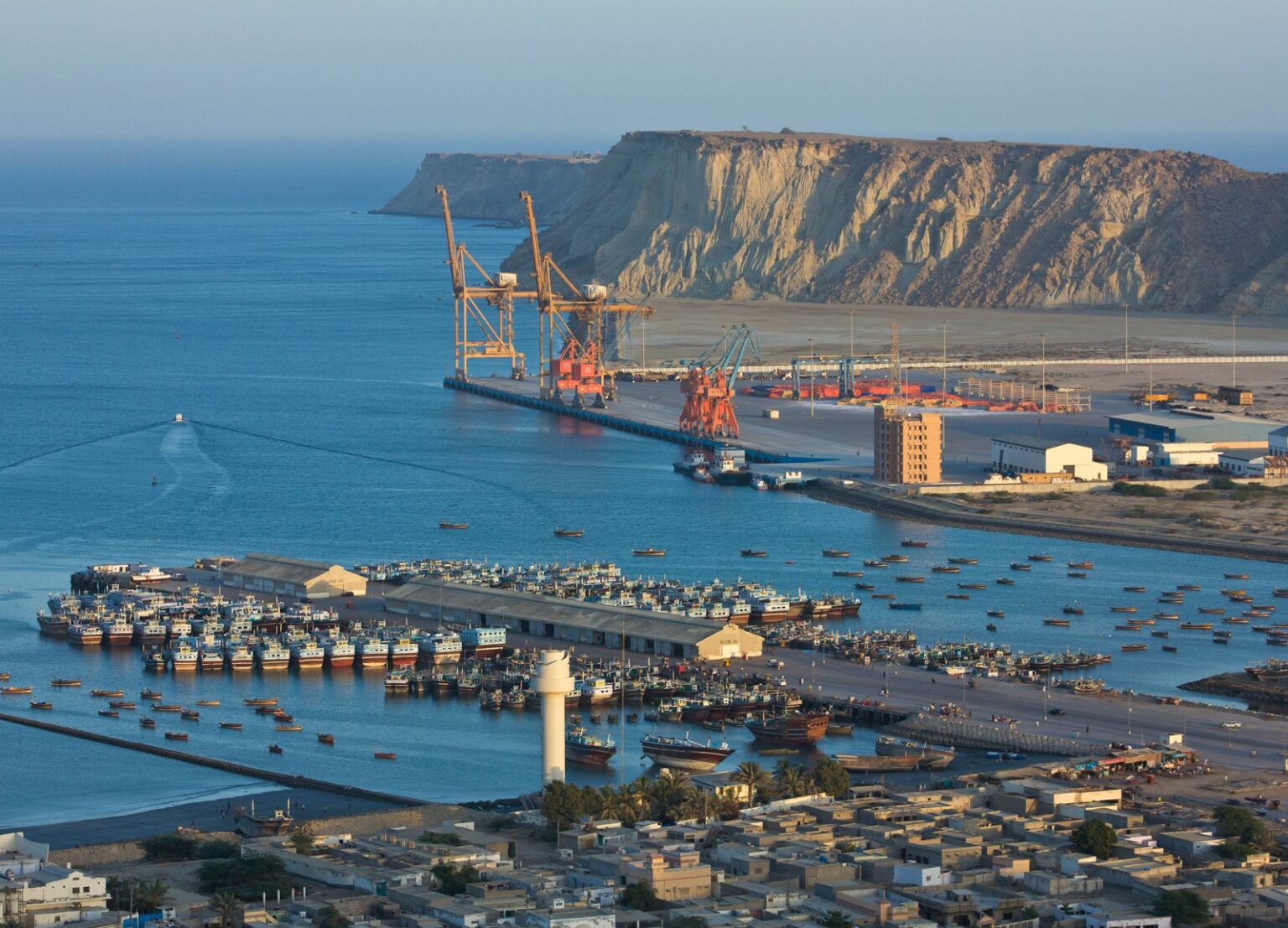
Gwadar Port seeks to strengthen trade corridors to Iran & Central Asia
GWADAR (News Desk): Pakistan is seeking to strengthen Gwadar Port’s role in regional trade by developing commercial corridors connecting Iran and Central Asian states, as port authorities and Pakistan Customs move to address logistical bottlenecks, improve border clearance and expand transit trade operations.
The initiative was discussed at a joint meeting chaired by Gwadar Port Authority Chairman Noorul Haq Baloch and Director General Transit Trade Pakistan Customs Irfan Javed, with officials from both institutions, representatives of the business community and other stakeholders in attendance.
The meeting focused on expanding regional and international trade through Gwadar, including transit trade, international transshipment and the implementation of the Transport International Routier (TIR) system.
Officials were informed that international transshipment operations had commenced at Gwadar Port for the first time this year, with cargo handled through 22 bulk vessels. At the Gabd border, customs processing had been completed for 358 vehicles, including 51 containers.
The participants also discussed the potential movement and handling of approximately 5,000 containers through Gwadar Port, alongside opportunities for establishing shipping lines to strengthen the port’s commercial operations.
Improving connectivity with Iran and Central Asian markets emerged as a key priority, with particular attention given to removing trade barriers at the Gabd-Rimdan border crossing.
The meeting highlighted operational challenges at the border, including long queues of vehicles, cargo clearance delays and inadequate basic facilities. Participants stressed the need to digitize customs procedures and activate the WeBOC customs system to improve processing efficiency and facilitate cross-border trade.
Proposals were also discussed to allocate separate yards for export and TIR cargo, allowing more organized handling and reducing congestion.
The delayed completion of the National Logistics Corporation’s (NLC) bonded area and cargo-handling system was also raised during the meeting as an infrastructure issue requiring attention.
Beyond port and border operations, the discussions covered investment opportunities in Gwadar Free Zone, particularly the establishment of factories, processing units and packaging industries.
Participants emphasized that industrial investment and local value addition would be important in expanding economic activity around the port rather than limiting Gwadar’s role to cargo movement and transit operations.
The meeting also highlighted the need to create a business-friendly environment for shipping companies and offer appropriate incentives to attract investors. Stakeholders further discussed raising awareness among the business community about the potential economic benefits of alternative trade routes.
The discussions reflect efforts to strengthen coordination between Gwadar Port Authority and Pakistan Customs to improve the port’s regional trade connectivity.
Participants proposed developing a comprehensive action matrix to address operational problems, identify responsible institutions and establish clear implementation timelines.
For Gwadar, the challenge remains converting its geographical position into sustained commercial activity. Regular cargo flows, efficient customs clearance, reliable border infrastructure, shipping services and industrial investment will be essential to strengthening its role in regional and international trade.
The proposed measures are intended to address these requirements and improve Gwadar’s capacity to serve as a regional trade and logistics centre connecting Pakistan with neighbouring markets and Central Asia.