
8,000-year-old Mehrgarh heritage gets US-funded Museum revival in Balochistan
KARACHI (News Desk): The United States has completed its first-ever cultural preservation project in Balochistan, upgrading the Mehrgarh Museum to protect and showcase archaeological artefacts from the region’s 8,000-year-old Mehrgarh civilization.
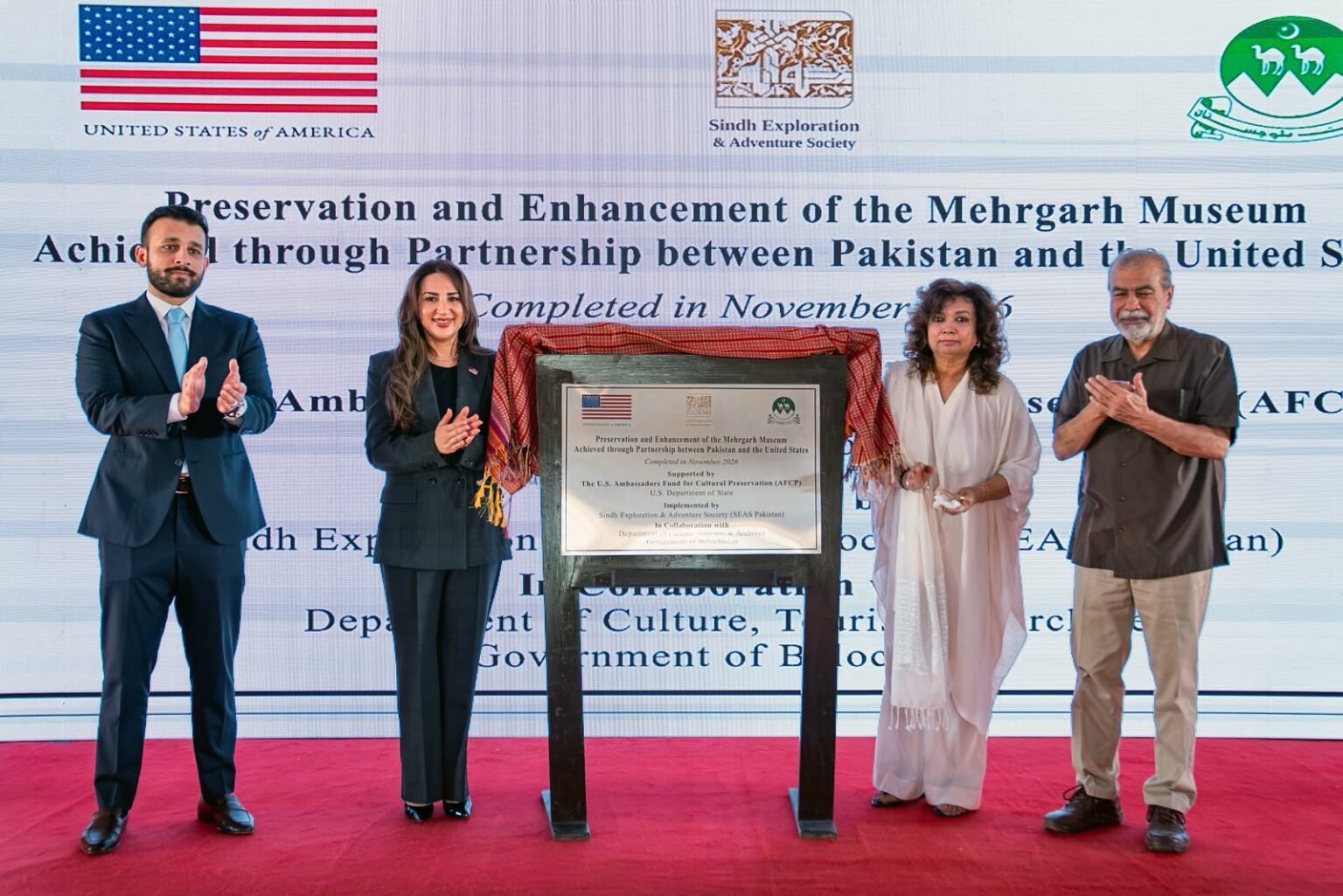
US Chargé d’Affaires Natalie Baker joined Balochistan Parliamentary Secretary Nawabzada Mir Muhammad Zarain Khan Magsi and representatives of the Sindh Exploration and Adventure Society (SEAS) on November 7 to mark the completion of the project, funded through the US Ambassadors Fund for Cultural Preservation (AFCP).
Implemented in collaboration with SEAS and the Balochistan Culture Department, the initiative focused on preserving ancient Neolithic and archaeological artefacts, upgrading museum curation to international standards and strengthening the capacity of local heritage professionals.
The project also included community outreach programmes and training for local professionals to ensure the long-term preservation and management of the museum’s collections.
Speaking at the ceremony, Baker said the project would enable the Mehrgarh Museum to showcase the 8,000-year-old civilisation and other archaeological heritage, highlighting the role of American expertise in preserving historical assets.
She said cultural preservation initiatives could deliver lasting results by protecting history, creating employment opportunities and strengthening local communities.
The US diplomat also noted that the AFCP’s footprint now extended across all four provinces of Pakistan, reflecting Washington’s continued engagement in the country’s cultural heritage preservation.
During the ceremony, Baker, Magsi and the project leads Dr Asma Ibrahim and Dr Kaleemullah Lashari unveiled a commemorative plaque at the museum entrance in Quetta.
The museum is scheduled to officially reopen later this month, providing an upgraded platform for displaying Mehrgarh’s archaeological heritage and expanding public access to the region’s ancient history.
The project also highlights the potential of archaeological heritage as a resource for cultural tourism, research and local economic activity in Balochistan.