
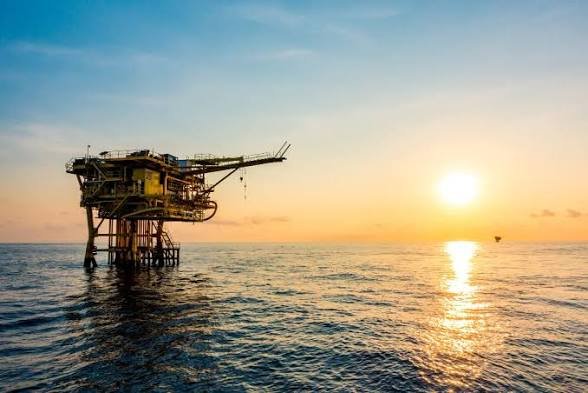
Pakistan revives offshore exploration after 18-year gap
ISLAMABAD (News Desk): Pakistan is set to revive offshore oil and gas exploration activities after an 18-year gap, with a Turkish seismic survey vessel scheduled to arrive in Karachi between November 17 and 20 to assess the country’s offshore hydrocarbon potential.
The Petroleum Division announced the development on Friday following a meeting between Petroleum Minister Ali Pervaiz Malik, a Turkish delegation and relevant government agencies to review preparations for receiving the vessel operated by Turkish Petroleum Offshore Company (TPOC).
“The vessel is expected to arrive in Karachi between Nov 17-20, marking the revival of Pakistan’s offshore exploration efforts after nearly two decades,” the Petroleum Division said in a statement, describing the development as a milestone in Pakistan-Türkiye relations.
Pakistan had been unable to auction offshore exploration blocks since 2006-07, while previous exploration activities in the country’s offshore basins failed to produce commercially successful discoveries.
In an effort to revive the sector, the government launched the Offshore Bid Round 2025 in January last year after an 18-year gap, offering 40 offshore blocks in the Indus and Makran basins along the coasts of Sindh and Balochistan.
Under the renewed exploration framework, Turkish Petroleum Offshore Company, a subsidiary of Turkish Petroleum Corporation, entered three exploration blocks in Pakistan through partnership arrangements with local energy companies, including Oil and Gas Development Company Limited (OGDCL), Mari Energies and Pakistan Petroleum Limited (PPL).
In the Eastern Offshore Indus-C block in the Arabian Sea, TPOC holds a 25 per cent participating interest and operatorship, while PPL has a 35pc stake and OGDCL and Mari Energies each hold 20pc.
According to PPL, the block has an estimated gas potential of 1.5 to 2 trillion cubic feet (TCF). Previous 2D and 3D seismic surveys have been conducted in the area, while the upcoming survey campaign by the Turkish vessel is expected to provide additional geological data to improve understanding of its hydrocarbon potential.
The seismic survey will help identify geological structures that may contain oil and gas, although the presence of commercially recoverable reserves can only be established through subsequent exploratory drilling and assessment.
TPOC has also secured participating interests in two onshore exploration blocks, holding a 25pc stake in Sukhpur-II and a 10pc interest in the Ziarat North block, further expanding Türkiye’s participation in Pakistan’s energy sector.
Petroleum Minister Ali Pervaiz Malik described the vessel’s arrival as a new chapter in the longstanding friendship and energy cooperation between Pakistan and Türkiye.
“This is a special moment for Pakistan-Türkiye friendship. I will try to personally receive the vessel upon its arrival in Karachi,” he said.
The minister said the government was fully committed to facilitating the offshore exploration initiative and ensuring that all necessary arrangements were completed for the commencement of operations. He assured the Turkish delegation of Pakistan’s full support, expressing hope that the joint initiative would achieve a landmark success.
The Secretary Petroleum also welcomed the upcoming arrival and stressed the importance of coordination among government departments and relevant stakeholders to ensure smooth arrangements for the vessel and its operations.
The TPOC project manager appreciated the cooperation extended by Pakistani authorities and expressed confidence in the initiative, saying the team had received encouraging support and hoped for a successful outcome from the exploration campaign.
The renewed offshore exploration effort marks an important step in Pakistan’s attempt to assess its untapped maritime hydrocarbon potential and attract foreign investment into the energy sector. However, any potential contribution to domestic energy supplies will depend on the results of seismic assessments, subsequent drilling and the commercial viability of any discoveries.