
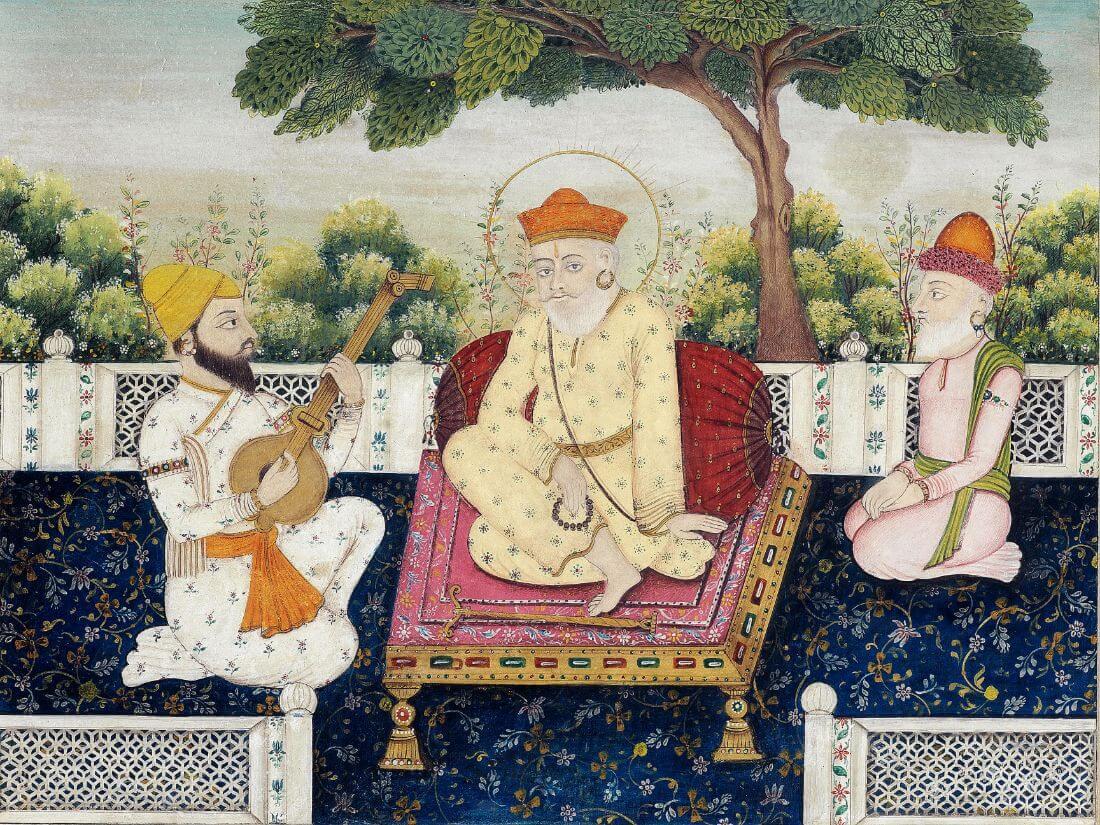
Guru Nanak’s economic philosophy: Centuries before the wealth inequality debate
KARACHI (TKP Feature): Long before modern economists began debating wealth inequality, fair wages, social welfare and corporate responsibility, Guru Nanak Dev Ji offered a philosophy that placed honest work, sharing and human dignity at the centre of social and economic life.
Born in 1469 in Rai Bhoi di Talwandi, now known as Nankana Sahib in Pakistan, Guru Nanak emerged during a period of considerable social, religious and economic divisions in the Indian subcontinent. His teachings challenged caste hierarchies, social discrimination and practices that allowed wealth and privilege to determine human worth.
On his 557th birth anniversary, his teachings offer an opportunity to revisit an enduring economic question: What is wealth worth if it does not improve the lives of others?
The ethics of earning wealth
Guru Nanak’s teachings placed considerable emphasis on honest labour, truthful conduct and earning a livelihood without exploiting others.
His compositions in the Guru Granth Sahib emphasize the relationship between honest work and sharing its rewards with those in need. One particularly relevant verse states:
Ghaal khaaye kichh hathahu dei, Nanak raah pachhaane sei.
It conveys the idea that those who earn through their labour and share some of what they earn understand the righteous path.
This philosophy challenged the idea that wealth or social position alone determines an individual’s worth.
At Kartarpur, where Guru Nanak spent his later years, he demonstrated the importance of productive work through an active household and agricultural life rather than advocating complete withdrawal from worldly responsibilities.
The principle has a striking relevance to contemporary economic debates. Modern economies frequently measure success through income, assets, corporate valuations and financial returns. Yet questions about fair wages, workers’ rights, exploitation and ethical business practices remain unresolved.
Guru Nanak’s teachings offer an ethical basis for examining not simply how much wealth is generated, but how it is earned.
Sharing wealth as a social responsibility
Another important dimension of his philosophy was the responsibility to share resources with others.
The familiar Sikh expression Vand Chhako, commonly understood as sharing what one has, reflects this ethical tradition. It is important, however, to distinguish the popular modern formulation of Sikhism’s three principles from the precise historical language of Guru Nanak’s compositions.
The underlying emphasis on charity, sharing and collective welfare is firmly rooted in Sikh teachings.
This philosophy found a practical expression in Langar, the community kitchen associated with Guru Nanak’s community at Kartarpur.
People from different social backgrounds could sit together and share meals without distinctions of caste, wealth or social standing. The institution subsequently developed through the work of successive Sikh Gurus and became a defining feature of Sikh community life.
Langar represents more than charitable food distribution. It reflects collective contribution, voluntary service and the principle that access to food should not depend on social status or purchasing power.
In contemporary economic language, the institution can be examined through the concepts of community welfare, food security, voluntary contributions and social inclusion.
At a time when food insecurity remains a major challenge across developing economies, this tradition offers an important lesson: basic human needs should not become privileges reserved for those who can afford them.
A different relationship with wealth
Guru Nanak did not advocate the rejection of material life or suggest that earning wealth was inherently wrong.
His teachings instead emphasized truthful living, restraint, honest work and responsibility towards others.
This distinction is particularly relevant to modern debates surrounding capitalism.
Entrepreneurship, investment, trade and wealth creation can generate employment, expand production and improve living standards. However, economic growth can coexist with deep inequality when the benefits of prosperity remain concentrated.
Guru Nanak’s philosophy provides an ethical framework in which economic achievement is accompanied by obligations towards fellow human beings.
It does not prescribe a modern taxation system, a capitalist model or a socialist economic structure. Its relevance lies in the moral questions it raises about accumulation, exploitation and the distribution of resources.
For today’s business community, these teachings invite reflection on corporate governance, responsible investment, fair compensation and the social consequences of commercial decisions.
Equality beyond the marketplace
Guru Nanak’s opposition to caste discrimination was another significant aspect of his social philosophy.
At Kartarpur, the practice of Sangat, or congregation, and Pangat, the tradition of sitting together for a communal meal, reflected an understanding of human equality that challenged established social hierarchies.
The symbolism was powerful: people from different backgrounds could sit alongside one another without distinctions of wealth, caste or social standing.
Modern economies continue to struggle with unequal access to education, employment, finance and entrepreneurship. Although the institutional challenges are different, the underlying question remains relevant: Can an economy be considered fair when opportunities are determined by inherited privilege?
Guru Nanak’s teachings placed human dignity above these divisions.
A lesson for modern business and society
Pakistan, where Guru Nanak was born, has a particularly meaningful connection to his legacy.
The country’s economic challenges include poverty, food insecurity, unequal opportunities and the need for more responsible business practices. His philosophy provides a historical and cultural reference point for examining these issues beyond conventional economic indicators.
For businesses, the emphasis on honest labour highlights ethical production and fair earning. For wealthy individuals and institutions, the tradition of sharing emphasizes social responsibility. For society, the principle of equality challenges discrimination and exclusion.
These ideas do not replace the need for effective economic policies, investment, institutional reform or sustainable growth. Rather, they offer an ethical foundation against which economic progress can also be measured.
Five centuries after Guru Nanak’s time, the world has developed sophisticated financial markets, multinational corporations and complex economic systems. Yet the fundamental questions remain remarkably familiar.
How should wealth be earned? What responsibility comes with possessing it? And what is the purpose of prosperity if large sections of society remain excluded from its benefits?
Perhaps the enduring relevance of Guru Nanak’s economic philosophy lies in its insistence that prosperity should not be measured only by what an individual accumulates, but also by what that individual contributes to the lives of others.
His message was not against wealth. It was against wealth without conscience.