
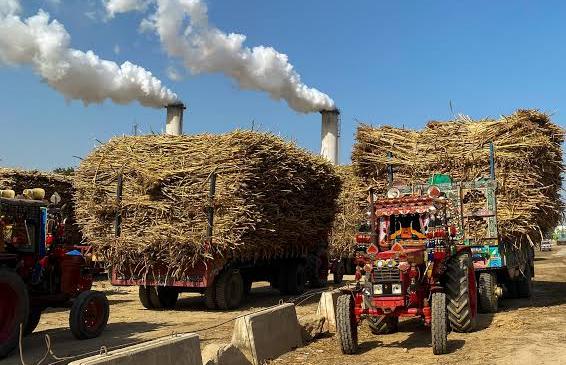
Pakistan approves sugar deregulation, ends production controls and export subsidies
ISLAMABAD (News Desk): Pakistan has approved sugar deregulation policy, moving to shift the country’s sugar industry from government-controlled arrangements towards a competitive, market-based system aimed at encouraging investment, improving agricultural productivity and expanding trade opportunities.
The federal cabinet and all provincial governments, including Sindh and Punjab, have agreed to implement the policy, according to an announcement issued by the Ministry of Industries and Production on Tuesday.
The reform package seeks to remove regulatory restrictions on the establishment of sugar mills, production capacity, sugarcane procurement and inter-provincial movement of sugar, potentially reshaping the business environment for farmers, mill owners, traders and exporters.
Under the new framework, sugarcane growers will be free to sell their crops to any buyer, while sugarcane prices will be determined through market mechanisms rather than administrative controls.
The government believes greater commercial freedom will improve farmers’ bargaining opportunities and allow them to secure better returns for their produce.
Another significant change involves removing restrictions on establishing new sugar mills and approving their production capacities. Mills will be able to make production decisions according to market demand and prevailing business conditions, potentially encouraging fresh investment and competition within the sector.
The policy also announces the elimination of subsidies on sugar exports, signalling a shift towards a more market-oriented trade framework.
To improve predictability for businesses, the government plans to introduce transparent mechanisms governing sugar imports and exports. It will also facilitate the movement of sugar between provinces by removing unnecessary regulatory barriers.
The reforms extend beyond pricing and trade. The government intends to improve access to financing for sugarcane growers and sugar mills, promote farm mechanisation and develop commodity markets to support transparent price discovery.
Additionally, work will be undertaken to make ethanol blending mandatory, potentially creating new commercial opportunities for the sugar industry through the development of alternative fuel markets.
The Ministry of Industries and Production said the policy had been developed following consultations with stakeholders and provincial governments, with the objective of improving productivity, industrial efficiency, investment and competitiveness.
However, the transition from administrative controls to market-based pricing will raise important questions about the distribution of benefits across the sugar supply chain.
While farmers could gain greater freedom to negotiate with multiple buyers, their actual bargaining power will depend on the availability of competing mills and buyers in their respective regions.
Similarly, removing restrictions on new mills could encourage investment and competition, but effective market oversight will remain important to prevent excessive concentration, collusion and artificial price increases.
For consumers, the key question will be whether greater competition translates into more stable and affordable sugar prices.
The removal of export subsidies also represents a significant change in the industry’s trade structure, making export decisions more dependent on international prices and commercial viability.
Pakistan’s sugar industry now faces a transition in which market forces, rather than administrative decisions, are expected to play a greater role in determining production, procurement and trade.
The success of the reform will ultimately depend on transparent implementation, effective competition and ensuring that the benefits of deregulation reach farmers and consumers alongside industrial investors.