
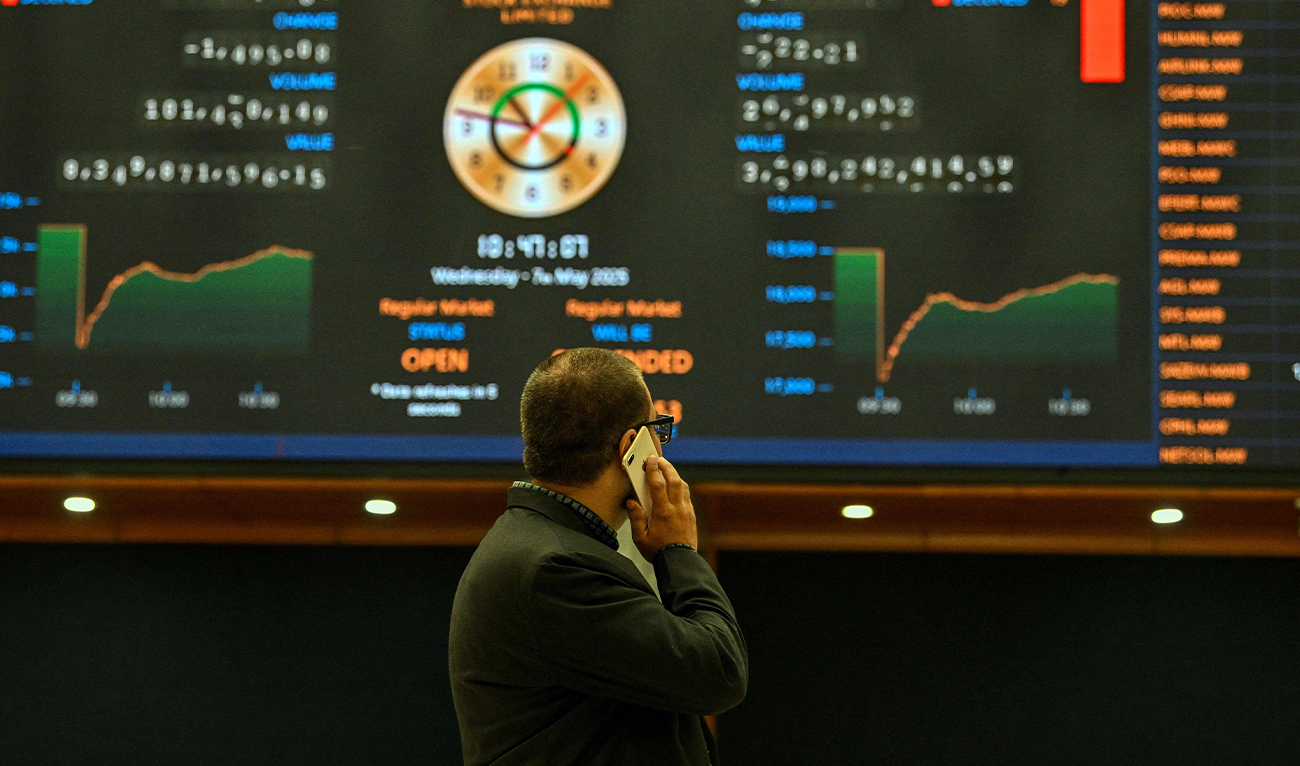
PSX sheds 421 points as profit-taking weighs on investor sentiment
KARACHI (Staff Report): The Pakistan Stock Exchange (PSX) closed in negative territory on Wednesday, with the benchmark KSE-100 Index shedding 421 points amid selling pressure, as investors remained cautious during the trading session.
The benchmark index settled at 178,121 points, down 421 points from the previous close, reflecting a decline in investor sentiment and continued volatility in the equity market.
During the session, the KSE-100 Index touched an intraday high of 178,918 points, while its lowest level was recorded at 178,107 points, indicating that the market remained under pressure after failing to sustain its early gains.
Trading activity remained substantial, with a total of 643.9 million shares changing hands during the day. The aggregate value of traded shares stood at approximately Rs18.51 billion, reflecting significant participation by investors despite the negative market close.
Out of 570 companies traded during the session, share prices of 236 companies declined, while 232 recorded gains. The remaining companies either closed unchanged or were not included in the gainers and losers categories.
The relatively narrow gap between advancing and declining stocks suggests that market weakness was not entirely broad-based, although the benchmark index’s decline indicates pressure on major index-heavy companies.
The market’s performance highlighted the cautious approach adopted by investors, with trading activity remaining elevated despite the negative closing trend.
The KSE-100’s inability to hold its intraday high also reflected selling pressure at higher levels, as investors appeared unwilling to extend positions aggressively.
The latest decline comes amid a period of volatility at the Pakistan Stock Exchange, where investors have been balancing expectations about domestic economic conditions, monetary policy, corporate earnings and international developments.
Market participants continue to monitor developments in global financial markets, international oil prices, foreign investment flows and domestic economic indicators for signals about the direction of equities.
The benchmark’s movement also remains sensitive to activity in heavyweight sectors, including banking, energy, fertiliser and cement, where changes in institutional positioning can significantly influence overall index performance.
Despite the decline, the substantial volume of shares traded indicates that market participation remained active, suggesting that investors continued to reposition their portfolios rather than withdrawing entirely from the market.
Going forward, the ability of the KSE-100 to regain lost ground and sustain levels above its recent trading range will remain important in determining short-term market direction.
However, the actual triggers behind Wednesday’s decline will require further confirmation through sector-wise performance, major index contributors and institutional trading data.