
Pakistan-based KICT showcases remote management of global port operations.
KARACHI (News Desk): Karachi International Container Terminal (KICT) has highlighted its international connectivity and remote management capabilities, demonstrating Pakistan’s growing role in technology-driven maritime logistics and container terminal operations.
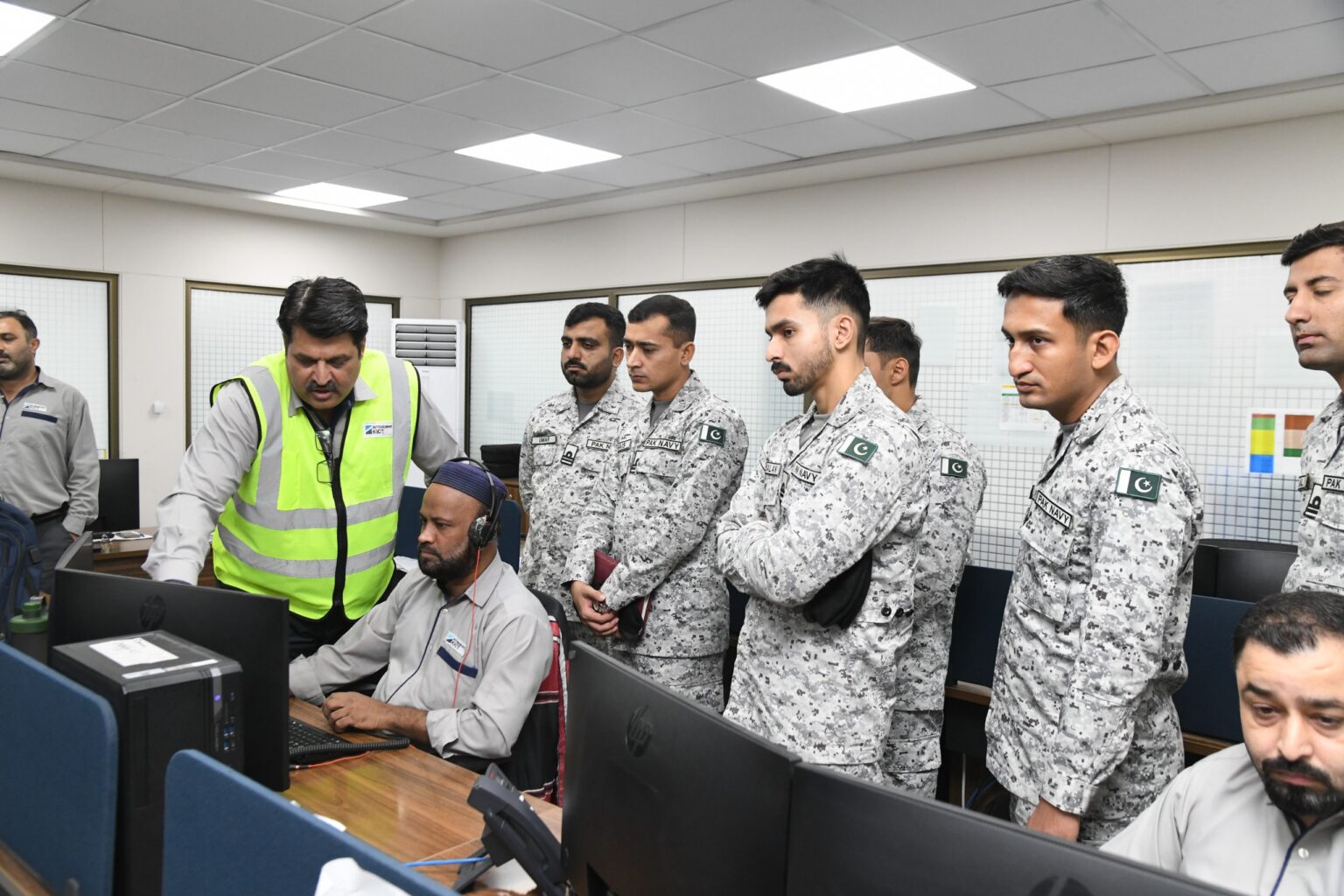
The development came during a visit by a delegation of eight officers undergoing the First Advance ND Course at PNS Bahadur, who visited KICT at Karachi Port Trust on Friday to gain practical insight into modern container terminal operations, cargo handling procedures and port management practices.
During the visit, KICT Chief Commercial Officer Aamir Aziz and Chief Operating Officer Ben briefed the delegation on the terminal’s operational framework, international connectivity linkages and its network of clients and terminals being remotely managed from Pakistan.
The briefing highlighted how port-related operational activities can be coordinated through centralized management systems, extending the role of Pakistan-based professionals beyond domestic maritime operations.
The officials also discussed KICT’s direct engagement with Jia Bagga Dry Port, particularly in container transportation and scrap-handling operations, highlighting the importance of inland logistics connectivity in supporting seaport activities.
The integration of seaports with inland cargo facilities plays an important role in facilitating the movement of goods, improving supply-chain coordination and supporting international trade. Efficient connectivity between container terminals and dry ports can also help businesses manage transportation requirements and cargo distribution more effectively.
The naval delegation subsequently visited the berth area, where officers observed vessel-handling activities and cargo movement. They also toured the terminal’s Operations Room to examine the planning, coordination and operational management systems used to facilitate container handling.
The visit provided the officers with practical exposure to the commercial and logistical dimensions of maritime operations, including the relationship between port infrastructure, shipping activities and wider supply chains.
The growing importance of technology, operational coordination and international connectivity has made modern container terminals an essential component of global trade infrastructure. Their efficiency directly influences cargo movement, shipping schedules and the competitiveness of national trade networks.
For Pakistan, strengthening port-management capabilities and developing efficient connections between seaports and inland logistics facilities remain important to improving maritime trade competitiveness.
The visit also provided an opportunity for naval officers to understand the operational requirements of commercial ports, where efficient vessel handling, cargo management and logistics coordination are central to facilitating maritime commerce.
KICT’s briefing on remotely managed international terminal operations offered a particular insight into the expanding role of Pakistan-based management capabilities in the global maritime logistics network.