
Six percent of State Life properties encroached upon, Senate panel demands GPS audit
KARACHI (News Desk): Around 6% of the real estate owned by the State Life Insurance Corporation of Pakistan (SLIC) is reportedly under illegal occupation, prompting a Senate committee to demand a comprehensive, GPS-mapped audit of the corporation’s properties and stronger measures to recover disputed public assets.
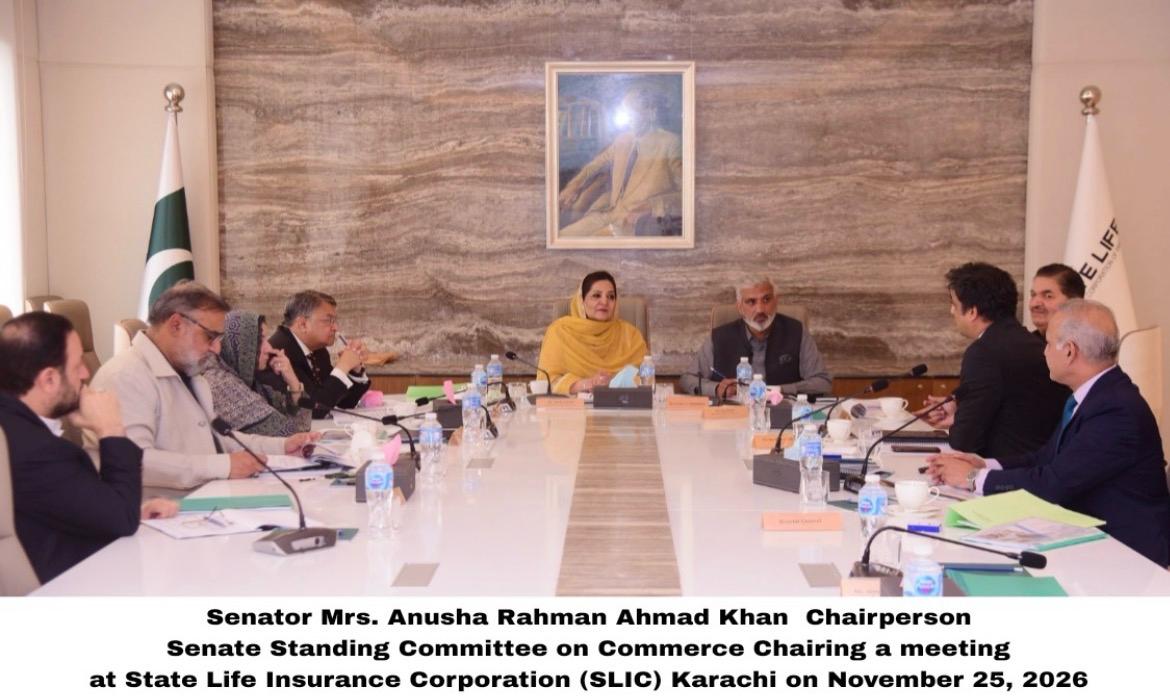
The issue came under scrutiny during a visit by the Senate Standing Committee on Commerce, chaired by Senator Anusha Rahman Ahmad Khan, to State Life’s offices in Karachi on Wednesday. The committee reviewed the corporation’s property disputes, encroachments, housing schemes and pending litigation.
During the briefing, SLIC officials informed the committee that approximately 6% of its real estate was illegally occupied. They attributed delays in resolving several disputes to court stay orders and prolonged legal proceedings.
The corporation also offered to work with local authorities and affected communities to resolve overlapping property boundaries through official re-measurement and demarcation.
However, the committee expressed concern over the slow pace of resolving property disputes and the need for more effective communication with the public. It stressed that government-owned properties represent valuable national assets and should not remain occupied, neglected or economically unproductive.
In a significant intervention, the committee directed State Life to provide a comprehensive register of all properties owned by the corporation and arrange independent, GPS-based inspections of every disputed property.
It also called for direct coordination with local land revenue authorities and communities to resolve boundary disputes and establish the legal status of contested properties.
The committee further sought a detailed report on housing projects, complaints lodged by property allottees and disciplinary or legal action taken against developers found violating contractual or regulatory requirements.
During the meeting, SLIC presented details of its real estate operations, including Board approvals, competitive bidding records and independent property valuations for its housing schemes.
The corporation maintained that delays in certain projects had primarily resulted from court injunctions and non-compliance by development partners. It said contractual penalty clauses had been invoked against developers defaulting on their obligations to protect institutional interests.
The briefing also covered reforms in property leasing and litigation management. SLIC informed the committee that it had introduced a centralized digital case-tracking system to monitor pending lawsuits and improve oversight of legal proceedings.
The committee also examined property-related disputes involving affected parties, including the Youhanabad matter, where property losses and legal discrepancies have reportedly resulted in litigation.
Senator Anusha Rahman emphasized that public properties must be protected through transparent management, regular monitoring and timely enforcement. She stressed that institutional assets should generate economic value rather than remain tied up in prolonged disputes.
The committee’s demand for GPS mapping and a comprehensive property inventory could provide a clearer picture of State Life’s real estate holdings, the extent of disputed ownership and the challenges preventing the recovery of occupied land.
The key test, however, will be whether the proposed audit translates into actual recovery of public assets, resolution of housing disputes and accountability for developers and other parties responsible for contractual violations.