
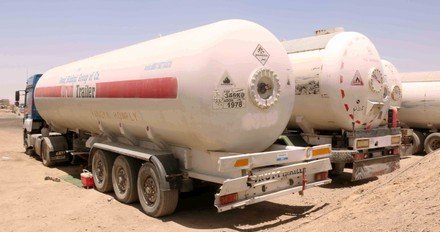
Iran LPG supply resumes after 7 Days, prices to drop to Rs500/kg
KARACHI (Staff Report): In a major relief for consumers reeling under skyrocketing Liquefied Petroleum Gas (LPG) prices, the supply of Iranian LPG through the Gabd border has resumed after remaining suspended for over a week.
Senior Vice Chairman of the Pakistan LPG Marketers Association, Ali Haider, in a video statement issued on Saturday, confirmed that LPG consignments from Iran have started arriving from today, which will help stabilize the local market that has been facing severe shortage and price manipulation.
“There is good news for consumers, the supplies from Gabd border, will start being received from today which had been stopped for the last seven to eight days,” Ali Haider said.
He added that the clearance process for the Iranian LPG tankers has commenced and the imported gas will be available in the open market by Monday.
According to market sources, LPG prices in Karachi have surged to an unprecedented level of Rs530 to Rs550 per kilogram over the last 10 days due to the disruption in supply from Iran and increased demand ahead of winter. This is almost Rs200 per kg higher than the OGRA-notified price.
Ali Haider expressed hope that with the resumption of supplies, retail prices in Karachi will come down to Rs500 per kg within the next two to three days.
“Prices which are currently running at an average of 530 to 550 rupees per kg in Karachi city will come down to 500 rupees. As soon as these supplies start coming regularly, these prices will come down rapidly,” he said.
Pakistan meets nearly 60-70% of its LPG demand through imports, with a significant portion coming from Iran via the Gabd-Rimdan border crossing in Balochistan. Any closure or delay at this border immediately creates a crisis in the domestic market, particularly in Karachi, Quetta, and interior Sindh, where LPG is the primary cooking fuel for millions of households not connected to the Sui gas network.
Traders said that around 200-300 LPG tankers were stranded on the Iranian side due to administrative and clearance issues, which led to hoarding and black-marketing by local mafia, pushing prices to record highs.
Appeal to Government
While announcing the resumption, the LPG Marketers Association SVP made a strong appeal to the federal government to take emergency measures in view of the ongoing geopolitical crisis in the Persian Gulf.
He urged the government to exempt state-owned entities like Sui Southern Gas Company (SSGC), Pak-Arab Refinery Company (PARCO), and Pakistan State Oil (PSO) from the strict Public Procurement Regulatory Authority (PPRA) rules so they can import LPG on an urgent basis without bureaucratic delays.
“We appeal to the government through the Pakistan LPG Market Association that as long as the clouds of war are hovering over the Gulf and there is uncertainty, you should free SSGC, PARCO, PSO from PPRA rules and the local PDL implementation on local LPG in the LPG policy and subsidize them so that abundant cheap gas can come,” Ali Haider demanded.
He warned that if the supply system is not fixed immediately, Pakistan will face a severe LPG crisis in the upcoming winter season, when demand increases by 40-50% for heating purposes in northern areas.
Ali Haider also criticized the Oil and Gas Regulatory Authority’s (OGRA) monthly price notification mechanism, saying it has lost its relevance in the current volatile international market.
“As long as the situation in the Persian Gulf does not become normal, we need that the determination of LPG prices should not be done on a daily basis, but at least once a week. This monthly notification has lost its time,” he said.
Industry experts support the demand for weekly pricing. Global LPG prices, driven by the Iran-US tensions and soaring oil tanker freight rates which have hit an all-time high of $280,000 per day, are fluctuating wildly. A monthly fixed price in Pakistan does not reflect the ground reality and creates room for black marketing.
The LPG Marketers Association also demanded that the government reduce the Petroleum Development Levy (PDL) and other taxes on locally produced LPG to encourage local refineries to increase production and keep prices affordable for the common man.
Consumers in Karachi and other major cities have welcomed the news but remain skeptical until prices actually drop on the ground. The association has assured that monitoring teams will be active to prevent hoarding once fresh supplies hit the market.
If the Iran supply remains consistent and the government accepts the association’s demands, consumers can expect further reduction in LPG prices in the coming weeks, providing much-needed relief amid high inflation and geopolitical uncertainty.