
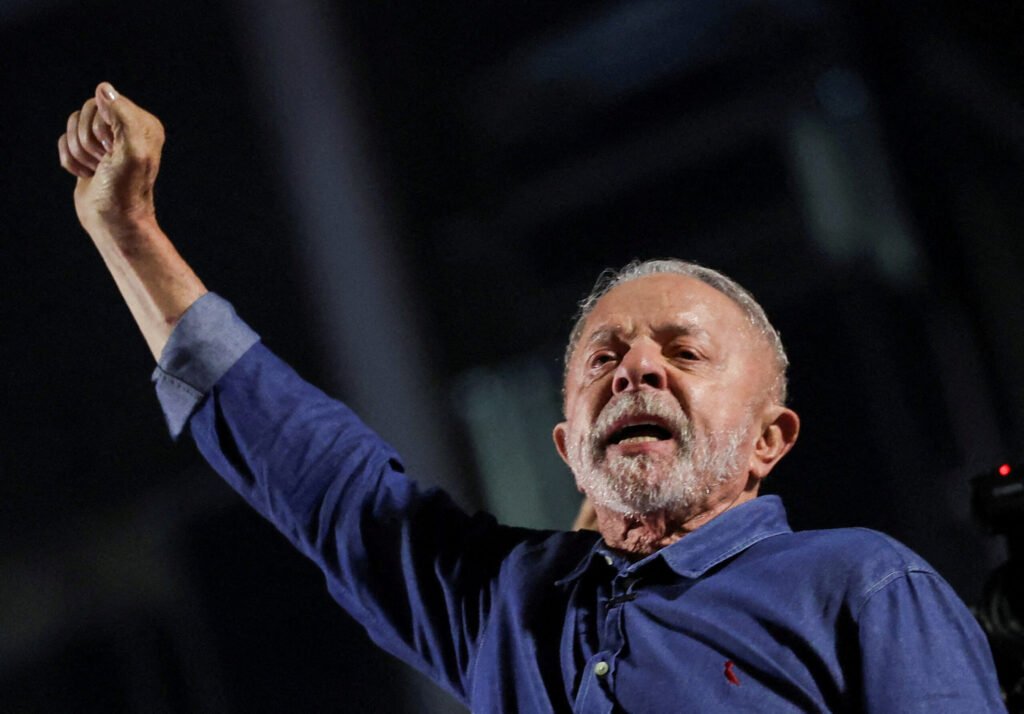
The resilient phoenix: How Lula da Silva redifined global left-wing politics
TKP Feature:
On the international stage of modern geopolitics, few figures command as much polarizing reverence and enduring fascination as Luiz Inácio Lula da Silva. As the President of Brazil celebrates his 81st birthday, his journey stands not just as a personal triumph over adversity, but as a masterclass in political survival. From a deeply impoverished childhood in the northeast of Brazil to becoming a foundational pillar of the Global South, Lula has rewritten the rules of populist leadership and left-wing diplomacy.
Born on October 27, 1945, in the arid hinterlands of Caetés, Pernambuco, Lula’s early life was defined by the harsh realities of working-class struggle. A former metalworker and trade union leader who lost a finger in a factory accident, he rose to prominence during the late 1970s by leading massive strikes against the military dictatorship.
This grassroots activism laid the groundwork for the creation of the Workers’ Party (PT). His early political career was marked by three unsuccessful presidential bids, campaigns that would have permanently discouraged a lesser politician. Yet, these defeats only sharpened his pragmatism, eventually leading to his historic presidential victory in 2002.
Lula’s first two terms (2003–2010) are widely regarded as a golden era for Brazil. By combining market-friendly economic policies with sweeping social welfare initiatives, most notably the highly acclaimed Bolsa Família program, his administration lifted over 20 million Brazilians out of absolute poverty. Brazil’s economy boomed, propelled by a global commodities super-cycle, transforming the nation into the “B” in the BRICS economic bloc.
By the time he left office in 2010, he boasted an unprecedented 87 percent approval rating, with former U.S. President Barack Obama famously calling him “the most popular politician on Earth.”
However, the political trajectory of Lula is distinct because it is defined by a dramatic fall and a spectacular resurrection. In 2017, amid the sweeping “Operation Car Wash” corruption investigation, he was convicted on controversial charges and spent 580 days in prison. His political obituary was written globally, and Brazil shifted sharply to the right under Jair Bolsonaro.
Yet, in a stunning turn of events, the Supreme Federal Court annulled his convictions in 2021, ruling that the presiding judge had been biased. Vindicated, Lula staged an improbable political comeback, narrowly defeating Bolsonaro in the tense 2022 election to secure a non-consecutive third term.
Today, Lula’s third presidency presents a vastly different challenge than his earlier terms. He governs a deeply polarized nation, facing a powerful right-wing opposition and a more fragile global economy. Despite these domestic headwinds, his focus remains squarely on restoring Brazil’s environmental credentials—particularly through aggressive protections for the Amazon rainforest—and championing the interests of developing nations on the global stage.
For readers in Pakistan and the wider Global South, Lula’s political philosophy offers crucial insights. He has long advocated for a multipolar world order, balancing relationships with Western powers while strengthening ties within the BRICS framework.
His diplomatic agility allows him to maintain open channels with Washington while simultaneously deepening strategic partnerships with Beijing and Moscow. This pragmatic approach underscores his belief that developing nations must forge independent paths rather than aligning blindly with superpower blocs.
As Lula da Silva enters his 82nd year, his legacy remains dynamic and actively unfolding. He continues to prove that political resilience is not merely about surviving defeats, but about the capacity to reinvent oneself to meet the demands of a changing era. For Brazil and the international community, the veteran statesman remains an indispensable, unavoidable force in shaping twenty-first-century global politics.