
Pakistan Halal Industry to adopt blockchain, AI, QR traceability for global market access
KARACHI (Staff Report): Pakistan’s Halal industry is set to embrace cutting-edge technologies including blockchain verification, QR-code traceability and AI-based audits to meet international standards and capture a larger share of the $3 trillion global Halal economy.
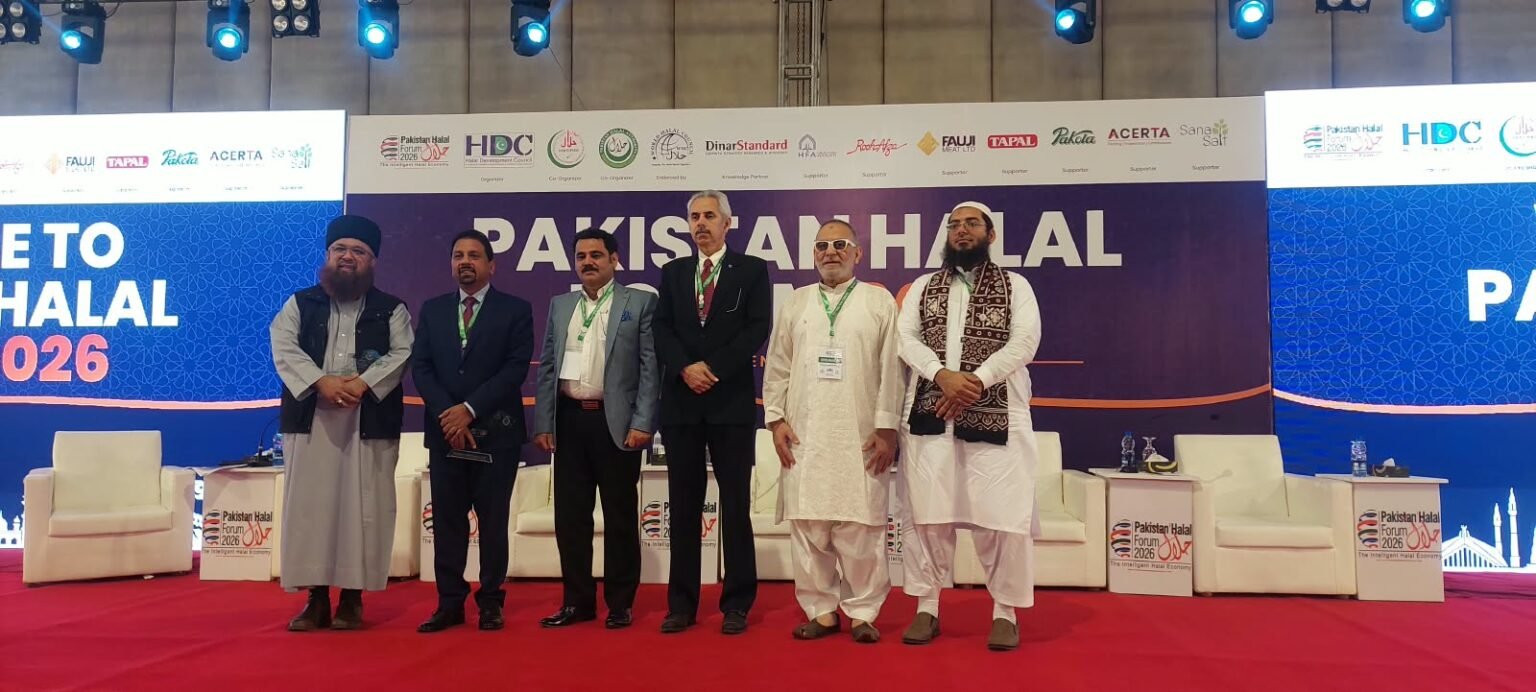
The technology-driven roadmap was unveiled at the landmark 1st Pakistan Halal Forum 2026, which concluded successfully on Saturday at the Pearl Continental Hotel, Karachi, under the theme “The Intelligent Halal Economy.”
Organized by the Halal Development Council (HDC), co-organized by Pakistan Halal Authority (PHA) and International Halal Certification (IHC), with DinarStandard as Knowledge Partner and endorsed by the World Halal Council (WHC), the forum marked Pakistan’s first dedicated platform for the global Halal industry.
The day-long forum featured keynote addresses, panel discussions, B2B networking, certification insights and growth strategies covering Halal Food, Pharma, Cosmetics, Modest Fashion, Halal Tourism, Logistics, Islamic Finance, and Technology-driven traceability.
Speaking on the occasion, organizers said Pakistan, despite being home to the world’s second-largest Muslim population, holds less than 1% share in the global Halal economy. The Forum aims to transform this challenge into a $40-50 billion export opportunity.
Mr. Asad Sajjad, Chairman, Halal Development Council, said, “This forum is not just an event, it is the beginning of positioning Pakistan as a Global Halal Hub. Our focus is on public-private partnership, innovation and export facilitation to connect Pakistani businesses with buyers in GCC, Malaysia, Indonesia and beyond.”
Highlighting the technology shift, Mufti Zeeshan Abdul Aziz, CEO International Halal Certification, said Halal is no longer just a religious concept but a global benchmark for quality, hygiene and safety. He said modern consumers, both Muslim and non-Muslim, demand transparency and authenticity, which can only be ensured through technology.
“QR-code traceability, Blockchain verification and AI-based audit are now driving the Halal economy worldwide. Through globally accepted certification, we will help Pakistani products gain international market access and build trust among global buyers,” he said.
He explained that blockchain technology will allow end-to-end traceability from farm to fork, enabling consumers in markets like Saudi Arabia, UAE and Malaysia to scan a QR code and verify the entire Halal supply chain, including sourcing, slaughtering, processing and logistics. AI-based audits will help make certification faster, more transparent and less prone to human error.
Representatives from DinarStandard, the global knowledge partner for the forum, shared insights on the Halal lifestyle economy, noting that the world is increasingly looking at Pakistan for authentic Halal sourcing. They said the global Halal economy is expanding beyond food into pharmaceuticals, cosmetics, modest fashion, travel and Islamic finance, all driven by a young, tech-savvy Muslim population.
Pakistan’s current Halal exports are largely limited to raw materials such as meat and low-value products. The Forum proposed a shift from raw material exports to value-added, certified products, supporting SMEs and establishing ‘One National Halal Mark, One Standard’ to avoid confusion and enhance credibility in international markets.
The Forum also proposed dedicated Halal Economic Zones, SME support programs, common facility centers for certification and investment facilitation for Halal industries. B2B meetings were held on the sidelines to connect Pakistani exporters with potential buyers and investors from GCC, Malaysia and Indonesia.
The organizers announced that Pakistan Halal Forum will be made an annual platform to track progress, facilitate policy reforms and promote Pakistan as a credible Halal hub.
The event was attended by industry leaders, exporters, regulators, Shariah scholars, SMEs and international delegates from the Halal food, pharma, cosmetics and logistics sectors.
Experts at the forum said with adoption of intelligent Halal systems, Pakistan cannot only increase its export earnings but also create jobs, attract foreign investment and strengthen its soft image as a leader in the global Halal economy.