
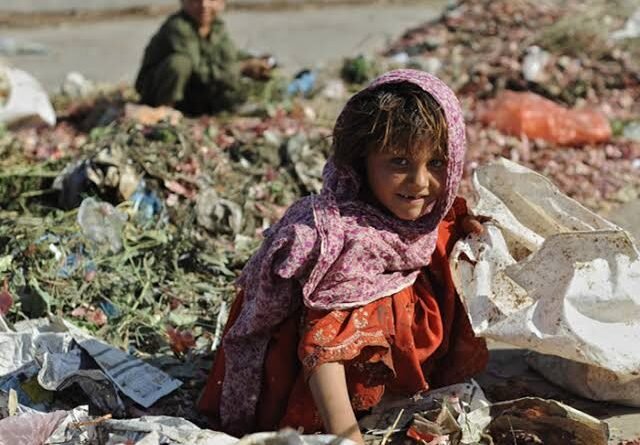
‘Big claims, empty plates’: Pakistan’s hunger reality
Pakistan’s hunger crisis has deepened to a “serious” level, with the country ranking 106th out of 122 countries in the Global Hunger Index (GHI) 2026, with a score of 25.5, behind Bangladesh, India, Nepal and Sri Lanka.
According to the report released by Concern Worldwide and Welthungerhilfe, Pakistan is one of only two countries in South Asia where hunger has worsened since 2018. The country’s score deteriorated by 6.3% from 24.0 in 2018 to 25.5 in 2026.
The most alarming figure is undernourishment, which has jumped from 10.9% in 2018 to 16.1% in 2026. This means one in six Pakistanis is not getting enough calories to lead a healthy life.
Child wasting, an indicator of acute malnutrition, has also increased from 7.1% to 9.8% during the same period. While child stunting improved from 38.1% to 33.6%, it still affects one in three children in the country.
A ground check by The Karachi Post in Jodia Bazaar, Lea Market and Liaquatabad Market reveals why the numbers are worsening on the ground.
Traders say a monthly ration that cost Rs. 12,000 in 2018 now costs over Rs. 28,000 for a family of five. Families are cutting milk, meat and pulses first. A worker cannot even afford an egg for the breakfast.
“The customers would buy 5 kg pulses back then; now they prefer 1 kg and sometimes even half,” said a retailer at Liaquatabad Market.
In Pakistan, packaged and cartoned milk is also subject to 18 percent GST. Parents in Akhtar Colony area said they have reduced milk for children from daily to twice a week due to prices crossing Rs. 220 per litre.
The report places Pakistan far behind its regional peers. Bangladesh ranks 84th with a score of 19.2, Nepal 72nd with 14.5, Sri Lanka 53rd with 10.2, and India 100th with 24.1. Only Afghanistan ranks lower than Pakistan at 108th.
Experts attribute Pakistan’s worsening food security to three factors: prolonged economic instability, sharp food price inflation, and climate-related disruptions.
The report notes that heavy monsoon rains and flash floods in 2025 affected more than 6 million people and damaged agricultural land and infrastructure, disrupting supply chains that feed Karachi, the country’s largest consumer market.
Iran conflict-related fertilizer and fuel price shocks have also increased input costs for farmers, a cost that is ultimately passed to Karachi’s consumers.
With South Asia’s average hunger score at 23.5, Pakistan’s 25.5 puts it above the regional average, raising serious questions about food security policy and urban supply chain management.