
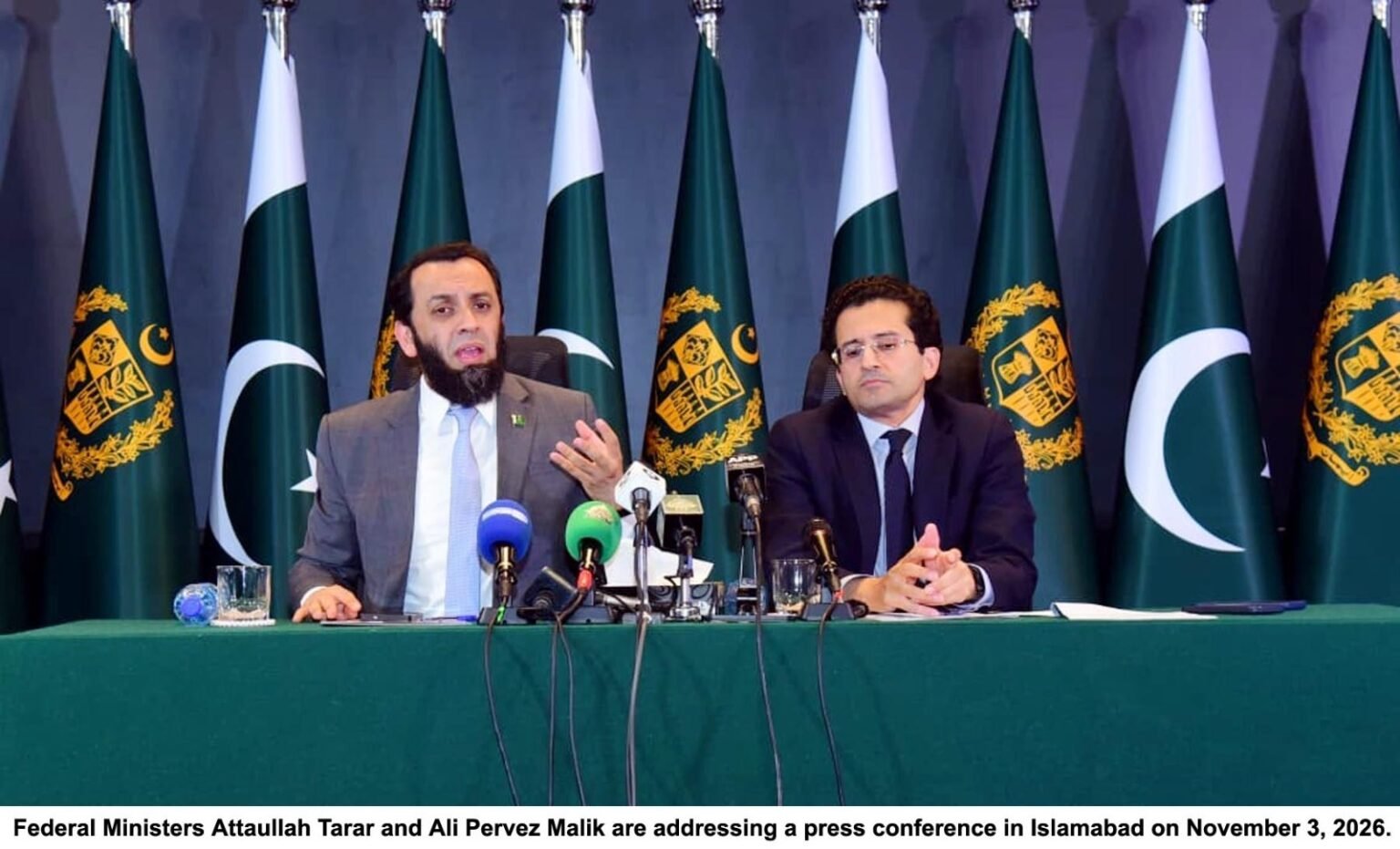
Govt to introduce new LPG import, pricing and distribution mechanism
ISLAMABAD (Agencies): The government is introducing a new transparent mechanism for the import, pricing and distribution of liquefied petroleum gas (LPG), under which state-owned companies will import the fuel in bulk while special funds will be established to provide subsidised supplies to deserving consumers.
Federal Minister for Petroleum Ali Pervaiz Malik announced the proposed reforms while addressing a press conference alongside Minister for Information and Broadcasting Attaullah Tarar on Tuesday.
The petroleum minister said the government had directed Pakistan State Oil (PSO), Sui Southern Gas Company’s LPG subsidiary and Pakistan LNG Limited to arrange bulk LPG purchases through government-to-government (G2G) and business-to-business (B2B) agreements.
He said private importers would also be encouraged to participate, adding that the government would welcome companies capable of supplying LPG at prices lower than those offered by state-owned entities. He also referred to PARCO Pearl Gas in this regard.
Explaining the market situation, Malik said Pakistan’s annual LPG demand stood at approximately 2.4 million tonnes, with daily consumption ranging between 6,500 and 7,000 tonnes. Domestic production was around 2,000 to 2,500 tonnes per day, while the remaining requirement was met through imports.
He said the country had traditionally received a significant portion of its imported LPG through the western border, with the remainder arriving by sea. Engro and Sui Southern Gas Company operate LPG import terminals with a combined storage capacity of approximately 14,000 tonnes.
The minister said Saudi Aramco’s Contract Price (CP) had increased from $540 per tonne in March to $756 per tonne recently. Under the existing pricing mechanism, the Oil and Gas Regulatory Authority (OGRA) adjusts domestic LPG prices in line with international benchmarks.
However, he said the 2016 LPG policy relied on Saudi CP and free-on-board (FOB) prices without adequately incorporating import-related expenses, despite imports accounting for nearly 70 per cent of the country’s requirements.
Malik said importers were currently paying an additional premium of $300 to $400 per tonne in the spot market. After including freight and other expenses, the landed cost of imported LPG could reach approximately Rs450 to Rs500 per kilogram.
To improve transparency, the government will publish monthly details of Saudi Aramco’s CP, premiums, freight and other import-related expenses on the websites of relevant state-owned companies.
Under the proposed distribution mechanism, domestic LPG supplies will be auctioned in lots of five and 10 tonnes, with auction results made public. The process will be supervised by the petroleum secretary, OGRA chairman and boards of the relevant companies, while supplies will be distributed through OGRA-licensed distributors.
The government will also implement the existing 10 per cent allocation for difficult and remote areas. State-owned companies will procure this quota from domestic producers and identify eligible districts in consultation with provincial chief secretaries.
The minister said proceeds exceeding producers’ FOB prices through the auction mechanism would be transferred to a Price Stabilisation Fund and a Vulnerable Protection Fund.
Eligibility criteria for subsidised LPG would be developed in consultation with the Ministry of Energy, provincial governments and relevant institutions. Subject to the prime minister’s approval, the government could fix subsidised prices at Rs300 or Rs400 per kilogram or provide a direct subsidy of Rs50 per kilogram to deserving consumers.
He said the Competition Commission would help prevent market collusion and artificial price increases, while OGRA would improve licensing transparency and audit storage facilities to discourage hoarding and profiteering. The regulator would also oversee cylinder and bowser standards, safety measures and the introduction of a track-and-trace system.
Addressing winter gas shortages, Malik said Pakistan had approximately 10 million gas connections, while a significant number of consumers outside the pipeline network depended on LPG.
He warned that meeting winter demand through the pipeline network could require expensive fuels or imported LNG, potentially necessitating supply restrictions. However, he said the government would try to ensure gas availability for domestic consumers during all three daily cooking times.
The minister said the country also needed to strengthen its storage capacity, refineries and LPG supply chain to improve long-term energy security. He noted that international LPG transportation was shifting from pressurised containers towards refrigerated and cryogenic cargo, requiring large Very Large Gas Carriers (VLGCs) and specialised receiving and storage infrastructure.
Malik expressed hope that the benefits of the new mechanism would reach consumers before the winter season, helping establish a more transparent and sustainable energy supply system.