
Pakistan plans shift from raw mineral exports to domestic processing
ISLAMABAD (News Desk): Prime Minister Shehbaz Sharif has called for a fundamental shift in Pakistan’s mineral export strategy, urging investors to establish domestic processing and manufacturing facilities instead of exporting the country’s mineral resources in raw form.
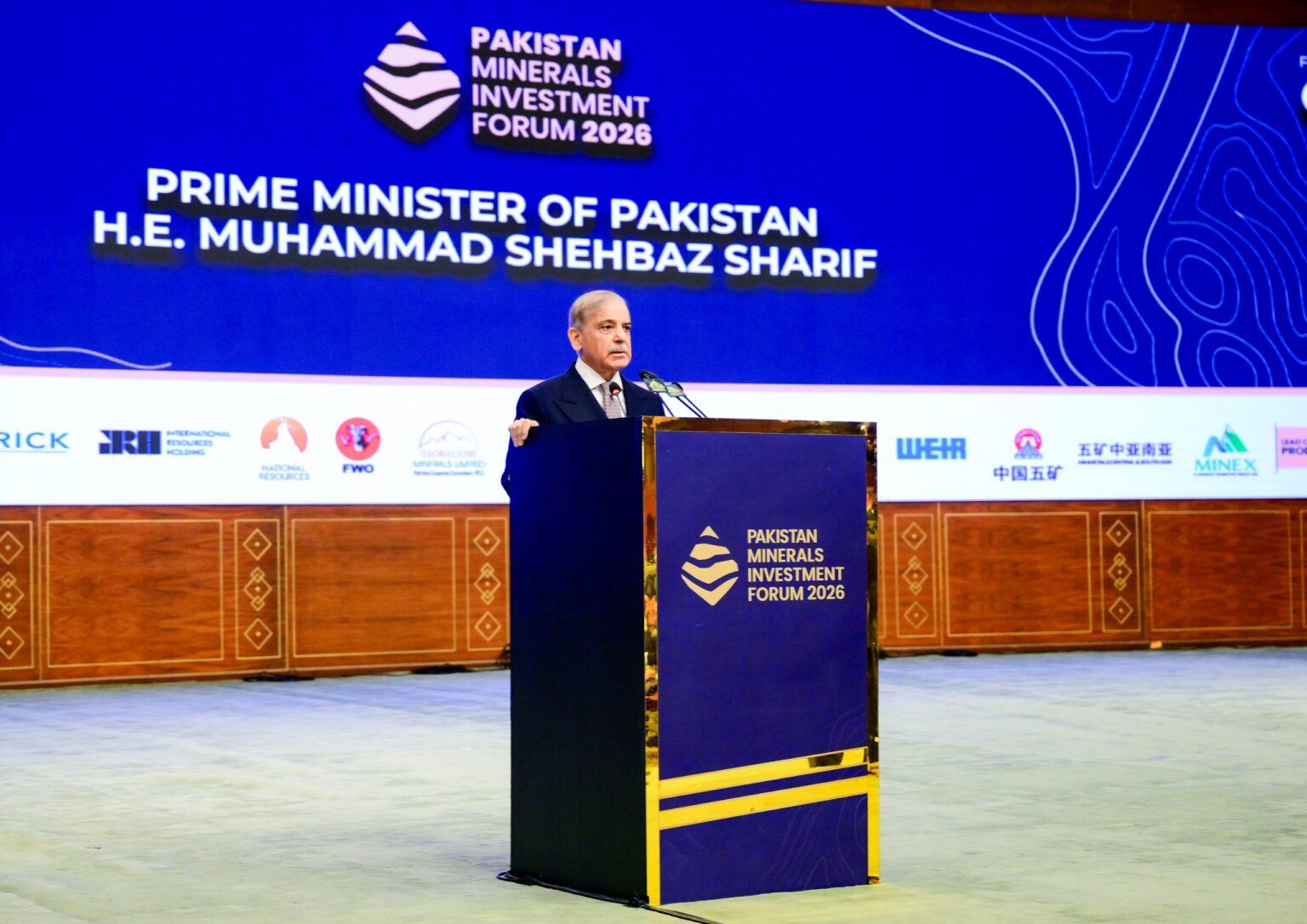
Addressing the Pakistan Minerals Investment Forum 2026 on Friday, the prime minister said Pakistan must move towards value addition by strengthening downstream industries and converting its mineral wealth into greater economic opportunities within the country.
He stressed that the practice of exporting valuable minerals without processing them should come to an end, adding that Pakistan’s natural resources must become a foundation for domestic industrial development rather than remain limited to raw material exports.
The prime minister urged international investors to extend their participation beyond mineral extraction and establish processing and manufacturing facilities in Pakistan.
He said the government wanted investors to undertake mining, processing and manufacturing activities locally before exporting mineral products to international markets.
The proposed shift is aimed at increasing the economic benefits generated from Pakistan’s mineral resources, strengthening local industries and creating employment opportunities through industrial development.
Highlighting the potential of the Reko Diq project and other deposits in the Tethyan Copper Belt, Shehbaz Sharif said these projects should contribute to the establishment of refineries, cement plants and industries manufacturing cables and conductors.
He said mineral resources should be converted into finished and semi-finished products within Pakistan to ensure that the country captures greater economic value from its natural wealth.
The prime minister expressed confidence that the time was approaching when Pakistan would completely end the export of raw minerals, with its mineral resources instead supporting domestic industrial expansion.
He described this approach as part of the government’s vision for fair and mutually beneficial partnerships with international investors.
The emphasis on domestic processing comes as Pakistan seeks to attract foreign investment into its mining sector and utilize its extensive deposits of copper, gold and other valuable minerals.
The prime minister specifically highlighted Reko Diq, describing it as one of the world’s largest undeveloped copper and gold deposits.
He said production at the project was expected to begin in 2028 after remaining stalled for nearly two decades, adding that the project was now moving towards the implementation stage.
According to the prime minister, successful development of Reko Diq and other mineral projects could provide a foundation for wider industrial investment, particularly in sectors linked to mineral processing and manufacturing.
He also stressed that investment in mining must be accompanied by technology transfer, professional training, development of local suppliers and the creation of a skilled workforce.
The prime minister said these measures were essential to convert mining investment into sustainable economic development and ensure that domestic businesses and workers benefited from the expansion of the sector.
He urged international investors to establish long-term partnerships with Pakistan and contribute to developing local industrial capabilities rather than limiting their involvement in extracting and exporting natural resources.
Reaffirming the government’s commitment to facilitating foreign investment, Shehbaz Sharif said administrative procedures would be simplified, bureaucratic obstacles removed and transparent policies ensured to create a more favourable investment environment.
He acknowledged the importance of attracting international investors and strengthening cooperation between the government and private sector to develop Pakistan’s mineral potential.
The prime minister also appreciated Field Marshal Syed Asim Munir, Federal Minister for Petroleum Ali Pervaiz Malik and their teams for their efforts in organizing the Pakistan Minerals Investment Forum and bringing international investors and relevant stakeholders onto a common platform.
He said their efforts had helped place mineral resources at the centre of Pakistan’s broader economic vision.
The government’s proposed strategy represents an attempt to link mineral extraction with domestic manufacturing, employment generation and industrial expansion. However, its implementation will depend on investment in processing infrastructure, technology, skilled labour and the development of downstream industries.
For Pakistan, the challenge will be to translate its substantial mineral potential into a broader industrial base capable of generating greater domestic economic value.
Really appreciated the systematic breakdown presented in “pakistan plans shift from raw mineral exports to”. Looking forward to reading more of your insightful perspectives and follow-up work on this topic!