
Pakistan Sets Rs1trn housing loan target as disbursements reach Rs112bn
ISLAMABAD (Agencies): Pakistan has set a target of distributing Rs1 trillion in housing loans over the next six months under the Prime Minister’s Apna Ghar Programme, as the government seeks to accelerate affordable housing finance and expand homeownership opportunities for low- and middle-income families.
Prime Minister Shehbaz Sharif on Monday directed commercial banks to speed up loan approvals and remove unnecessary procedural hurdles, emphasizing that political recommendations, favouritism and delays in legitimate applications would not be tolerated.
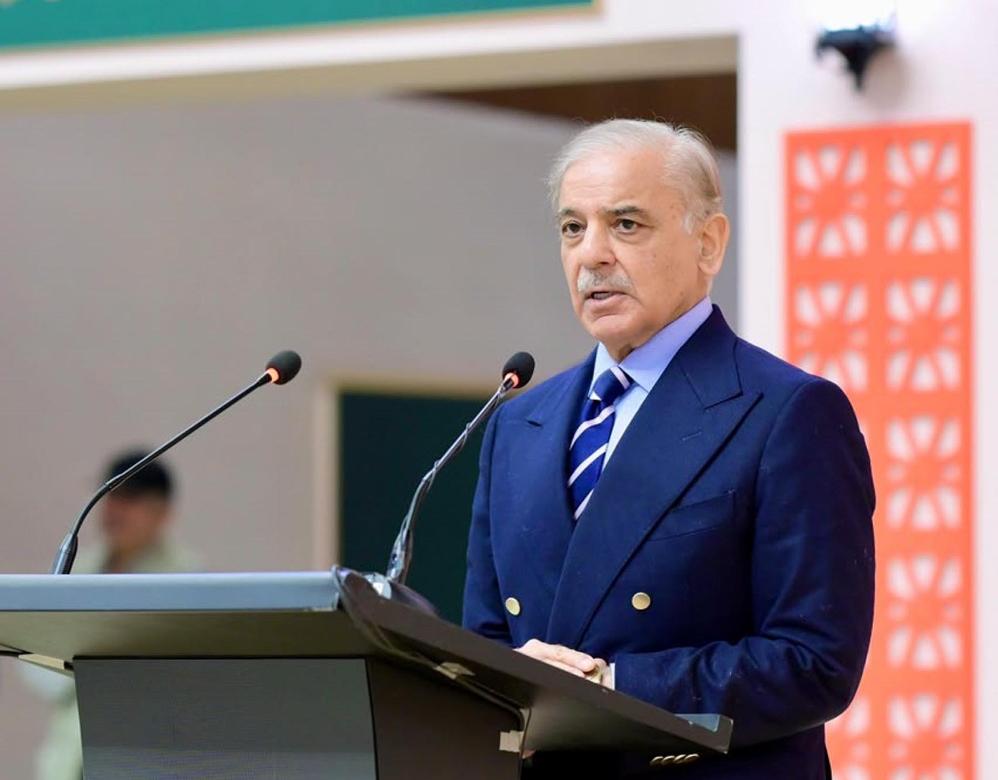
Addressing a ceremony marking the disbursement of more than Rs100 billion under the programme, the prime minister said the initiative had already facilitated thousands of families but required faster implementation to achieve its next financing milestone.
According to figures shared at the ceremony, approximately Rs112 billion has been disbursed for around 19,000 families since the programme’s launch in April 2026. Meanwhile, housing loans worth approximately Rs560 billion have been approved by participating banks.
The prime minister said the government wanted to accelerate disbursements and achieve the Rs1 trillion target within the next six months. He directed the finance ministry, Ministry of Housing and Works, State Bank of Pakistan and commercial banks to work together to remove obstacles affecting the financing process.
He stressed that the programme was intended primarily for workers, widows, orphans, farmers, middle-income households and financially disadvantaged families rather than affluent sections of society.
Sharif said providing housing to deserving families was a national responsibility and that access to financing should be determined by eligibility and merit rather than political affiliation or personal connections.
He also instructed banks to reject inappropriate recommendations, including those originating from the highest government offices, maintaining that public welfare financing should reach eligible applicants without discrimination.
The prime minister acknowledged that banks had initially been reluctant to extend substantial financing to the housing sector, partly because investments in government treasury bills and other public instruments offered attractive returns.
He said the programme had demonstrated progress in encouraging banks to participate in housing finance and called for further expansion of their lending activities.
To accelerate processing, Sharif identified clear and undisputed property ownership documents as a fundamental requirement for housing loans. However, he suggested that other documentation and procedural requirements could be simplified through dedicated facilitation desks at participating banks.
He also directed that an immediate meeting be arranged between the Association of Builders and Developers (ABAD), the State Bank, commercial banks and the construction industry to improve coordination and utilise the sector’s capacity.
Finance Minister Muhammad Aurangzeb said approximately Rs112 billion had been disbursed to 19,000 families, while banks had approved financing worth around Rs560 billion.
He said the programme covered all provinces as well as Gilgit-Baltistan and Azad Jammu and Kashmir, allowing eligible applicants in major cities and smaller towns to access housing finance.
Housing Minister Mian Riaz Hussain Pirzada said the programme was being implemented through coordination between the government, the finance ministry, the housing ministry and commercial banks, with an emphasis on transparency, merit and faster processing.
The construction industry has also reported increased activity associated with the initiative.
ABAD Chairman Hanif Gohar said the association’s approximately 1,500 members were connected with the programme through housing and residential development projects.
He said demand for houses and apartments in Karachi had increased under the scheme and claimed that previously available residential inventory held by ABAD members had been sold.
Gohar also said that 75,000 applications had been approved by the State Bank, while the prime minister had set a target of 125,000 houses.
The reported increase in housing demand could provide opportunities for developers and allied industries, including cement, steel, construction materials and building services. However, the extent of the economic impact will depend on the conversion of financing approvals into actual construction and completed residential units.
The programme’s next phase will therefore place pressure on banks to accelerate legitimate loan disbursements while maintaining appropriate credit assessment and property verification standards.
The prime minister also announced recognition for five participating banks — United Bank Limited, Habib Bank Limited, Bank Alfalah, Meezan Bank and Mobilink Microfinance Bank — for their contribution to housing finance under the initiative.
The government is now seeking to move the programme beyond its initial financing milestones, with the next six months expected to test the banking sector’s ability to translate approved housing loans into actual disbursements and expand access to homeownership across the country.