
Pakistani elite’s privileges exceed BISP spending threefold
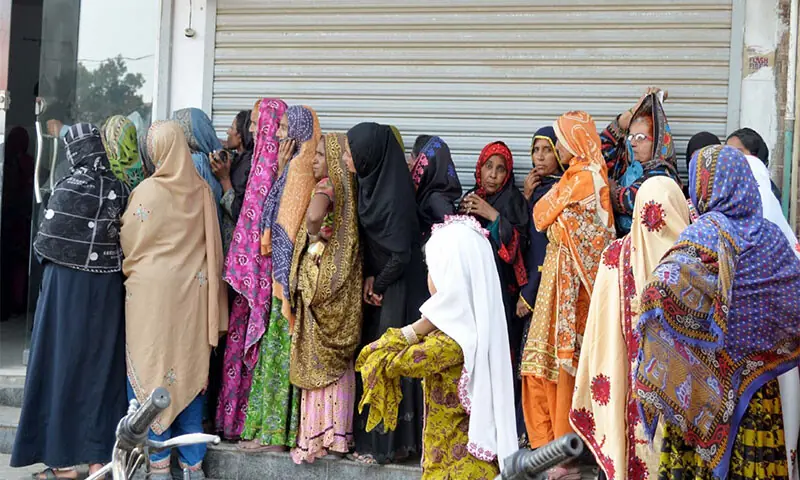
KARACHI (News Desk): The estimated privileges enjoyed by Pakistan’s powerful economic groups amounted to Rs2,660 billion, more than three times the government’s annual allocation for the Benazir Income Support Programme (BISP), renewing questions over the distribution of public resources and the country’s approach to poverty alleviation.
The disparity was highlighted at a seminar organized by the Pakistan Women’s Foundation for Peace (PWFFP), titled Breaking the Paradox of Elite Capture: Subsidizing the Rich and Borrowing to Feed the Poor, where leading economists questioned an economic structure that continues to provide substantial benefits to influential groups while millions of people depend on government assistance.
According to the UNDP’s National Human Development Report 2020, the privileges enjoyed by powerful groups in Pakistan were estimated at approximately Rs2,660 billion in 2017-18, equivalent to around 7 per cent of the country’s GDP at the time.
In comparison, social protection expenditure stood at Rs624 billion in 2019, highlighting the significant imbalance between resources benefiting privileged groups and government spending directed towards vulnerable segments of society.
The report also found that redirecting just 24 per cent of these privileges towards poorer households could potentially double the benefits received by them.
The comparison assumes particular significance as the federal allocation for BISP increased from Rs716 billion in FY2025-26 to approximately Rs838-844 billion in FY2026-27, according to figures presented at the seminar.
The discussion raised a fundamental question about Pakistan’s fiscal priorities: why does the state continue to rely on taxation and borrowing to finance poverty alleviation while substantial economic privileges enjoyed by powerful groups remain largely unaddressed?
Former chairperson of the State Bank of Pakistan, Dr Ishrat Hussain, argued that Pakistan’s economic model had increasingly favoured a relatively narrow group of influential stakeholders rather than ensuring that the benefits of economic growth reached the wider population.
He said Pakistan had previously experienced periods of economic growth of around six per cent annually, accompanied by a reduction in poverty to below 20 per cent. However, the country’s economic trajectory had subsequently weakened.
According to Dr Hussain, successful economies including South Korea, Taiwan, Singapore, China and Indonesia adopted development models in which the benefits of economic expansion were shared more widely.
Pakistan, he argued, had followed an elitist growth model involving political leaders, senior military officials, civil servants, industrialists and religious leaders.
He maintained that the state and markets had been captured by influential groups, creating structural obstacles to competition, investment and inclusive development.
Former chief executive of Unilever Pakistan and the Pakistan Business Council, Ehsan Malik, highlighted the relationship between elite privileges and weaknesses in the country’s taxation system.
Referring to the UNDP findings, he said the estimated Rs2.7 trillion in elite privileges needed to be examined alongside the approximately Rs800 billion being spent on BISP.
He pointed out that Pakistan’s tax system remained heavily dependent on immediate revenue requirements rather than a consistent medium- and long-term policy framework.
Of approximately 3.5 million taxpayers, the top one per cent reportedly contributed around 80 per cent of income tax, while withholding and advance taxes accounted for nearly 33 per cent of income tax collection.
He also highlighted the burden of taxation at the import stage, which accounted for approximately 35 per cent of revenue collection.
Malik argued that several sectors, including agriculture, real estate, wholesale trade and transport, remained inadequately represented in the tax net, while salaried individuals continued to face regular tax deductions.
He also criticized import-substitution policies that rely on tariff protection, arguing that high duties and restrictions raise costs and allow domestic producers to maintain elevated prices.
Meanwhile, Director of the Collective for Social Science Research Dr Asad Sayeed questioned whether government subsidies were reaching their intended beneficiaries.
He said the federal government’s total subsidy bill stood at approximately Rs1.1 trillion, excluding BISP, with around Rs700 billion allocated to electricity subsidies.
He questioned the distribution of these subsidies, arguing that several support programmes benefited middle-income and better-off groups rather than exclusively targeting poorer households.
The discussion also highlighted the country’s pension expenditure, estimated at around Rs2 trillion for government employees, and raised questions about the distribution of fuel subsidies and housing support.
Dr Sayeed argued that poverty could not be sustainably reduced through spending programmes alone without stronger economic growth and a more equitable distribution of resources.
The seminar also examined the broader human development implications of economic inequality. Figures presented by PWFFP placed Pakistan’s poverty rate at 28.9 per cent according to official data, while estimates by the Social Policy and Development Centre and the World Bank indicated substantially higher levels under their respective measures.
Child stunting was cited at 40-44 per cent nationally, rising to 57 per cent among children in the poorest income quintile.
The economists called for structural reforms involving taxation, education, agriculture, financial inclusion and the distribution of public expenditure.
Dr Hussain advocated greater devolution of administrative and fiscal powers to local governments, improved support for small farmers, education reforms and broader access to credit for small businesses and young professionals.
The seminar brought together students and faculty members from nine universities, with participants questioning why Pakistan continued to rely on borrowing, why education remained unaffordable for many families and whether existing cash assistance programmes could create sustainable employment opportunities.
The debate underscored a wider challenge facing Pakistan’s economy: increasing social protection allocations may provide immediate relief, but without addressing the distribution of economic privileges, weaknesses in taxation and barriers to inclusive growth, the underlying causes of poverty are likely to persist.