
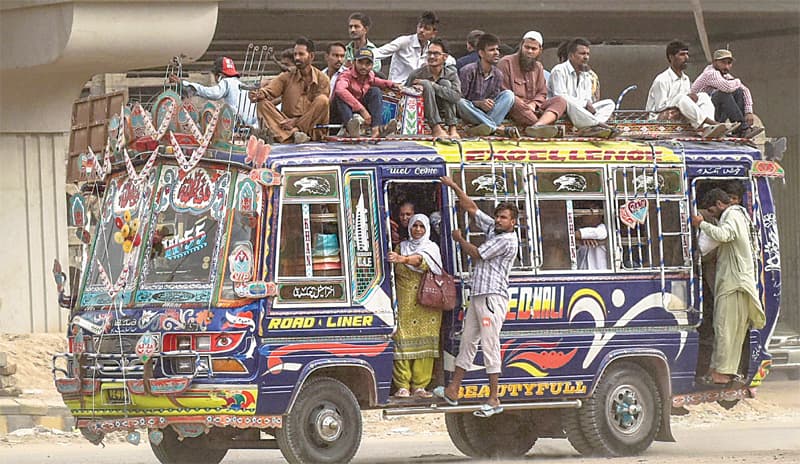
Pakistan’s auto policy prioritizes car industry over mass mobility
KARACHI (TKP Report): Pakistan’s proposed Auto Policy 2026-31 aims to transform the country’s automobile industry through tariff reductions, electric vehicle incentives and ambitious export targets, but its benefits may remain concentrated among car manufacturers and a small segment of vehicle-owning households, leaving millions of people dependent on motorcycles and public transport with limited relief.
The concern emerged during a virtual workshop organized by LENS (Learning, Ethics, Networking and Support for Media) on Saturday, where Bilawal Suhag, Head of Research at the Federation of Pakistan Chambers of Commerce and Industry (FPCCI), presented an analysis of the new policy.
Suhag argued that Pakistan’s automobile policy should be assessed not only through industrial growth and export targets but also through its impact on people’s ability to access affordable and safe transportation.
According to figures presented during the workshop, only 6.6 per cent of Pakistani households own cars, while approximately 57 per cent own motorcycles. Another 41 per cent of households do not own any vehicle, leaving a substantial population dependent on public transport.
“The people who gain most are the fewest; the largest group gains least,” Suhag’s presentation concluded.
The proposed policy, unveiled on November 7 following approval of a revised draft by the prime minister in October, seeks to increase Pakistan’s automobile exports from approximately $200 million to $6 billion.
Under the proposed framework, customs duties on completely built-up vehicles and completely knocked-down kits will gradually decline, reaching 15 per cent by 2030-31. Regulatory and additional customs duties are also scheduled for abolition by FY31.
The government has additionally proposed lower sales tax rates for electric vehicles, ranging from one per cent for battery-electric vehicles to nine per cent for plug-in hybrids. The financing ceiling for electric vehicles would increase from Rs3 million to Rs10 million.
However, Suhag questioned whether these incentives would translate into meaningful benefits for ordinary commuters.
He pointed out that although duties on locally manufactured parts for electric motorcycles and rickshaws would decline from 30 per cent to 15 per cent, the proposed framework did not announce comparable targeted relief for conventional motorcycle users.
The public transport sector also appears to have received limited attention. Buses and trucks would face a two per cent Automotive Development Levy, while the presentation highlighted the absence of reported specific incentives for electric buses.
Karachi provides a particularly visible example of the challenge. The city has approximately 1,029 buses against an estimated requirement of 15,000, highlighting the scale of its public transportation deficit.
The proposed Automotive Development Levy is expected to generate Rs232 billion over five years, with much of the funding intended to support export incentives. The levy would apply at two per cent to vehicles between 1,001cc and 2,000cc and 10 per cent to vehicles above 2,000cc.
The policy also proposes consumer protections, including a 20 per cent ceiling on advance payments at vehicle booking and 45 safety standards based on the United Nations WP.29 framework.
Nevertheless, Suhag cautioned against expecting substantial immediate reductions in vehicle prices, saying that actual price movements would depend on market competition and exchange-rate stability.
The proposed policy still requires Federal Cabinet approval and formal notification, meaning its provisions and final implementation framework could change.
The central question, therefore, extends beyond whether Pakistan can manufacture and export more vehicles. It is whether industrial expansion will also make transportation safer, more accessible and affordable for the majority.
As Suhag’s analysis suggests, the country’s transportation challenge cannot be addressed simply by putting more cars on the roads. It requires moving more people efficiently.