
The Irony of History: When regime change haunts Washington
KARACHI (TKP Report): History has a peculiar sense of irony. Empires rise believing their power is permanent, governments attempt to reshape the political destinies of others, and leaders often mistake influence for control. Yet history repeatedly demonstrates that the forces unleashed beyond one’s borders can eventually return to challenge authority at home. The 2026 US midterm elections offer a striking moment to reflect on this historical paradox.
President Donald Trump and the Republican Party have suffered a significant electoral setback, with Democrats capturing control of both the House of Representatives and the Senate. The outcome has transformed Washington’s political landscape, placing the remainder of Trump’s presidency under the shadow of a divided government and increased congressional scrutiny. It is not a change of government, nor an overthrow of the administration, but a substantial redistribution of political power.
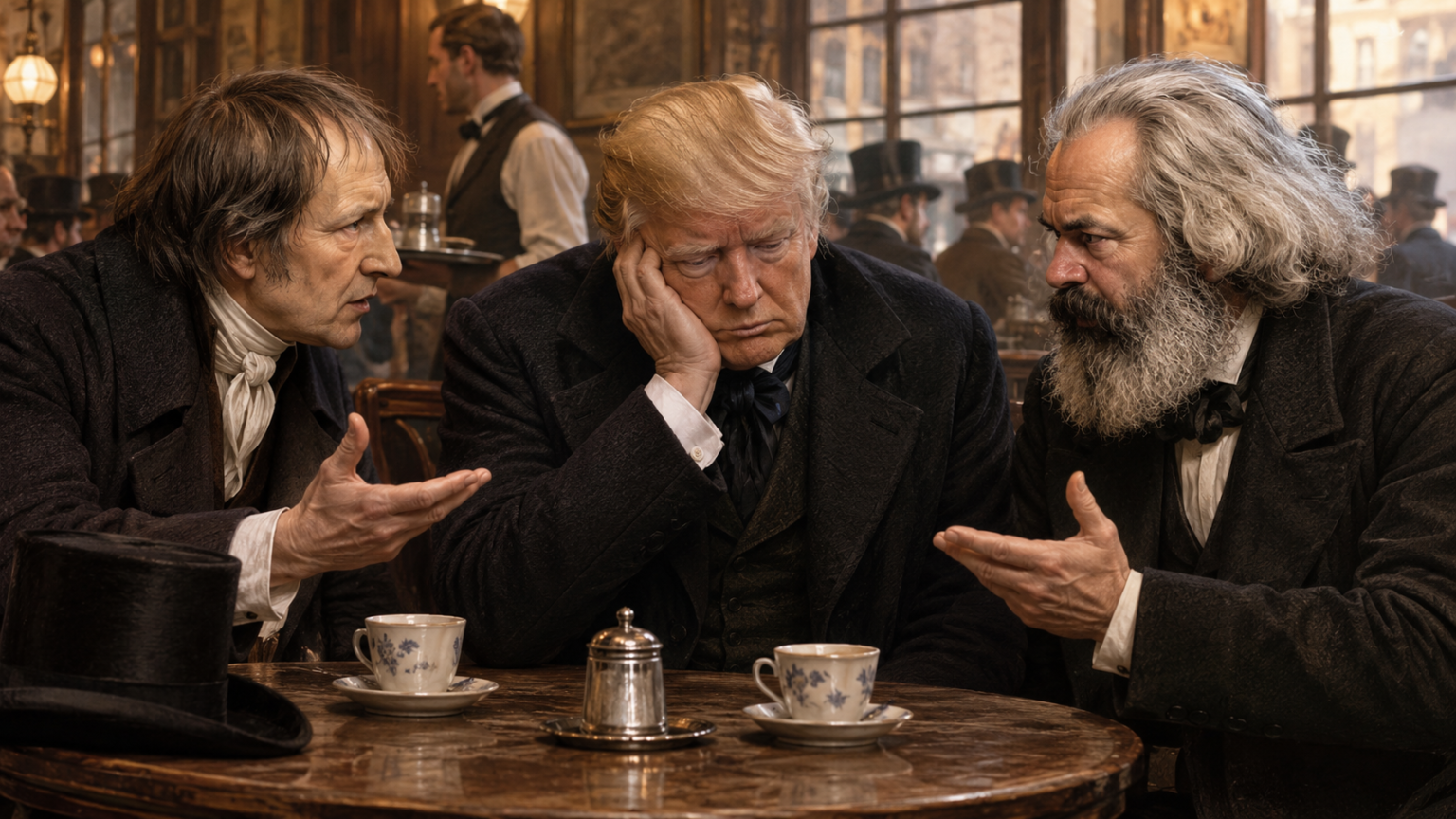
There is something profoundly Hegelian about this moment. Georg Wilhelm Friedrich Hegel viewed history as a dialectical process in which contradictions generate transformations that individuals and political institutions cannot always anticipate. His notion of the “cunning of reason” suggested that historical forces often produce consequences beyond the intentions of those who set them in motion. Political actors may believe they are directing history, only to discover that history is directing them.
Karl Marx approached this contradiction through material conditions and the struggles embedded within society. In The Eighteenth Brumaire of Louis Bonaparte, Marx examined how political power, class interests and historical circumstances interact, famously observing that history repeats itself, first as tragedy and then as farce. His argument was not simply about political personalities but about the contradictions that undermine seemingly established systems of power.
The American midterms can be viewed through this philosophical lens. An administration that has projected American power internationally and pursued an assertive approach towards geopolitical rivals now faces the domestic consequences of political discontent. Economic pressures, the cost of living, the consequences of the Iran war and dissatisfaction with governance have contributed to the electoral backlash, according to election coverage.
The irony is not that Washington has suddenly become powerless. Rather, it is that the world’s most influential political capital remains subject to the same historical forces that shape every political system: public dissatisfaction, institutional resistance and the changing balance of power.
The Democratic victory also restores the constitutional tension between the executive and legislative branches. Congressional oversight, investigations and legislative obstruction could become defining features of the remaining Trump presidency.
Perhaps the greatest lesson is that power cannot permanently suspend history. Governments may attempt to influence political outcomes abroad, but no administration can entirely insulate itself from the contradictions accumulating within its own society.
Hegel might have recognised the movement of historical reason in this reversal; Marx might have looked beneath the electoral result to the material contradictions driving it.
History, however, needs neither philosopher to deliver its verdict. It simply moves forward, often in directions those who believe they control it least expect.
The United States remains infamous for the regime change operations across the globe, but the Iran War has become a whole different ball game which is haunting Washington itself. The interesting part is, if the two philosophers were alive today, they might have been laughing upon the irony of history, that those who were trying to contain the others are now themselves being contained.