
Rs23bn Petroleum Levy defaults raise alarm at Senate Committee
KARACHI (News Desk): Outstanding petroleum levy defaults amounting to Rs23 billion came under scrutiny as the Senate Standing Committee on Petroleum called for stronger coordination between the Oil and Gas Regulatory Authority (OGRA) and the Federal Board of Revenue (FBR) to identify defaulters and improve revenue recovery.
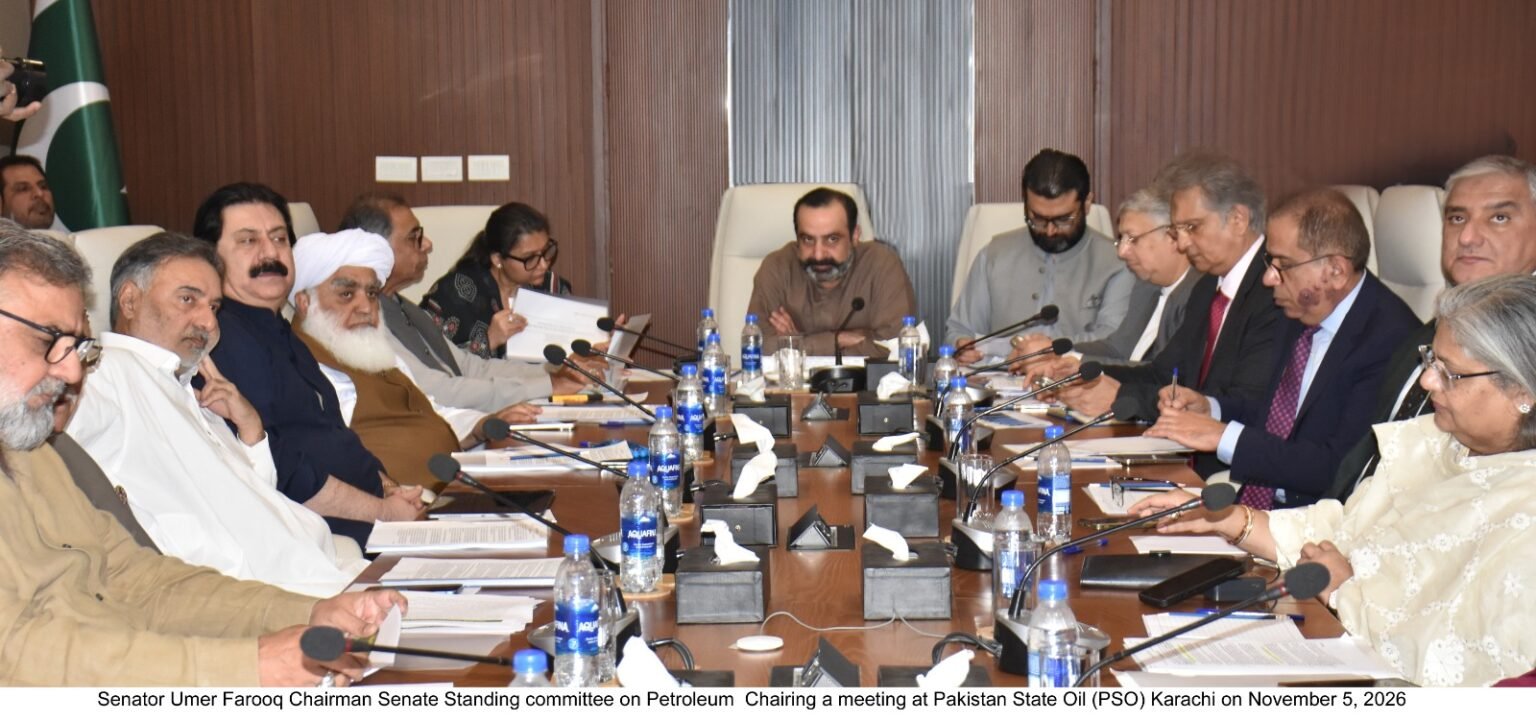
The issue was discussed during a committee meeting held at the Pakistan State Oil (PSO) headquarters in Karachi on Thursday, chaired by Senator Umer Farooq and attended by senior officials of the Ministry of Energy, OGRA, PSO, PARCO and other relevant institutions.
OGRA Chairman Barrister Nabeel Ahmed Awan, participating through a virtual link, briefed the committee on outstanding payments and recovery matters involving oil marketing companies (OMCs). He informed the senators about Rs23 billion in petroleum levy defaults.
Expressing concern over the apparent lack of coordination among government institutions, the committee stressed that OGRA must work closely with FBR to identify tax defaulters, particularly those operating in the oil marketing sector.
The committee also directed OGRA to provide details of its external audit, including a comprehensive breakdown of audit-related expenditures, to strengthen transparency and institutional accountability.
Separately, PSO briefed the committee on outstanding recoverable dues from Pakistan International Airlines (PIA), FBR and Pakistan Railways. Taking notice of the pending payments, the committee directed that representatives of the concerned organisations be invited to its next meeting to explain their outstanding liabilities and present a recovery plan.
The senators also emphasised involving the Ministry of Finance in monitoring and recovering government-sector dues.
The meeting additionally examined petroleum supply and distribution challenges in Balochistan, where the committee expressed concern over the relatively low number of petrol stations and reported petroleum consumption.
The senators observed that the situation raised questions about the possible presence of smuggled petroleum products in the province. PSO officials attributed some of the difficulties to restricted and inaccessible areas.
The committee directed PSO to submit a detailed report on quality control, revenue monitoring and tracking arrangements in Balochistan, stressing the need for a transparent mechanism to monitor petroleum movement and identify potential irregularities.
The meeting also reviewed PSO’s retail operations, contractual arrangements and facilities extended to petrol stations over the past five years.
Concluding the proceedings, the committee called for stronger institutional coordination, effective monitoring and greater transparency to address regulatory weaknesses and improve governance across the petroleum sector.