
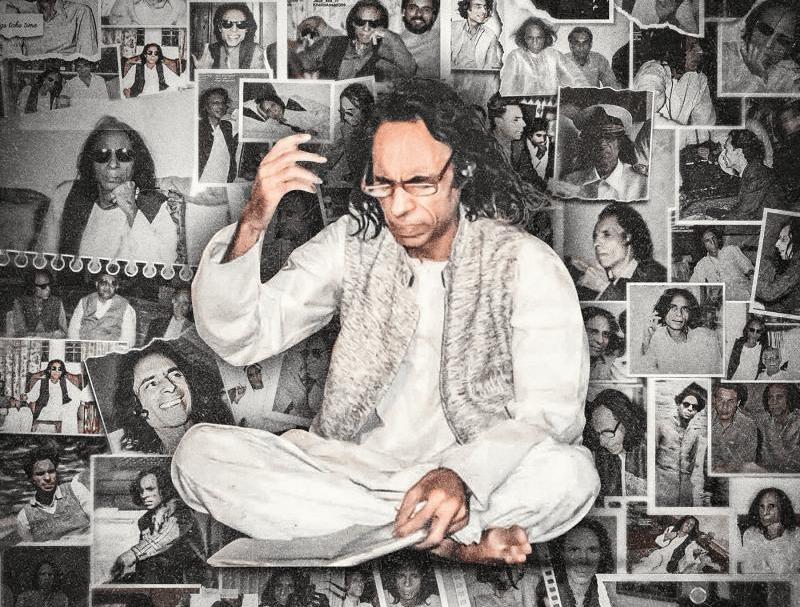
From Ghazals to Hip-Hop: How Jaun Elia conquered Gen-Z
KARACHI (TKP Feature): Decades after his passing, the city’s most cynical, brilliant, and heartbroken poet is finding an unexpected second life in the ears of a new generation.
If you walk into a dimly lit café in DHA, a university campus courtyard in Gulshan, or a roadside tea stall in Nazimabad, you will eventually hear his name. Or, more accurately, you will hear his pain. Decades after his death on 8 November 2002, Syed Jaun Elia continues to find a remarkable audience in Karachi.
But he isn’t just trapped in the pages of Urdu literature or the dusty shelves of old bookstores in Saddar. Today, Jaun Elia has become an icon of Karachi’s contemporary youth culture. His poetry circulates through social media edits, his couplets are widely shared on TikTok and Instagram, and his unapologetic cynicism resonates with a generation navigating its own uncertainties.
The Ultimate Anti-Hero
To understand why millennials and Gen Z are drawn to Elia, one must look at his distinctive place in the landscape of Urdu poetry. Urdu literature has a long tradition of rebellion, romanticism and social criticism, but Jaun brought an unusually personal, conversational and irreverent voice to his work.
With his disheveled hair, wild eyes, and theatrical stage presence at Karachi’s mushairas, he challenged conventional literary decorum. He didn’t just recite poetry; he delivered it with an intensity that often left audiences captivated.
Jaun didn’t write only about idealized love; he wrote about bitter breakups, existential dread, the pointlessness of routine, and the exhausting reality of living in a chaotic metropolis.
“Naya ek rishta paida kyun karein hum?
Bichadna hai toh phir jhagda kyun karein hum?”
(Why create a new relationship? If we are bound to separate, why even argue?)
In a world of curated Instagram filters and toxic positivity, Elia’s brutal honesty feels remarkably real. For a generation dealing with economic anxiety, political instability, and digital loneliness, Jaun is the poet who doesn’t necessarily tell them to cheer up. He sits with them in the dark. He gives expression to their cynicism.
The Intellectual Rebel of Garden East
Jaun’s deep tie to Karachi is foundational to his art. After migrating from Amroha, India, in 1957, he made Garden East, Karachi, his home. It was here, amidst the shifting socio-political landscape of post-partition Karachi, that his distinct worldview developed. He lived as a bohemian scholar, maintaining an association with the Urdu Dictionary Board while remaining connected to the city’s literary and intellectual circles.
Karachi became a living character in his verse. The city’s noise, its relentless pace, and its inherent alienation mirrored his inner turmoil. He was a man caught between profound scholarly brilliance—mastering Arabic, Persian, and philosophy—and a profound, agonizing desire to disconnect from the world. This duality strikes a chord with modern Karachiites, who must navigate the harsh daily grind of a hyper-urban jungle while yearning for deeper meaning.
From the Mushaira to the Spotify Playlist
Nowhere is Jaun’s modern footprint more evident than in Karachi’s hip-hop and contemporary music scene. The city’s youth are no longer just reading his ghazals; they are also discovering his poetry through modern music and digital platforms.
Karachi-based rap heavyweights like Talha Anjum and Young Stunners have helped bring Urdu literary influences into contemporary hip-hop. Their song Why, for instance, incorporates verses from a Jaun Elia ghazal. Talha Anjum has also spoken about discovering Jaun through recordings of his mushairas.
When local rappers address betrayal, survival, and the cold, unyielding realities of growing up on Karachi’s streets, their themes often intersect with the emotional and intellectual territory explored by poets like Elia.
They draw on a tradition of weary defiance to articulate the struggles of urban youth, bridging the gap between classical Urdu expression and contemporary street culture.
By bringing literary Urdu into modern musical formats, these artists have helped introduce a new generation to poetry that might otherwise have remained confined to books and traditional mushairas.
They have demonstrated that the angst of a man living in a quiet flat in Garden East decades ago can still resonate with a 20-year-old navigating Karachi traffic with headphones plugged in today.
The Man Behind the Memes
While social media has undoubtedly fuelled his resurgence, it risks reducing Jaun to a caricature—the “king of heartbreak” or a meme-worthy nihilist. However, his internet popularity can also serve as an entry point for a deeper literary awakening. Young readers who discover him through a viral 15-second soundbite may eventually turn to his books, discovering the rigorous academic mind behind the unconventional persona.
He famously delayed publishing his first poetry collection, Shayad, until 1991, when he was 60 years old. He was deeply sceptical of the establishment and highly critical of his own genius. He did not write for quick applause; he wrote because he had to. It is this apparent lack of commercial calculation that makes him particularly appealing to a generation increasingly sceptical of corporate phoniness.
“Main bhi bohat ajeeb hoon, itna ajeeb hoon ke bas,
Khud ko tabah kar liya aur malal bhi nahin”
(I am such a strange person, so extraordinarily strange, that words fail.
I have destroyed myself, yet I feel no regret)
A Legacy Reborn on the Streets
Jaun Elia spent much of his life feeling alienated, isolated, and profoundly misunderstood by the literary circles of his time. He died on 8 November 2002, leaving behind a city that was only just beginning to realise what it had lost.
If only he could see Karachi now.
Through the headphones of the city’s youth, the rebellious poet has found a new generation of admirers. He is no longer just a memory buried at Sakhi Hasan Graveyard in Karachi; he is the beating heart, the subtext, and an enduring voice in the cultural imagination of modern Karachi.