
Pakistan’s women borrow Rs236 bn, can microfinance build entrepreneurs?
ISLAMABAD (News Desk): Women received Rs236.2 billion in loans from non-bank microfinance companies during fiscal year 2026, highlighting the growing scale of their participation in Pakistan’s microfinance sector, but questions remain over whether access to credit is translating into sustainable businesses and long-term economic independence.
According to a briefing by the Securities and Exchange Commission of Pakistan (SECP), women accounted for 81.9 percent of active borrowers of non-bank microfinance companies, reflecting their substantial presence in the country’s microfinance market.
The figures point to the expanding role of women in formal financial services, particularly through small-scale borrowing. However, the economic impact of microfinance cannot be assessed through lending volumes alone. The ability of borrowers to establish viable businesses, increase household incomes and generate employment remains equally important.
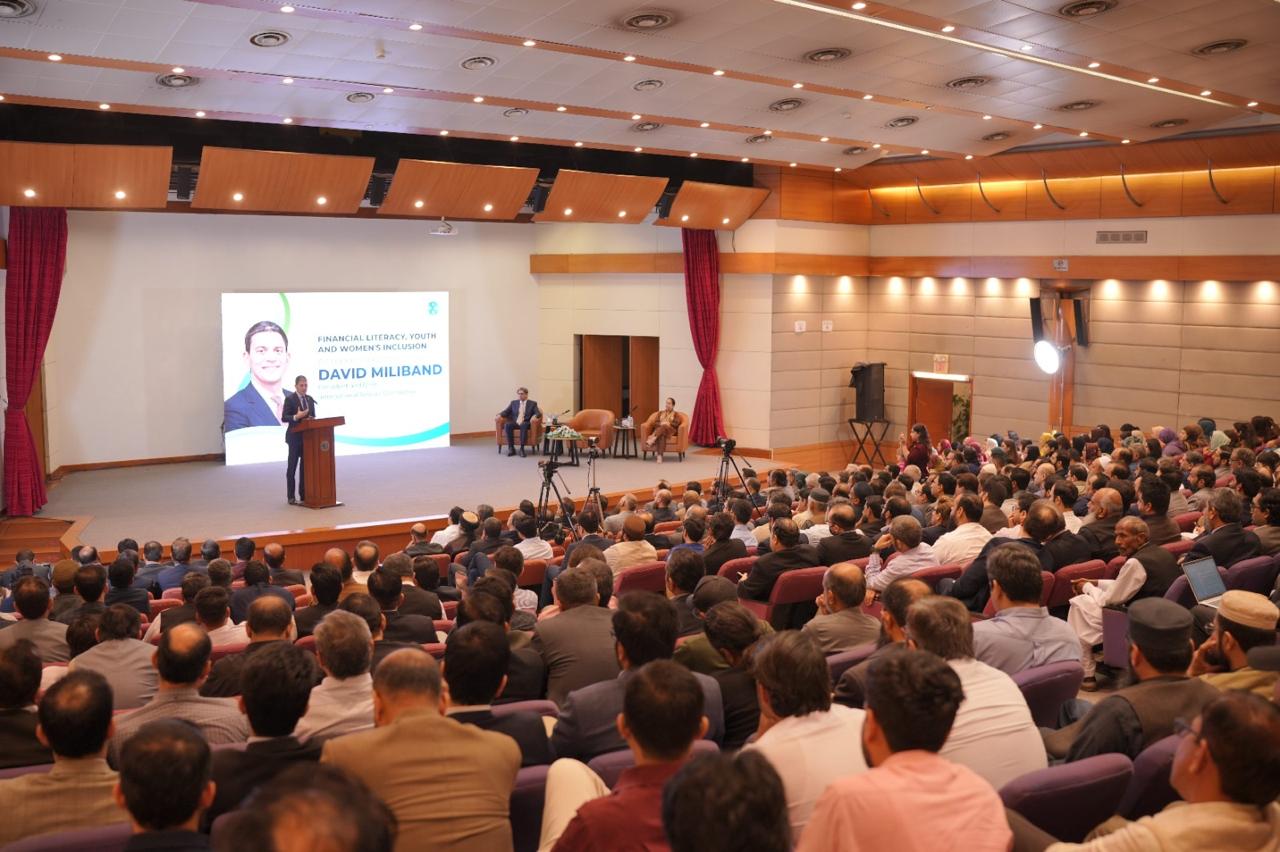
The issue came into focus during a seminar on financial literacy and the inclusion of youth and women, addressed by the International Rescue Committee (IRC) President and Chief Executive David Miliband during his visit to the SECP.
Miliband emphasized that connecting social development with economic opportunities was essential for achieving sustainable economic independence. He said the IRC would work with the SECP to strengthen women’s financial inclusion and support Pakistani women seeking to establish businesses.
He also highlighted the importance of combining access to small-business loans with financial education, suggesting that credit facilities alone were insufficient to ensure meaningful economic empowerment.
The distinction is significant for Pakistan, where access to financing remains a challenge for small entrepreneurs, particularly women operating informal or home-based businesses. While microfinance can provide an entry point into formal financial services, borrowers also require business management skills, financial planning and access to markets to turn borrowed capital into sustainable income-generating activities.
For regulators and financial institutions, the challenge therefore extends beyond increasing the number of borrowers. It involves ensuring that financing reaches productive economic activities and enables businesses to grow beyond their initial operations.
The SECP has been taking measures to improve access to small loans for women entrepreneurs, while its financial awareness initiatives are also targeting young people across the country.
SECP Chairman Dr Kabir Ahmed Sidhu identified limited financial literacy as a major obstacle to greater public participation in capital markets. He said the regulator was working to increase the number of stock market investors to 2.5 million.
The target reflects a broader effort to expand participation in formal financial markets, although the challenges facing first-time investors differ from those confronting women seeking small-business financing.
Financial literacy remains an important link between access to financial products and their effective use. Understanding borrowing costs, repayment obligations, savings, investment risks and business finances can influence whether individuals use financial services to improve their economic position.
Pakistan’s microfinance figures provide an indication of the scale of women’s engagement with financial institutions. However, the available lending data alone does not establish how much of the credit has financed new businesses, expanded existing enterprises or supported household consumption.
A clearer assessment would require information on the sectors receiving loans, business survival rates, employment generated, repayment performance and changes in borrowers’ incomes.
The proposed cooperation between the IRC and SECP could provide an opportunity to address some of these gaps by linking financial inclusion with entrepreneurship support and financial education.
Ultimately, the measure of success will not simply be how much money women borrow, but whether that financing helps them build businesses, generate independent incomes and participate more substantially in Pakistan’s economy.
The challenge for Pakistan’s financial inclusion agenda is to move beyond expanding access to credit towards creating the conditions in which borrowers can become sustainable entrepreneurs.