
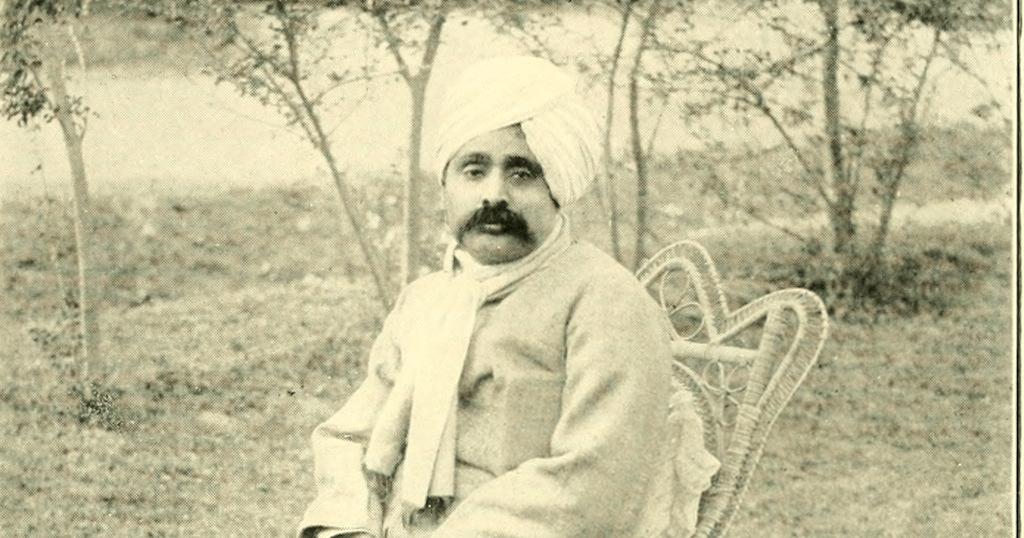
Lala Lajpat Rai and the Economics of Freedom
KARACHI (TKP Feature): Political independence was not the only battle Lala Lajpat Rai wanted India to win. Long before the end of British colonial rule, he was concerned with another form of dependence: the economic structures that shaped India’s financial institutions, businesses, education and access to capital.
For Rai, nationalism was not simply about challenging British authority or demanding political representation. It also involved building indigenous institutions capable of supporting a self-reliant economy. His association with banking, insurance, education and social reform reflected a broader understanding that a nation’s freedom required more than a change of political leadership.
Remembered as Punjab Kesari, or the Lion of Punjab, Rai died on November 17, 1928, following injuries sustained during a police baton charge in Lahore while leading a demonstration against the Simon Commission. His death became an important moment in India’s independence movement. Yet the story of his life extends well beyond that confrontation.
Born on January 28, 1865, in Dhudike, Punjab, Rai trained as a lawyer before becoming involved in journalism, politics and social reform. His association with the Arya Samaj, a Hindu reform movement, influenced his social and cultural outlook. Over time, he emerged as one of the prominent nationalist figures of the late nineteenth and early twentieth centuries.
What makes his legacy particularly interesting is his belief that political mobilisation needed to be accompanied by institution-building.
Banking and the idea of indigenous capital
One of the clearest examples of this approach was his association with the establishment of Punjab National Bank.
During British rule, India’s financial sector operated within an economic system heavily influenced by colonial institutions and capital. The development of Indian-owned financial institutions offered an alternative through which domestic businesses and individuals could participate in organized banking.
Rai supported the establishment of an Indian joint-stock bank and circulated proposals among influential individuals to mobilize support for the initiative.
Punjab National Bank was incorporated on May 19, 1894, and commenced operations in Lahore on April 12, 1895. Lala Harkishan Lal, Sardar Dyal Singh Majithia and other prominent figures were associated with its establishment. Rai was an important supporter of the initiative and subsequently joined its board of directors.
The significance of this development extended beyond the creation of another bank. It demonstrated the possibility of mobilizing Indian capital to establish financial institutions under Indian ownership and management.
In contemporary economic language, this can be understood as an early expression of financial self-reliance.
Beyond banking: Enterprise and economic development
Rai’s interest in indigenous institutions was not restricted to banking. He was also associated with Lakshmi Insurance Company, reflecting his engagement with the development of Indian-owned financial enterprises.
His economic thinking can also be examined through his 1917 book, England’s Debt to India. The publication addressed the economic consequences of British rule and the relationship between colonial power and India’s resources.
His writings reflected concerns about the economic arrangements through which colonial rule influenced India’s development.
Although the economic challenges of his era were different from those confronting modern economies, his broader interest in domestic enterprise and institutional development remains an important part of his historical legacy.
For Rai, national progress required the participation of Indians in building institutions rather than remaining dependent on structures controlled from outside.
Education as an instrument of national development
Education was another important component of his public life.
Rai was associated with the development of educational institutions connected with the Dayanand Anglo-Vedic movement. He worked alongside other reformers, including Mahatma Hans Raj, in promoting education.
He was also associated with the establishment of the National College in Lahore, which emerged during the Non-Cooperation Movement period. The institution later became particularly notable because Bhagat Singh studied there.
National College represented an educational environment in which academic learning, political awareness and national consciousness could develop together.
Rai’s involvement in such initiatives reflected his belief that a country needed educated citizens capable of understanding its political and social challenges.
His contribution to institution-building also extended to the Servants of the People Society, which he founded in Lahore in 1921. The organisation sought to develop dedicated workers for public service and social reform.
These initiatives demonstrate that his understanding of nationalism included the development of human resources and organized civic institutions.
Taking India’s political cause abroad
Rai also understood that India’s struggle against colonial rule needed an international audience.
During his stay in the United States, he established the Indian Home Rule League of America in 1917. Through his activities and writings, he attempted to explain India’s political aspirations to American audiences and build international awareness about British rule.
His international engagement added another dimension to his political personality. He was not merely a provincial leader operating within Punjab; he sought to connect India’s independence movement with wider debates about colonialism, self-government and political rights.
His journalism and publications were central to this effort. Among his notable works were Young India: An Interpretation, Unhappy India, The Story of My Deportation and England’s Debt to India.
A legacy that deserves a deeper examination
Rai’s political and ideological journey was not without complexity. His association with Arya Samaj and his views on Hindu identity and Hindu-Muslim political relations have remained subjects of historical discussion.
His nationalism therefore needs to be understood within the political and social circumstances of colonial India rather than through simplified contemporary labels.
On November 17, 1928, his death following the police assault during the anti-Simon Commission demonstration turned him into a powerful symbol of resistance. The incident also influenced subsequent revolutionary developments, particularly among Bhagat Singh and his associates.
Yet reducing his life to its final confrontation would overlook the institutions, ideas and organisations with which he was associated.
More than a century after Punjab National Bank began operations, the relationship between financial institutions, domestic capital and economic independence remains relevant to discussions about national development.
Modern economies are deeply interconnected, and economic self-reliance does not mean isolation from international markets. It requires the ability to build competitive domestic institutions, develop local businesses and participate in global commerce from a position of strength.
That distinction provides a useful lens through which to examine Rai’s legacy.
His political struggle challenged colonial authority, while his institutional activities reflected an interest in strengthening India’s capacity to shape its own economic and social future.
His life consequently offers a broader understanding of independence: not merely the freedom to govern a country, but also the capacity to build the institutions through which its people can determine their collective future.