
Pakistan’s first astronaut mission opens new frontier in China ties beyond trade and CPEC
ISLAMABAD (News Desk): Pakistan’s participation in China’s Shenzhou-24 mission could mark a new phase in bilateral cooperation, extending the relationship beyond trade, infrastructure and the China-Pakistan Economic Corridor (CPEC) into space technology, scientific research and advanced engineering.
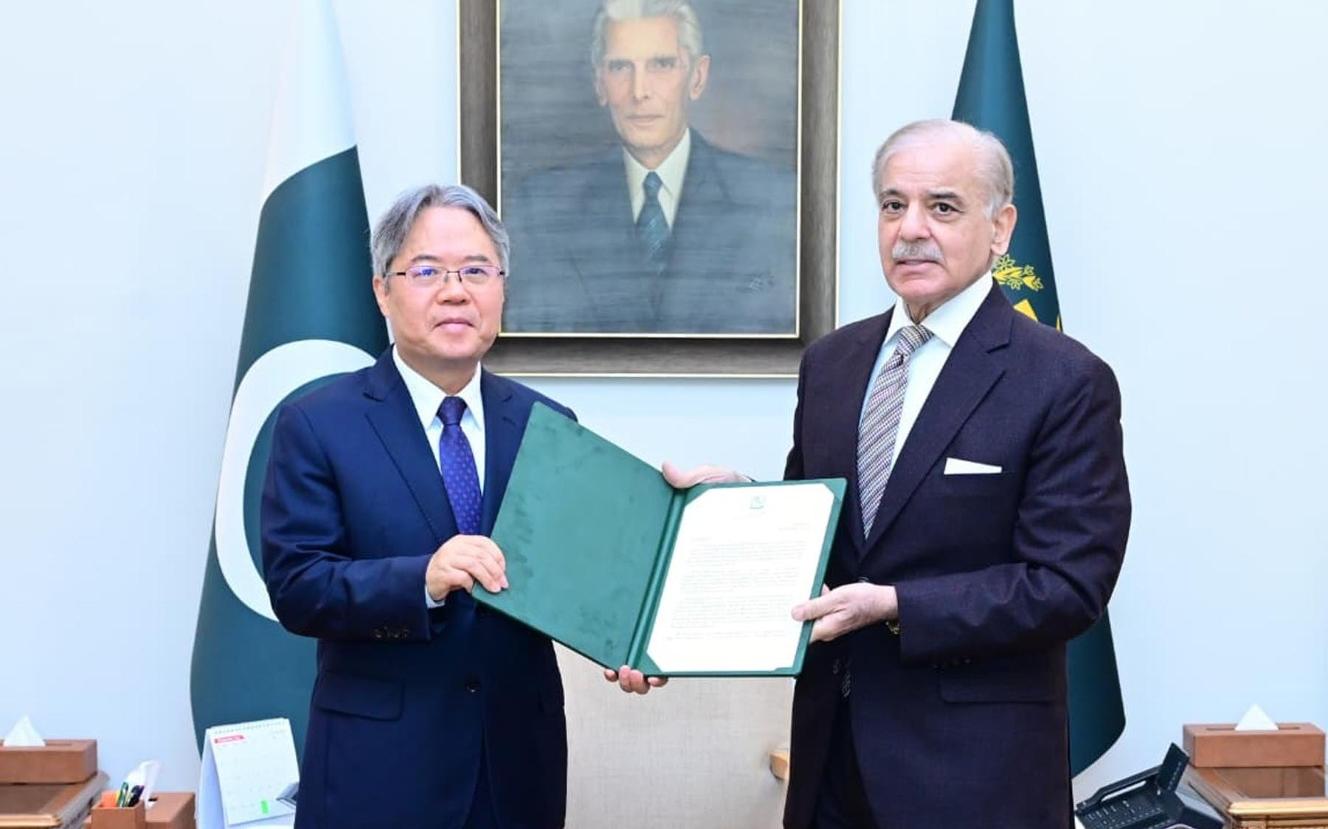
Prime Minister Shehbaz Sharif has described the mission as a practical manifestation of the longstanding Pakistan-China partnership, saying the country is committed to working with Beijing on the peaceful exploration and use of space.
The mission, launched from China’s Tiangong Satellite Launch Centre on November 25, is carrying Pakistani astronaut Muhammad Zeeshan Ali to China’s Tiangong space station, according to a statement issued by the Prime Minister’s Office. Sharif congratulated the Chinese leadership and people, while acknowledging their role in making Pakistan part of the historic mission.
Beyond its diplomatic significance, the development raises an important question: how can Pakistan translate participation in an international space mission into long-term scientific and economic capacity at home?
Space technology has applications well beyond exploration. Satellite-based services support telecommunications, weather forecasting, agricultural monitoring, navigation, disaster management and maritime surveillance. Improved capabilities in these areas could help Pakistan strengthen several sectors of its economy.
For agriculture, satellite imagery and remote sensing can help monitor crop conditions, assess water resources and identify areas affected by drought or floods. In maritime affairs, satellite data can support vessel monitoring, coastal observation and the management of marine resources. Better forecasting and earth-observation systems could also improve preparedness for climate-related disasters.
The mission may also create opportunities to strengthen cooperation between Pakistan’s Space and Upper Atmosphere Research Commission (SUPARCO), Chinese research institutions and Pakistani universities. Joint research, specialist training and academic exchanges could help develop a skilled workforce in aerospace engineering, robotics, materials science and other advanced fields.
However, participation in a space mission does not automatically guarantee technology transfer or the development of a domestic space industry. These outcomes would require sustained investment, research partnerships, institutional capacity and a clear national strategy.
The challenge for Pakistan will be to turn this milestone into practical programmes that benefit universities, researchers, businesses and public-sector institutions.
For Pakistan, the journey to the Tiangong space station could therefore carry significance beyond the achievement of sending its first astronaut. Its lasting value will depend on whether the country can use this partnership to build scientific expertise, strengthen technological capabilities and create new opportunities for its economy.