
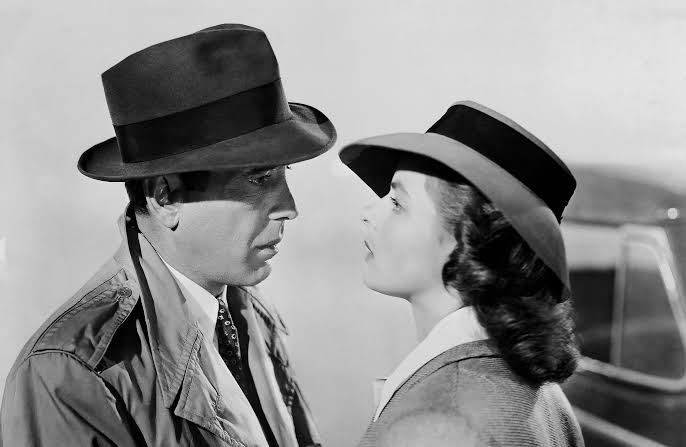
Hollywood’s accidental masterpiece: How World War II made Casablanca timeless
Eighty-four years after its New York premiere, Casablanca remains a cinematic landmark, born out of an unfinished screenplay, wartime uncertainty and a historical coincidence that turned an ordinary Hollywood production into an enduring cultural phenomenon.
KARACHI (TKP Feature): On November 26, 1942, audiences gathered in New York to watch a black-and-white Hollywood drama set in a North African city caught between war, occupation and desperation. Few could have anticipated that the film would become one of the most celebrated productions in cinema history.
That film was Casablanca.
Starring Humphrey Bogart and Ingrid Bergman, the romantic drama was initially not considered an extraordinary undertaking by Warner Bros. Yet, through an unusual combination of historical timing, memorable performances, political relevance and creative uncertainty, it became a masterpiece whose influence extended far beyond the cinema screen.
Its success was, in many respects, an accident of history.
A screenplay that was never quite ready
The story originated in an unproduced stage play titled Everybody Comes to Rick’s, written by Murray Burnett and Joan Alison. Warner Bros acquired the rights, and the material eventually developed into the screenplay for Casablanca.
The writing process involved several contributors, including Julius and Philip Epstein, Howard Koch and Casey Robinson. The screenplay continued evolving during production, with important dialogue and dramatic elements being revised as filming progressed.
Unlike carefully planned contemporary productions, Casablanca emerged through an imperfect creative process. Even the film’s celebrated ending was not entirely settled during the early stages of production.
Directed by Michael Curtiz and produced by Hal B. Wallis, the film was shot in California rather than Morocco. Its fictional North African setting was constructed largely on Warner Bros.’ studio lots.
The circumstances surrounding its creation make its eventual success even more remarkable.
When real history promoted a Hollywood film
The most extraordinary coincidence came from events unfolding thousands of miles away.
Warner Bros. had initially anticipated a later release. However, the Allied invasion of French North Africa, known as Operation Torch, dramatically changed the circumstances surrounding the film.
On November 8, 1942, American and British forces landed in Morocco and Algeria, including at Casablanca. The operation was designed to establish Allied positions in North Africa and open another front against Axis forces.
Suddenly, Casablanca was no longer simply the name of an unfamiliar foreign city. It was appearing in American newspaper headlines and radio broadcasts.
The film’s title had acquired immediate relevance.
Warner Bros. brought forward its premiere to November 26, capitalizing on the international attention surrounding the North African campaign. The coincidence provided the studio with extraordinary publicity that conventional advertising could hardly have manufactured.
The National WWII Museum has documented how Operation Torch transformed the film’s marketing prospects. What had initially been a challenge in selling an unfamiliar geographical setting became an unexpected promotional advantage.
In January 1943, the film received its wider American release, just as Casablanca again entered international headlines through the meeting of US President Franklin D. Roosevelt and British Prime Minister Winston Churchill.
History had effectively become the film’s marketing department.
More than a love story
At its heart, Casablanca follows Rick Blaine, an American nightclub owner who encounters his former lover, Ilsa Lund, in a city crowded with European refugees attempting to escape Nazi-controlled territories.
Ilsa arrives with her husband, Victor Laszlo, a prominent resistance leader seeking passage to safety.
Rick possesses valuable letters of transit that could help the couple escape. He must decide whether to protect his personal interests or sacrifice his own happiness for a larger cause.
The romantic conflict provides the emotional foundation, but the film’s political significance lies in its portrayal of moral choices during wartime.
Its characters represent different responses to authoritarianism, uncertainty and personal survival. Some seek profit, others protection, while a few are prepared to risk everything for their principles.
The famous scene in which refugees sing the French national anthem, La Marseillaise, to drown out German officers’ singing became an especially powerful cinematic expression of resistance.
The film was not simply reflecting the war. It was participating in the cultural conversation surrounding it.