
Uzbekistan eyes Karachi Port as gateway for Central Asian trade
KARACHI (News Desk): Uzbekistan is exploring the possibility of using Karachi Port as a maritime gateway for its international trade, opening prospects for greater regional connectivity and commercial cooperation between Pakistan and Central Asia.
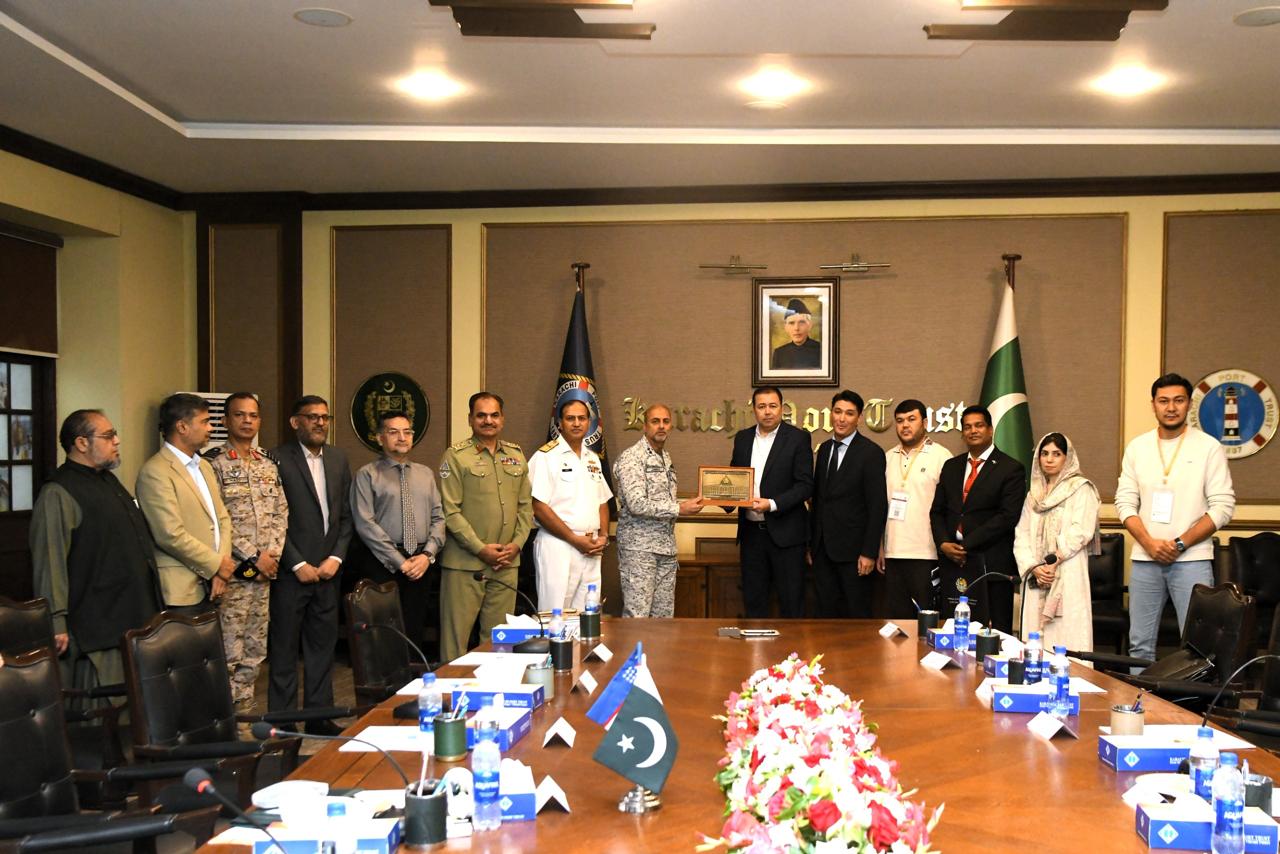
A high-level Uzbek delegation visited Karachi Port Trust (KPT) on Thursday to explore bilateral trade opportunities, with particular emphasis on potential collaboration with port terminal operators and facilitating cargo movement through a newly established regional dry port in Uzbekistan.
During the visit, Director General Engineering KPT Rear Admiral Kashif Munir briefed the delegation on Karachi Port’s infrastructure, operational capacity, development projects and international connectivity. The briefing highlighted the port’s record cargo throughput of 55.44 million tonnes and 2.73 million TEUs during fiscal year 2025-26, alongside initiatives involving digitalization, green-port development and investment opportunities.
Director General Operations KPT Rear Admiral Jawad Ahmed highlighted Karachi Port’s strategic geographical position and its potential to serve as a transit gateway for landlocked Central Asian countries through comparatively shorter land routes.
He also referred to Karachi Port’s 69th position in the World Bank’s Container Port Performance Index (CPPI) and 34th position in the Liner Shipping Connectivity Index (LSCI), presenting the port as a potential option for handling cargo destined for Central Asian markets.
The Uzbek delegation acknowledged Karachi Port as its nearest seaport and proposed cooperation with KPT terminal operators to facilitate trade through its newly established regional dry port.
The proposed arrangement could create commercial opportunities for Pakistani port operators, shipping companies, freight forwarders and inland logistics providers if translated into concrete cargo-handling agreements and efficient transport arrangements.
For Pakistan, greater access to Central Asian cargo markets could help expand port activity, diversify trade-related revenue and strengthen its position as a regional transit and logistics hub. For Uzbekistan, cooperation with Karachi could provide another potential maritime route for connecting its businesses with international markets.
However, the proposal will require practical arrangements covering cargo volumes, transit costs, customs procedures, border infrastructure and the reliability of inland transportation before a commercially viable corridor can materialize.
To advance discussions, Rear Admiral Kashif Munir proposed establishing a joint working group and requested the Uzbek delegation to share its cargo-handling requirements and proposals for further deliberations under the patronage of the Ministry of Maritime Affairs.
The proposed working group could provide a platform for translating the initial interest into a structured port and logistics partnership.
The discussions signal growing interest in strengthening Pakistan’s maritime links with Central Asia, although the commercial viability of the proposed arrangement will ultimately depend on actual cargo commitments and competitive transit services.