
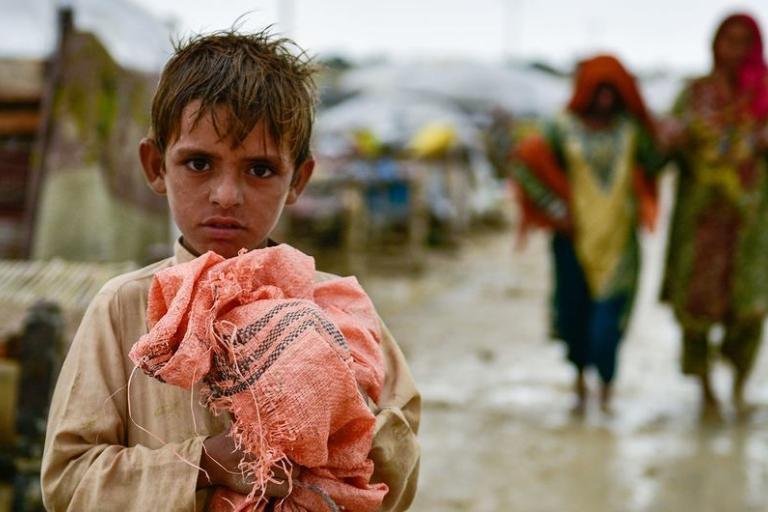
Climate risks could cut Pakistan’s GDP by 15% by 2050
ISLAMABAD (Staff Report): Pakistan remains highly exposed to climate-related risks including floods, extreme heat, water stress and glacial melt, with direct implications for agriculture, infrastructure, livelihoods and economic stability, according to new research by ACCA (the Association of Chartered Certified Accountants).
The report, titled Asia Pacific Builds a Sustainable Future: Resilience in Economy, Environment and Society, warns that if left unaddressed, water and extreme heat-related risks could reduce GDP by 10 to 15 percent in lower-income countries by 2050.
The findings carry particular relevance for Pakistan, where economic recovery is increasingly tied to climate resilience. The report notes that Pakistan’s economy recorded growth of 3.65 percent in FY2025-26, while installed electricity generation capacity has reached 49,651MW, including 7,319MW from solar net metering, showing a shift towards distributed renewable energy.
However, ACCA emphasizes that the transition alone is not enough unless backed by investment and stronger financial disclosures.
The report highlights that floods alone accounted for more than half of the 7.2 billion people affected by disasters across Asia Pacific between 1970 and 2024, a region where Pakistan is among the most vulnerable countries. Recent years have seen repeated flood events, extreme heatwaves and water scarcity impacting the country’s economic output.
Asia Pacific, according to the research, is leading the global adoption of sustainability reporting standards. More than 80 percent of ASEAN economies, measured by GDP, have adopted or plan to adopt standards issued by the International Sustainability Standards Board (ISSB). Including Chinese mainland, economies that have adopted represent approximately US$60 trillion, or 47 percent of global GDP.
Pakistan has taken steps in this direction through the Securities and Exchange Commission of Pakistan’s phased adoption of IFRS Sustainability Disclosure Standards and its subsequent ESG disclosure guidelines, which the report identifies as crucial for attracting sustainable investment.
Sharath Martin, Senior Policy Consultant, ACCA Asia Pacific, said the narrative around sustainability needs to change.
“What we heard consistently in our roundtables is that the narrative needs to change. This isn’t about disclosures per se, this is about making businesses more resilient. The same is true of decarbonisation. It cuts emissions, but it also protects businesses and economies from fossil fuel price volatility, rising costs and supply shocks,” he said.
Helen Brand OBE, Chief Executive of ACCA, said the region was building the architecture of sustainability reporting faster than anywhere else, but adopting standards was not the same as achieving decarbonisation or addressing wider sustainability challenges.
The report calls on businesses to integrate climate and nature-related risks into corporate strategy, budgets and investment decisions, while urging policymakers to mobilize capital, strengthen reporting and assurance capacity, and accelerate renewable energy investment.
It also stresses that renewable energy generation and storage need to be treated as strategic economic priorities, supported by financing mechanisms that make projects commercially viable, especially for climate-vulnerable countries like Pakistan.
The report draws on research, interviews and roundtable discussions with 44 finance and accountancy professionals and subject experts.