
DRAP digitizes 86,000 medicines under track-and-trace system
KARACHI (Staff Report):
KARACHI: The Drug Regulatory Authority of Pakistan (DRAP) has been fully digitized, with more than 86,000 medicines integrated into its Track and Trace System, enabling consumers to verify the authenticity and prices of medicines through mobile phone scans, Federal Health Minister Mustafa Kamal said on Saturday.
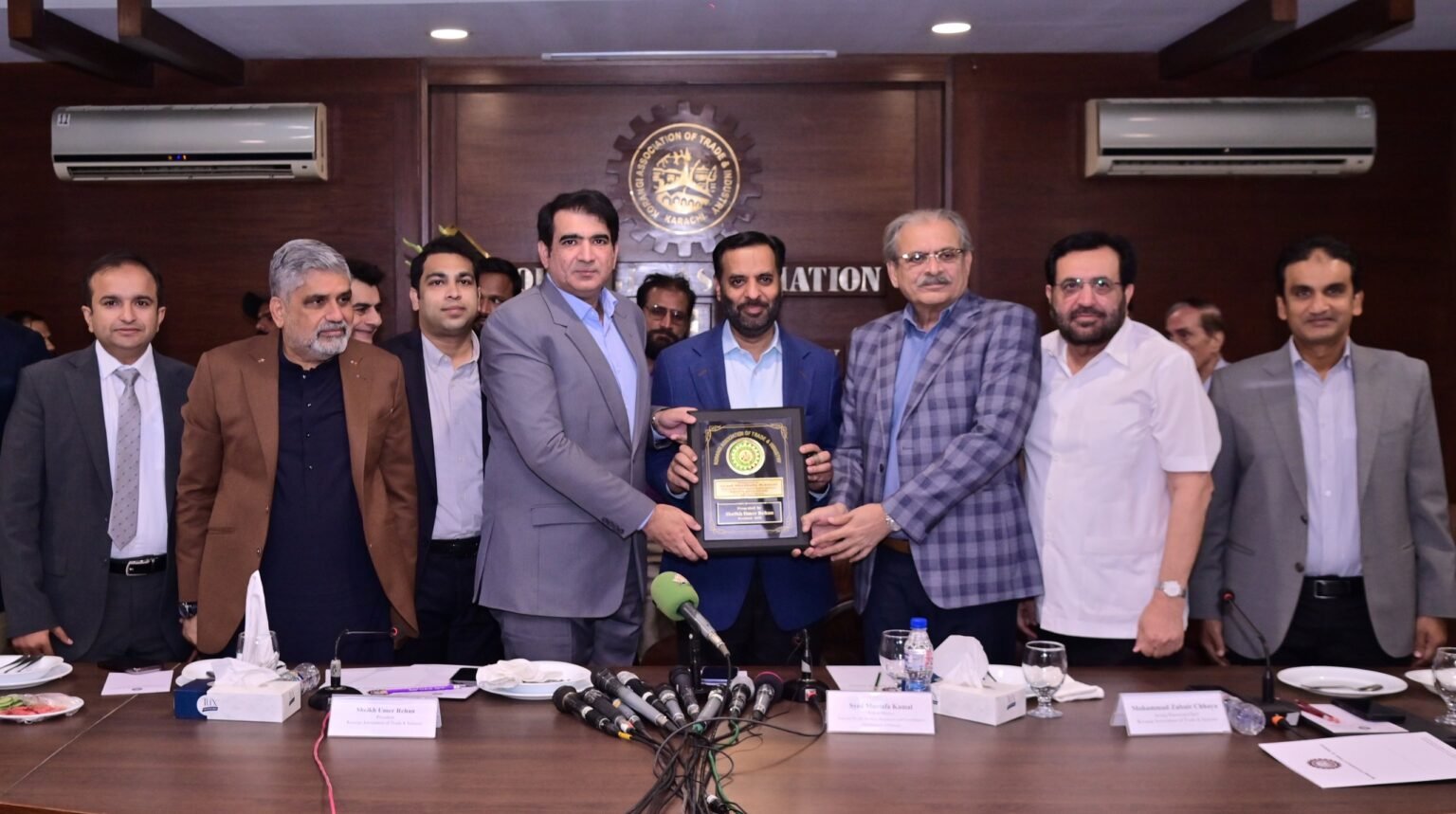
Addressing industrialists during his visit to the Korangi Association of Trade and Industry (KATI), the minister said the digital system had significantly improved transparency and efficiency, reducing the medicine registration process from several years to just 21 days.
He said pharmaceutical companies could now register their medicines and products online, while more than 5,000 cases had been processed since DRAP’s certification procedures were shifted to the digital system eight months ago. The Prime Minister had also recognised DRAP’s performance in digitalisation by presenting an award.
Mustafa Kamal said the pharmaceutical industry’s positive response reflected the impact of the reforms. However, he acknowledged that medicine pricing remained a major challenge, as pharmaceutical companies were seeking price increases while higher prices could further burden ordinary citizens.
He cautioned that keeping prices unchanged could also result in shortages of essential medicines, forcing patients to purchase them from the black market at up to three times their actual prices. He suggested that the government reconsider direct price regulation and allow market forces to determine medicine prices.
Recalling his tenure as Karachi’s Mayor, Mustafa Kamal said he had spent Rs300 billion on the city’s infrastructure, adding that Karachi’s development remained essential for the country’s economic progress.
He also said Karachi was not receiving its rightful share of resources and supported the establishment of administrative units as a possible solution to the city’s governance challenges.
Earlier, KATI President Sheikh Umer Rehan urged all federal ministers to visit Karachi at least once a month, following the example of the Federal Board of Revenue (FBR) chairman, to directly engage with business stakeholders and address sector-specific problems.
He said his association with Mustafa Kamal dated back several decades, recalling that his first official visit as Karachi’s City Nazim was to KATI. He also credited him with facilitating the construction of Road 8000.
Sheikh Umer Rehan said Pakistan’s cost of production was among the highest in the region, while the recent increase in interest rates had further intensified pressure on industrialists.
He highlighted the pharmaceutical industry’s contribution to the national economy, saying exports reached $457 million in FY2024-25, registering approximately 34 percent growth over the preceding fiscal year. The sector generated Rs523 billion in revenue, with 662 pharmaceutical companies operating across the country.
However, he pointed out that Pakistan remained heavily dependent on imported raw materials and Active Pharmaceutical Ingredients (APIs), calling for policies that could strengthen domestic manufacturing and reduce import dependence.
KATI Deputy Patron-in-Chief Zubair Chhaya said Karachi contributed 54 percent of the country’s total revenue but continued to face neglect at the federal level. He urged the prime minister and federal ministers to spend at least three days a week in Karachi to understand the city’s challenges.
He warned that industrialisation was gradually slowing down despite Karachi’s continued contribution to the national economy. With appropriate government attention and investment, he said, the city had the potential to help Pakistan overcome its economic difficulties.
“A prosperous Karachi means a prosperous Pakistan,” he said.
KITE Chairman Zahid Saeed appreciated the health ministry’s recent reforms, saying that the sector had historically faced administrative inefficiencies, corruption allegations and differences between regulators and pharmaceutical companies.
He said DRAP’s transition to a digital platform had been carried out following consultations with the pharmaceutical industry, adding that the reforms had helped resolve long-standing industry concerns.
Zahid Saeed further said that, from October 9, medicines available in the market would carry barcodes, allowing consumers to access detailed product information. He also called for the establishment of a national institution on the pattern of the National Command and Operation Centre (NCOC) to monitor disease outbreaks and improve coordination among provinces.
Chairman of KATI’s Standing Committee Saleem-uz-Zaman said medicine pricing remained a critical concern for pharmaceutical manufacturers, while the departure of multinational pharmaceutical companies from Pakistan was alarming.
He stressed that multinational companies played an important role in technology transfer and that their presence was necessary to strengthen the country’s pharmaceutical manufacturing capabilities.
He also drew attention to inadequate hospital waste management, urging authorities to introduce effective measures to address the issue.
The event was attended by MQM leader Anis Qaimkhani, KATI Senior Vice President Farukh Qandhari, Vice President Nasir Sheikh, former presidents and chairmen, MPA Daniyal Siddiqui and a large number of industrialists and business community representatives.