
Karachi’s development critical to achieving Pakistan’s Rs1 trillion economy ambition
KARACHI (News Desk): Achieving Pakistan’s ambition of building a PKR 1 trillion economy will remain a challenge without accelerating Karachi’s development, as business leaders and policymakers have called for greater federal attention to the country’s largest commercial and industrial centre.
Senator Dr. Afnan Ullah Khan, Chairman of the Privatization Commission, said Karachi possessed enormous economic potential and some of the country’s finest human resources, making its development essential to achieving broader national economic objectives.
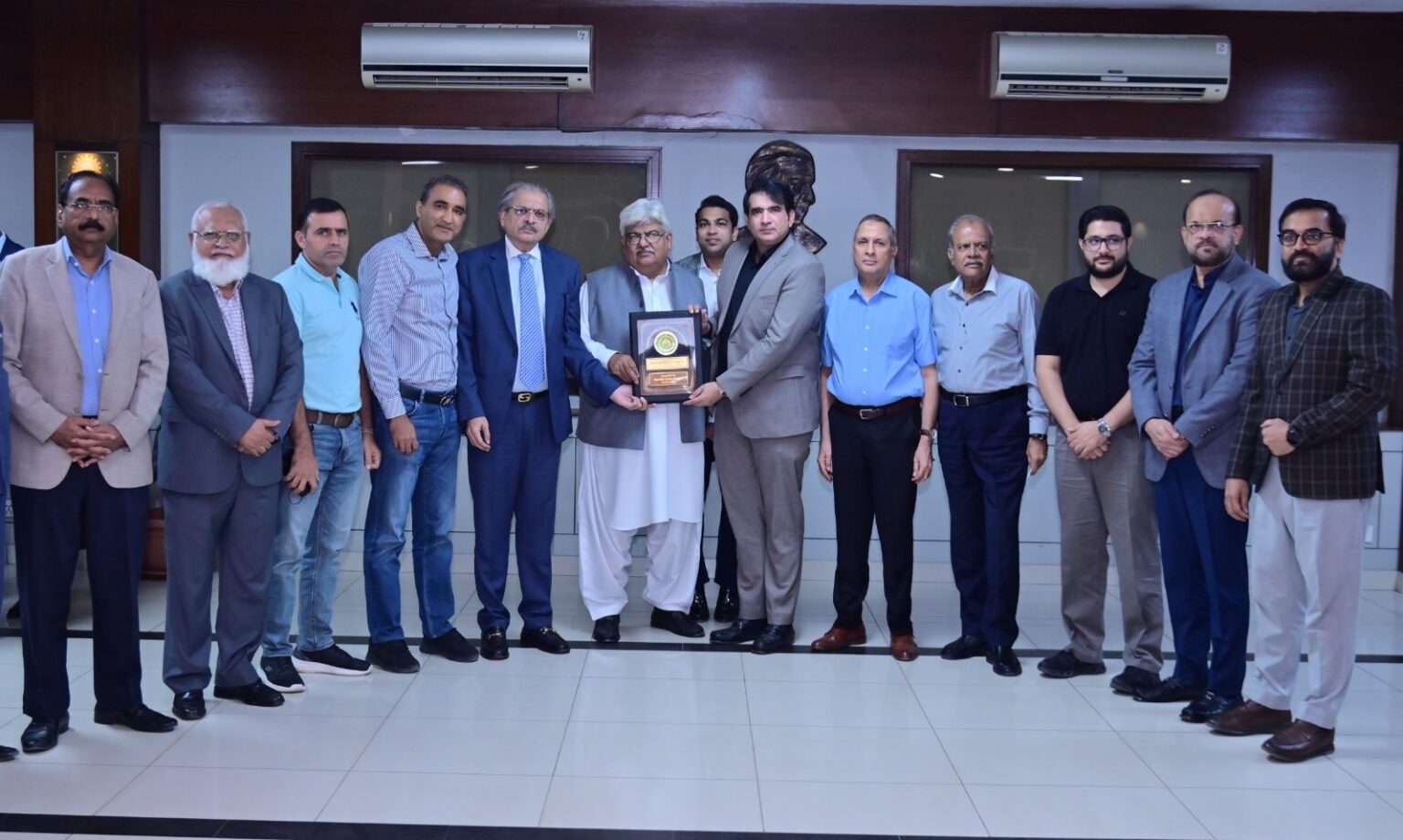
Speaking during a meeting with industrialists and business community representatives at the Korangi Association of Trade and Industry (KATI), he said Prime Minister Shehbaz Sharif was committed to improving Karachi’s infrastructure and that the federal government was making efforts to promote the city’s development.
He emphasized that the business community could play an important bridging role between the government and industry in addressing Karachi’s longstanding challenges and unlocking its economic potential.
The senator said federal government attention was necessary to resolve the city’s persistent infrastructure problems, particularly electricity and water supply issues. He assured industrialists that he would raise these matters at the federal level.
Highlighting Karachi’s contribution to the national economy, he said developing the city was a responsibility because of its substantial contribution to national revenue. He added that the scope of development projects could be expanded if the PML-N received greater public support in Karachi.
KATI President Sheikh Umer Rehan said Karachi contributed more than half of Pakistan’s national revenue, while the Korangi Industrial Area accounted for approximately 60 percent of the city’s overall revenue.
He said six major export-oriented industries operating in the Korangi Industrial Area contributed around five percent to Pakistan’s total exports, while exports from the industrial zone had reached approximately $3.1 billion.
Despite this contribution, he said Karachi’s business community continued to face challenges at federal, provincial and local government levels.
He identified expensive electricity and energy as major obstacles to industrial growth, saying high energy costs were increasing production expenses and making Pakistani products less competitive in international markets.
Sheikh Umer Rehan called for monthly visits by federal ministers to Karachi, following the example of the FBR chairman, who visits the city every month on the Prime Minister’s directives to engage with stakeholders.
He said regular interaction between federal ministers and industrialists would help the government understand business concerns directly and accelerate the resolution of longstanding problems.
KATI Deputy Patron-in-Chief Zubair Chhaya also stressed that Pakistan’s economic progress was directly linked to Karachi’s development.
He said the city’s business community continued working for national economic prosperity regardless of political affiliations, despite challenges relating to law and order, infrastructure and governance.
Chhaya said Karachi contributed approximately 60 percent to the national economy and accounted for 95 percent of Sindh Revenue Board collections.
He argued that Karachi deserved development initiatives similar to those undertaken in Punjab and urged the Prime Minister and federal government to give the city special attention.
He also highlighted the importance of an efficient railway freight system, saying improved freight transportation could provide businesses with affordable logistics, reduce pressure on roads and lower the country’s diesel import bill.
Meanwhile, Senator Afnan Ullah Khan said the government was working to improve the performance of electricity distribution companies and that the privatisation model for DISCOs had been adopted from Türkiye.
He also proposed establishing a solar park outside Karachi in cooperation with the business community, inviting KATI and industrialists to submit practical recommendations for consideration by the Prime Minister and federal government.
The senator further said financial closing of the Main Line-1 (ML-1) railway project had been achieved and work was expected to begin soon, which could help address problems associated with existing railway tracks.
He also discussed the privatisation of Pakistan International Airlines, saying the process had been completed after several unsuccessful attempts and that an independent third-party valuation had been conducted.
The meeting was attended by KATI President Sheikh Umer Rehan, Deputy Patron-in-Chief Zubair Chhaya, Senior Vice President Farrukh Qandhari, Vice President Nasir Sheikh and other industrialists and business representatives.