
KPT bridge 77% complete, set to ease Karachi traffic jams
KARACHI (TKP Report) Karachi Port Trust (KPT) has completed 77 percent of construction on a bridge linking its East and West Wharves, with the project scheduled for completion by May next year as authorities step up efforts to reduce cargo-related congestion on Karachi’s roads.
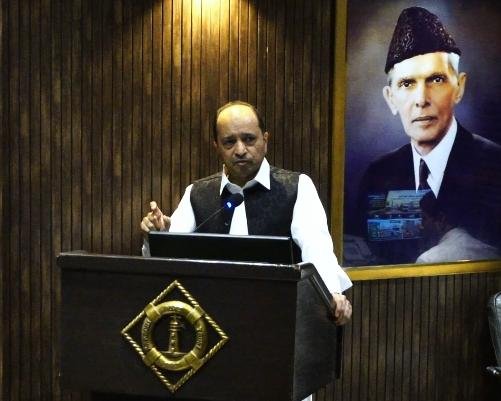
KPT Chairman Rear Admiral (Retd) Shahid Ahmed announced the progress while addressing an interactive seminar titled “From Congestion to Connectivity” at KPT Staff College in Lalazar, followed by a media briefing. The event was co-chaired by Port Qasim Authority (PQA) Chairman Rear Admiral (Retd) Syed Moazzam Ilyas.
The bridge, located near Native Jetty, is expected to enable cargo vehicles to travel between the two wharves without entering the city’s road network. The remaining 23 percent of construction is expected to be completed before the project becomes operational, improving internal port connectivity and reducing pressure on major urban arteries.
Ahmed said tackling traffic congestion had been a key priority since he assumed charge in November 2025.
The bridge is one component of a wider plan to improve freight movement through Pakistan’s busiest maritime gateway. KPT is also pursuing railway connectivity, dedicated freight routes and road infrastructure to move containers away from congested urban areas.
Construction of the Karachi section of the Main Line-1 (ML-1) railway project is expected to begin next month, according to the KPT chairman. He said he had held discussions with the federal railways minister and invited the Asian Development Bank to Pakistan twice in connection with the project.
Separately, a 54-kilometre dedicated freight corridor being developed by the National Logistics Cell (NLC) is scheduled to become operational in January. The corridor is expected to support four to six freight trains daily between Karachi Port and Pipri, transporting approximately 500 containers and bulk cargo.
KPT is also planning to initiate construction of the M-10 route from West Wharf rather than ICI Bridge within the next two to three months. Work on Shahrah-e-Bhutto has already begun, and the completion of the planned connectivity links is expected to allow at least 5,000 containers to move directly onto the expressway, bypassing congested city roads.
Ports Move to Address Transport Bottlenecks
The seminar brought together transporters and other stakeholders to discuss persistent problems involving road capacity, parking shortages, cargo delays and the movement of heavy vehicles.
Both port authorities pledged coordinated action and announced plans to revive a joint stakeholders’ committee to address operational issues. Transporters attending the event offered to provide services on weekends without charging additional fees to help facilitate trade and reduce congestion.
Ahmed said the Sindh government had initiated the tendering process for a modern 1,000-acre marshalling yard intended to manage heavy vehicles and improve traffic organisations around port facilities.
He also disclosed that the provincial government collects approximately Rs160 billion annually through a 0.85 percent cess on imports. KPT is seeking an allocation of Rs15 billion to Rs20 billion from these collections for roads connecting Karachi Port and Port Qasim.
Another road at West Wharf is also planned, with construction to be undertaken either by the Sindh government or KPT.
Advance Customs Processing to Reduce Delays
Alongside infrastructure development, KPT is seeking to reduce the time containers spend awaiting clearance.
The chairman urged importers to submit advance Goods Declarations (GDs), saying only around 10 percent currently do so despite approximately 70 percent having the necessary financial instruments available.
He said the limited use of advanced declarations contributes to congestion and unnecessary delays in cargo processing.
KPT has also approached Customs authorities to introduce night-time cargo inspections at Karachi Port and Port Qasim. Officials are working to streamline procedures, including removing certain requirements concerning the physical presence of agents at container terminals, allowing eligible routine cargo movements to proceed more efficiently.
On the technology front, both ports are introducing enterprise resource planning (ERP) systems and strengthening cyber security arrangements. Ahmed cautioned that no digital system could be considered completely immune to security risks.
The KPT chairman expressed confidence that coordinated measures involving the two port authorities, Customs, the Sindh government and transporters would produce substantial improvements in congestion management, cargo handling and operational efficiency by December 2026.
The success of the initiative will ultimately depend on timely completion of infrastructure projects, effective coordination among agencies and the extent to which freight traffic can be shifted away from Karachi’s already burdened urban road network.