
Only 3% of PSX-listed firms disclose children’s rights commitment: UNICEF
KARACHI (Staff Report): Only 3 percent of Pakistan Stock Exchange (PSX)-listed companies explicitly disclose a commitment to respecting children’s rights, highlighting significant gaps in corporate governance and sustainability reporting, according to a new assessment released by UNICEF in collaboration with the Pakistan Stock Exchange and Pakistan Business Council.
The report, titled Making Children Count: Sustainability Reporting in Pakistan, examined the sustainability disclosures of 98 companies listed on the PSX against 29 indicators relating to children’s rights and business.
The assessment found that while 78 percent of the companies reviewed reported community investments benefiting children, children’s rights remained less visible in their corporate governance structures, human rights due diligence, workplace practices, supply chains, products and services, and climate and environmental considerations.
The findings point to a gap between corporate social investment and the formal integration of children’s rights into business policies. Although companies are reporting initiatives that benefit children, relatively few explicitly recognize their responsibility to respect children’s rights as part of their core business commitments.
The report comes at a significant time for Pakistan’s corporate sector, as the Securities and Exchange Commission of Pakistan (SECP) moves towards phased mandatory Environmental, Social and Governance (ESG) reporting requirements beginning in 2029.
The transition is expected to place greater emphasis on corporate sustainability disclosures, creating an opportunity for companies to incorporate children’s rights into their reporting frameworks and business practices.
At the launch of the report, UNICEF Representative in Pakistan Pernille Ironside said Pakistan was home to 112 million children whose lives were influenced by business decisions long before they entered the workforce.
She said corporate activities affected children through their parents’ working conditions, the products they used, the food they consumed, digital environments they navigated and the communities in which they grew up.
According to Ironside, businesses therefore had an important responsibility towards children’s health, development and future opportunities, extending beyond traditional charitable contributions.
Pakistan Stock Exchange Chief Executive Officer Farrukh H. Sabzwari said capital markets played an important role in promoting transparency, responsible corporate conduct and long-term value creation.
He said recognizing children’s rights within the sustainability agenda was an important part of corporate responsibility. Through the PSX Sustainability Index and engagement with listed companies, the exchange saw opportunities to improve awareness and gradually strengthen the integration of children’s rights into corporate sustainability practices.
The assessment also highlights the need for companies to move beyond community investment programmes and examine how their everyday operations affect children.
This includes assessing workplace policies that influence employees’ families, identifying potential risks to children within supply chains, ensuring products and services do not adversely affect children, and considering the impact of environmental and climate-related decisions on younger generations.
The distinction is important because corporate responsibility towards children is not limited to donations, educational programmes or community welfare projects. It also involves identifying and preventing potential harm arising from business operations and commercial activities.
The report calls on businesses to integrate children’s rights more systematically into their corporate strategies and ESG practices. It also identifies an important role for regulators, stock exchanges and investors in providing guidance, improving disclosure standards and strengthening corporate accountability.
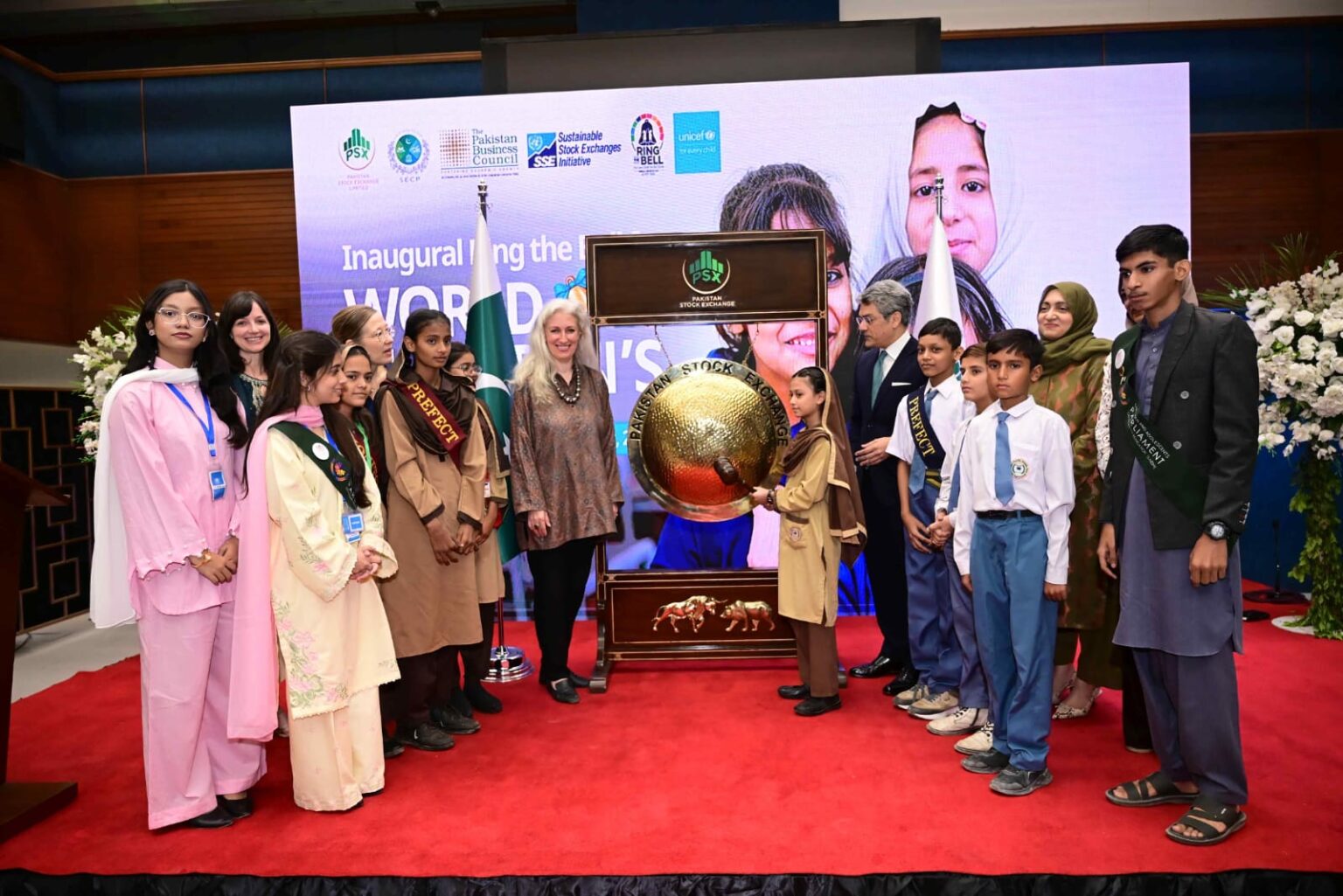
The findings were highlighted during the Ring the Bell for Children ceremony held at the Pakistan Stock Exchange on World Children’s Day. The event was part of a global campaign led by UNICEF and the United Nations Sustainable Stock Exchanges initiative, involving stock exchanges across 25 countries and five continents.
The campaign aims to encourage businesses and investors to consider children’s rights in their investment decisions, corporate policies and operational practices.
For Pakistan’s listed companies, the findings present a challenge ahead of the introduction of mandatory ESG reporting requirements. Improving sustainability disclosures will require companies to demonstrate not only their social investments but also how children’s rights are recognized and protected throughout their business activities.
With 112 million children in the country, the issue extends beyond corporate philanthropy to questions of governance, transparency and long-term economic sustainability.
As Pakistan moves towards a more structured ESG reporting framework, the extent to which businesses incorporate children’s rights into their policies and disclosures will become an important measure of corporate accountability.