
Pakistan seeks zero-tariff access to Chinese market to boost exports
KARACHI (Staff Report): Pakistan is seeking improved access to China’s vast consumer market through zero-tariff arrangements and a review of bilateral trade concessions, as Islamabad looks to address a persistent trade imbalance and expand its export base.
Federal Minister for Commerce Jam Kamal Khan said Pakistan had approached China for a review of the existing Free Trade Agreement (FTA), with particular emphasis on securing more favourable market access for Pakistani products.
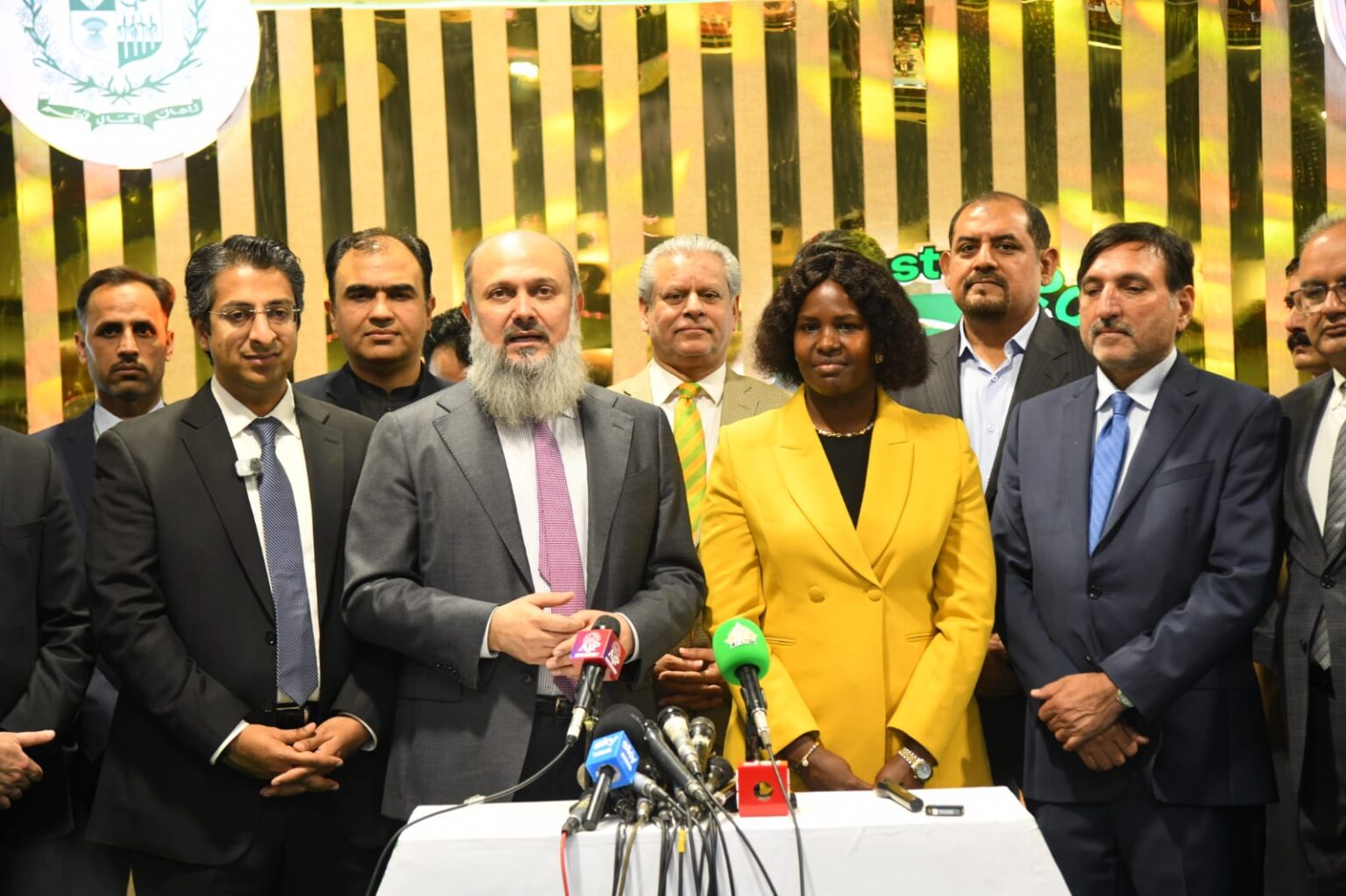
Speaking to the media on the sidelines of FoodAg 2026 at the Karachi Expo Centre on Monday, the minister said Pakistan had also discussed the possibility of obtaining zero-tariff treatment similar to arrangements China had extended to certain African countries and Bangladesh.
The initiative reflects Pakistan’s efforts to improve the competitiveness of its exports in one of its largest trading partner markets, where the gap between imports and exports remains substantial.
According to Jam Kamal, Pakistan’s annual imports from China stand at approximately $17 billion to $18 billion, while Pakistani exports to the Chinese market are around $3 billion.
The difference highlights the scale of the bilateral trade imbalance and the challenges facing Pakistan in expanding its presence in the Chinese market.
The minister said discussions had also taken place with Chinese companies to establish manufacturing facilities in Pakistan and sell locally manufactured products in China.
Such an approach could create opportunities to increase domestic production, attract foreign investment and strengthen Pakistan’s integration into regional and international supply chains.
Rather than relying solely on conventional exports, the government appears interested in encouraging Chinese businesses to use Pakistan as a manufacturing base for products destined for international markets.
However, the success of this strategy would depend on the competitiveness of local manufacturing, access to technology, energy costs, industrial productivity and the ability of Pakistani businesses to meet international quality standards.
The proposed review of the FTA could also become an important component of Pakistan’s broader export diversification strategy.
China remains a major destination for several Pakistani products, including agricultural commodities, textiles and other manufactured goods. Improved tariff access could potentially help exporters compete more effectively, although the actual benefits would depend on product-specific concessions, regulatory requirements and market demand.
Jam Kamal’s remarks also highlighted the importance of value addition in expanding Pakistan’s international trade.
Speaking at FoodAg 2026, the minister said agriculture, textiles and information technology had played an important role in supporting Pakistan’s exports during eight months of difficult global trading conditions.
He noted that rising crude oil prices and freight costs had created additional challenges for international commerce, but Pakistan’s export indicators had remained positive.
The focus on value addition is particularly relevant to Pakistan’s agricultural sector, which has considerable potential to increase export earnings through food processing, packaging, quality improvements and the development of higher-value products.
Ugandan representatives attending FoodAg 2026 also highlighted the importance of value addition in making international trade more profitable.
The exhibition, organised at Karachi Expo Centre, has brought together participants from 72 countries, with approximately 400 exhibitors showcasing their products. Around 820 international delegates are participating, while travel programmes for 820 buyers have reportedly been confirmed.
The event is intended to provide Pakistani businesses with opportunities to engage foreign buyers, explore new markets and develop commercial partnerships.
For Pakistan, improving access to China represents an important opportunity, but tariff concessions alone may not be sufficient to transform bilateral trade.
Exporters also face challenges related to production capacity, consistency of supply, certification, logistics and compliance with Chinese import regulations. Addressing these issues will be essential if Pakistani businesses are to translate improved market access into higher export volumes.
The government will also need to identify sectors and products with the greatest potential for expansion in China, ensuring that negotiations produce commercially meaningful concessions rather than broad commitments without measurable export benefits.
The proposed zero-tariff arrangement and FTA review therefore raise a wider question about Pakistan’s trade strategy: whether the country can move beyond importing finished goods and establish itself as a competitive manufacturing and export partner.
The outcome of negotiations with Beijing could help determine whether Pakistan can narrow its bilateral trade gap by expanding domestic production, attracting investment and gaining a stronger position in the Chinese market.