
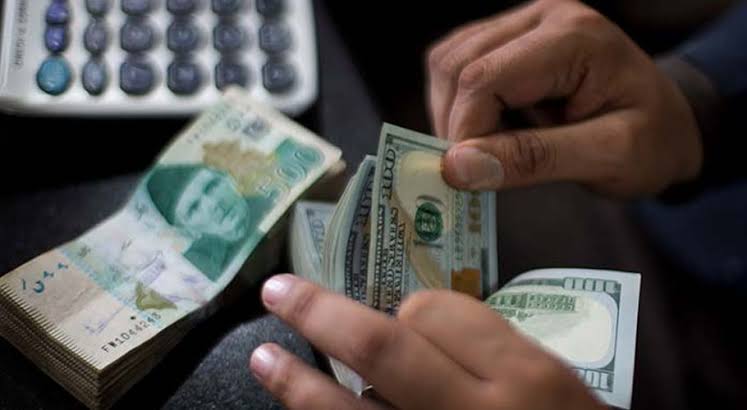
Remittances rescue Pakistan’s current account as trade deficit widens
KARACHI (Staff Report): Pakistan’s current account returned to surplus in October 2026, but the improvement was largely supported by rising workers’ remittances as the country’s merchandise trade deficit continued to widen, highlighting the persistent imbalance between export earnings and import expenditure.
According to data released by the State Bank of Pakistan (SBP), the country recorded a current account surplus of $39 million in October, compared with a deficit of $371 million in September and $307 million in October 2025.
The turnaround came as workers’ remittances increased 14% year-on-year to $3.892 billion, compared with $3.420 billion in the corresponding month last year. On a monthly basis, remittance inflows also grew 8% from $3.588 billion in September.
However, the merchandise trade balance continued to reflect pressure on the external account. Goods imports increased 9% year-on-year to $5.869 billion in October, while exports rose 10% to $2.902 billion. Consequently, the goods trade deficit widened to $2.967 billion from $2.755 billion a year earlier.
The four-month figures for FY27 underline this structural challenge. Between July and October, goods imports increased 13% to $23.642 billion, significantly outpacing the 8% growth in exports, which reached $11.354 billion. The resulting merchandise trade deficit stood at $12.288 billion, compared with $10.460 billion during the corresponding period last year.
Meanwhile, services exports provided some support to the external account, increasing 23% to $3.721 billion during the first four months of FY27. However, services imports also rose 18% to $4.791 billion, leaving a services trade deficit of $1.070 billion.
The strength of remittance inflows remained particularly significant. Pakistan received $14.767 billion in workers’ remittances during July-October, representing a 14% increase from $12.956 billion in the same period last year. Secondary income also increased 15% to $15.649 billion.
Consequently, Pakistan’s cumulative current account deficit narrowed approximately 20% to $850 million during the first four months of FY27, compared with $1.062 billion a year earlier.
While the October surplus and improvement in the cumulative current account position indicate better external account management, the faster growth in imports than exports raises questions about the sustainability of the improvement.
For Pakistan, the longer-term challenge remains strengthening export capacity and reducing the structural trade imbalance rather than relying predominantly on remittance inflows to support external stability.
The latest figures suggest that overseas Pakistanis continue to provide an important cushion to the country’s external account, while the underlying merchandise trade gap remains a major economic vulnerability.