
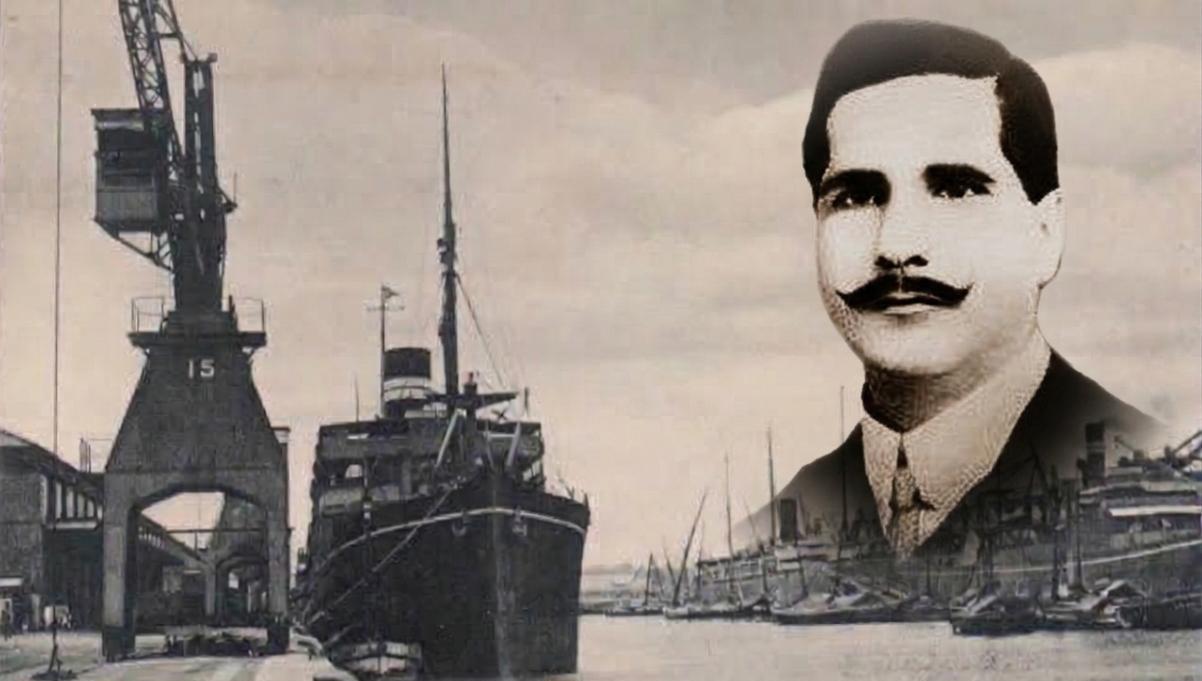
Before the poet, there was an economist: Rediscovering Iqbal
KARACHI (TKP Feature): Every November 9, Pakistan celebrates Allama Muhammad Iqbal as a poet, philosopher and the intellectual inspiration behind the idea of Pakistan. His verses are recited in schools, his portraits adorn public buildings, and his philosophical ideas are revisited in speeches and ceremonies. Yet, an important chapter of his intellectual life often remains outside the national conversation: his first published book was about economics, not poetry.
Titled Ilm-ul-Iqtisad (The Science of Economics), the Urdu-language book was Iqbal’s first published work and one of the early attempts to introduce modern economics to Urdu-speaking readers in the subcontinent. Written during his early academic career, it offers a glimpse into a young intellectual whose interests extended well beyond literature and philosophy.
Although some historical accounts date the book to 1903, the Iqbal Academy Pakistan identifies November 1904 as its publication date, a conclusion also supported by economist Pervez Tahir’s research. The discrepancy reflects a longstanding debate in Iqbal scholarship, but there is broad agreement that the work was his first published book.
The book emerged during a period when economics was gradually developing as an academic discipline in British India. Iqbal was associated with Lahore’s Oriental College and subsequently taught at Government College Lahore, where economics formed part of his academic responsibilities.
His engagement with economics was therefore not simply an intellectual curiosity. It was connected to his academic environment and his interest in understanding the material conditions shaping society.
In Ilm-ul-Iqtisad, Iqbal attempted to explain the principles of economics and political economy in accessible Urdu prose. The book explored subjects including wealth, production, consumption, distribution, wages, taxation, population and poverty. It also addressed broader economic questions involving banking, trade, land ownership and industrial organisation.
The significance of this effort becomes clearer when viewed in its historical context. Much of the established economic literature available to students at the time was in English. By presenting economic concepts in Urdu, Iqbal sought to make a relatively specialized discipline understandable to a wider readership.
His preface offers an especially revealing insight into his approach. He described economics as the study of the ordinary business of human life, examining how people earn their income and how they spend it. He also recognized that economic circumstances influence human habits, conduct and even intellectual development.
This was an important observation because it connected economic activity with the wider human experience rather than treating wealth as an isolated subject.
Iqbal also expressed concern about poverty in India and the limited understanding of economic conditions among the general population. His intention was to explain economic principles while examining their relevance to the circumstances of the country.
However, the book’s intellectual origins have also attracted scholarly debate. Researchers have examined its relationship with existing English-language economic textbooks, particularly the work of American economist Francis Amasa Walker.
Research by Pervez Tahir traces Iqbal’s academic engagement with economics and the translation and adaptation of contemporary economic literature. A separate 2024 study by Tariq Mehmood Hashmi, published in the Oriental College Magazine, revisits whether Ilm-ul-Iqtisad should be considered Iqbal’s original composition or an abridgement and translation of existing material.
This debate is significant because it places the book within a wider history of knowledge transfer, translation and the introduction of modern economic thought into Urdu.
It would, however, be misleading to present Iqbal as a formally trained economist or suggest that Ilm-ul-Iqtisad established a comprehensive economic theory of his own. The book drew considerably upon the economic literature of its time, and much of its textbook material subsequently became outdated.
Its historical importance lies elsewhere: it reveals the early intellectual interests of a man who would later become one of the most influential thinkers of the subcontinent.
Iqbal’s engagement with economics did not end with this publication. His later writings and political interventions reflected continuing concerns about poverty, economic exploitation, concentrated wealth, land ownership and social justice. His poetry, too, frequently challenged systems that placed material power above human dignity.
Yet, the distinction between his early academic work and his later philosophical thought deserves recognition. Ilm-ul-Iqtisad was not simply an early expression of the poet’s eventual worldview. It was also an attempt to introduce a developing academic discipline to readers in their own language.
More than a century later, the book raises an interesting question about how Pakistan remembers its intellectual figures. Iqbal is widely celebrated through his poetry, but his prose works and academic contributions receive considerably less public attention.
For a country where economic debates dominate national life, revisiting his first published work offers an opportunity to rediscover an overlooked part of its intellectual history.
It would be anachronistic to expect a book written in the early twentieth century to provide solutions to today’s economic challenges. Pakistan’s fiscal pressures, inflation, unemployment and structural economic weaknesses belong to a vastly different economic environment.
But the historical significance of Iqbal’s first book remains relevant. It reminds us that before becoming the celebrated poet of selfhood and spiritual awakening, he was also a scholar interested in how societies produce wealth, distribute resources and confront poverty.
On his birthday, perhaps the most interesting way to remember Iqbal is to return to the book with which his published intellectual journey began.
His first book was not poetry. It was economics.