
From Mohenjo-Daro to modern Sindh: Hindu community’s enduring cultural legacy
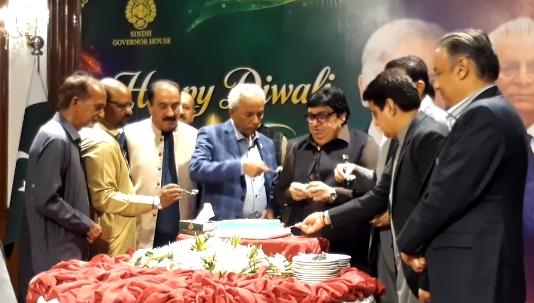
KARACHI (Staff Report): The Diwali celebrations at Governor House Sindh offered more than a glimpse of festive lights and cultural traditions, bringing renewed attention to the historical roots and contributions of the Hindu community in Sindh.
From the ancient civilization of Mohenjo-Daro to contemporary Sindh, the region has witnessed centuries of cultural interaction, religious diversity and social transformation. Its identity has been shaped by communities that have contributed to its traditions, commerce, language, arts and collective heritage.
Speaking at a Diwali ceremony at Governor House, Minister of State for Religious Affairs Kheal Das Kohistani highlighted the historical association of the Hindu community with the land, describing its members as an integral part of the region’s history.
The remarks brought into focus a community whose presence in Sindh predates the creation of Pakistan and whose cultural traditions remain deeply connected with the province’s social fabric.
Sindh’s Hindu community has historically played a significant role in trade, business, education and cultural activities. Hindu merchants, traders and business families have been part of the province’s commercial landscape, while religious festivals, traditional music, literature and local customs have contributed to its distinctive cultural identity.
Diwali, celebrated as the festival of lights, is among the most prominent occasions for Hindu families. Beyond its religious significance, the festival represents themes of renewal, hope and the triumph of light over darkness.
At the Governor House ceremony, Governor Sindh Syed Muhammad Nihal Hashmi described religious harmony as part of Quaid-e-Azam Muhammad Ali Jinnah’s vision for Pakistan. He emphasised that citizens belonging to all religions enjoy equal rights and that discrimination has no place in society.
The participation of members of the Hindu community, business personalities, women and children reflected the cultural and social significance of the occasion.
However, the broader significance of such celebrations extends beyond official ceremonies. The preservation of Sindh’s multicultural heritage also requires recognition of minority communities’ historical contributions, protection of their religious freedoms and equal opportunities in education, employment and economic participation.
Sindh’s history cannot be viewed through a single religious or cultural lens. Its identity has developed through the interaction of different communities, traditions and historical influences.
The Diwali celebrations at Governor House therefore offered an opportunity to revisit this shared heritage and recognise the Hindu community’s place in the historical and contemporary story of Sindh.