
Pakistan eyes Ethiopia as gateway to expand trade across Africa
ISLAMABAD (News Desk): Pakistan is looking towards Ethiopia as a strategic partner to expand its commercial footprint across Africa, with both countries exploring opportunities to strengthen trade, investment and economic cooperation.
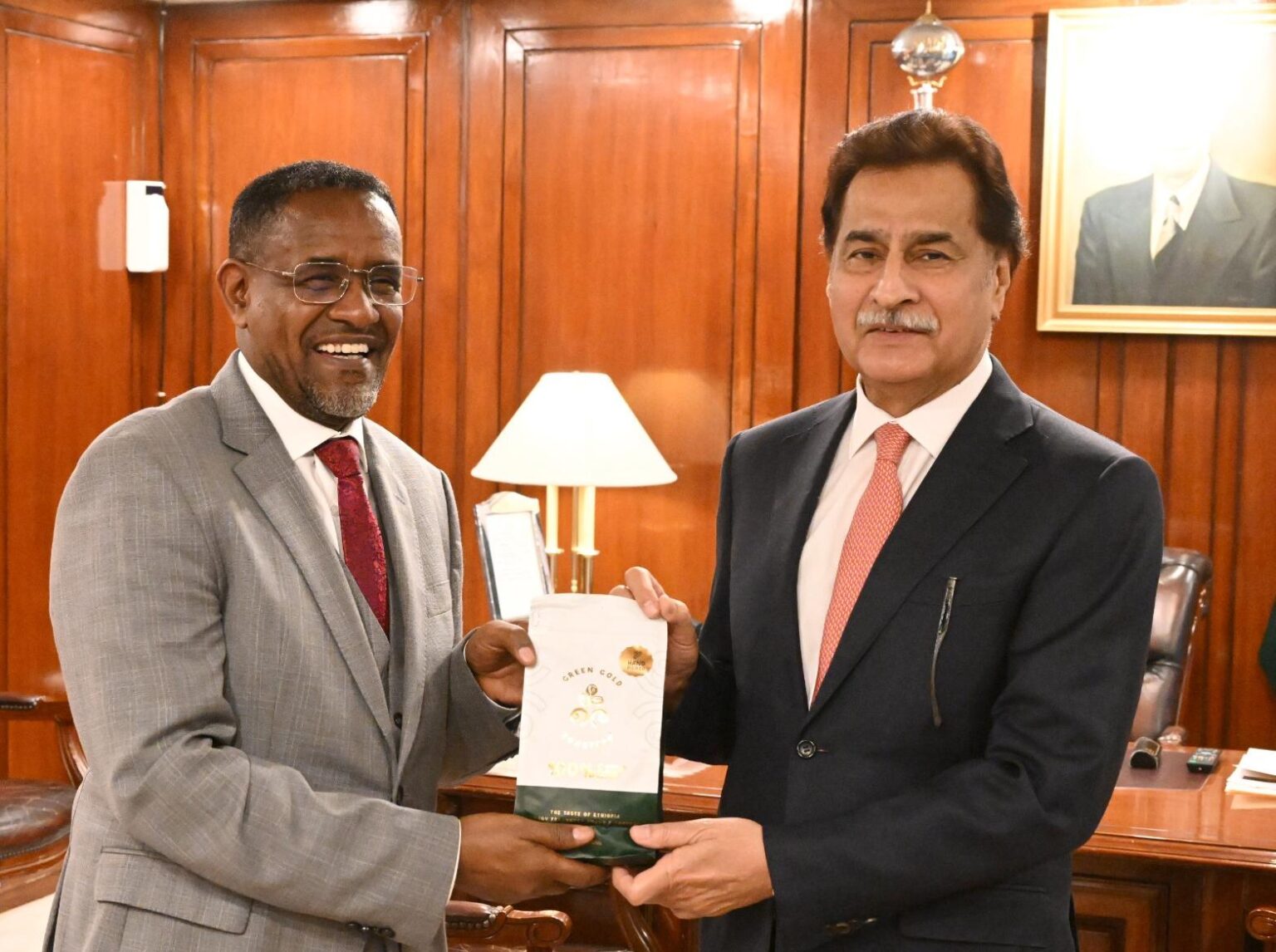
The possibility was discussed during a meeting between Ethiopian Ambassador to Pakistan Dr Oumer Hussien Oba and National Assembly Speaker Sardar Ayaz Sadiq at Parliament House on Wednesday, where the two sides explored ways to deepen bilateral relations and identify new areas of economic engagement.
The meeting comes as Pakistan seeks to strengthen its commercial and diplomatic presence in African markets under its Look Africa and Engage Africa policies. Ethiopia’s strategic position as the headquarters of the African Union could provide Pakistan with an important diplomatic platform to develop stronger relationships across the continent.
During the meeting, Ambassador Dr Oumer highlighted Ethiopia’s position as the seat of the African Union, noting that Pakistan could leverage its relations with the country to significantly expand its presence in Africa.
He reaffirmed the longstanding relations between the two countries and stressed the importance of encouraging high-level delegations and expanding cooperation across trade, investment, culture and tourism.
For Pakistan, stronger engagement with Ethiopia could offer an opportunity to explore new commercial partnerships at a time when diversification of export markets remains important for the country’s external trade prospects.
The National Assembly Speaker said Pakistan attached great importance to its friendly relations with Ethiopia and that both countries had considerable opportunities to enhance trade, investment and economic cooperation.
He also highlighted Pakistan’s Look Africa Policy, describing engagement with African countries as an important priority. The Engage Africa Policy, he said, reflected Islamabad’s commitment to expanding political, economic and diplomatic cooperation with the continent.
The discussions also covered parliamentary diplomacy, with both sides emphasizing the importance of exchanges between legislatures and visits by high-level delegations to strengthen institutional relations.
Beyond diplomatic engagement, the potential economic relationship could cover several areas, including trade, investment, tourism and cultural exchanges. However, translating these discussions into commercial outcomes would require sustained engagement between businesses, investors and relevant government institutions.
Ethiopia’s location and diplomatic significance make it an important country for Pakistan’s broader African engagement strategy. Its role as host to the African Union headquarters gives it particular relevance for diplomatic outreach, although access to individual African markets would still depend on country-specific trade arrangements and business relationships.
For Pakistani exporters, the opportunity would ultimately depend on identifying products and services with competitive demand in Ethiopia and other African economies, while addressing practical issues such as logistics, market access, payment arrangements and regulatory requirements.
The meeting did not announce specific trade agreements, investment commitments or export targets. Instead, it signalled an intention to explore additional avenues of cooperation and strengthen the institutional relationship between the two countries.
The challenge for both governments will now be to move beyond diplomatic exchanges and create practical channels for business-to-business engagement, investment partnerships and increased trade.
For Pakistan, Ethiopia could become an important partner in its effort to build stronger economic connections across Africa, provided the diplomatic momentum is translated into concrete commercial opportunities.