
Pakistan’s hidden tariff advantage could unlock global export markets
KARACHI (News Desk): Pakistani exporters could improve their competitiveness in international markets and attract more overseas buyers by effectively using preferential tariff concessions available under various trade agreements, a Trade Development Authority of Pakistan (TDAP) consultant said on Wednesday.
Kamal Sheharyar, while explaining the Preferential Trade Access Database (PTAD) portal at the Karachi Chamber of Commerce and Industry (KCCI), said Pakistani businesses were not fully utilising available tariff advantages, partly because exporters and foreign buyers often lacked convenient access to consolidated information about customs duties and trade concessions.
He said the online platform could help bridge this information gap by allowing Pakistani exporters to identify markets where their products enjoy preferential access, while overseas buyers could independently verify the customs-duty benefits available on imports from Pakistan.
The commercial significance of these concessions could be substantial. Sheharyar illustrated the potential savings with an example of a shipment valued at $100,000 that attracts a Most Favoured Nation (MFN) customs duty of 12%.
Under the normal tariff, the foreign buyer would pay $12,000 in customs duty. However, if the product qualifies for a preferential tariff of 3% under an applicable trade arrangement, the duty would fall to $3,000, generating a saving of $9,000.
Such savings could make Pakistani products more attractive to international buyers, improve their price competitiveness and encourage foreign companies to source more goods from Pakistan, he explained.
The example highlights an opportunity for exporters to compete not only through product quality and pricing but also by demonstrating the tariff advantages available to overseas customers.
Sheharyar said foreign buyers frequently asked Pakistani suppliers about the customs duties applicable to products imported from Pakistan. However, exporters did not always have readily available or updated information about the concessions offered under different trade agreements and preferential schemes.
The PTAD portal has been developed to address this problem by providing free and worldwide access to information on preferential trade arrangements, tariff concessions and market-access opportunities available to Pakistani products.
According to Sheharyar, the database covers 29 trade arrangements involving 95 countries, while Pakistan enjoys preferential trade arrangements for exports in 93 countries. The platform also provides information on 15 Generalized System of Preferences (GSP) schemes under which Pakistan receives preferential access to different markets and product categories.
The arrangements include Free Trade Agreements (FTAs), Preferential Trade Agreements (PTAs), regional and multilateral trade agreements, and GSP schemes extended by various countries.
Each arrangement has been placed in a separate module containing information about product coverage, applicable MFN and preferential tariff rates, tariff advantages, Rules of Origin, origin procedures and export-import documentation requirements.
This information is particularly important because preferential access is not automatically available to every product exported from Pakistan. Eligibility depends on the relevant trade arrangement, product classification and compliance with applicable Rules of Origin and documentation requirements.
Under these rules, exporters may need to demonstrate that goods originate in Pakistan or meet specified conditions relating to their production and processing before buyers can claim preferential customs duties.
Previously, businesses often had to search through lengthy trade agreements, annexures, tariff schedules and government websites to establish whether a particular product qualified for a concession in a specific market.
Identifying the correct Harmonized System (HS) Code, checking product coverage and calculating the difference between normal and preferential duties could require considerable time and technical knowledge.
The PTAD portal consolidates this information into a single platform, enabling businesses to examine available concessions and assess potential markets without having to navigate multiple documents and sources.
Sheharyar emphasized that the platform was designed to serve both exporters and importers, unlike many international tariff databases that primarily focus on imports into their respective countries.
For Pakistani exporters, the database can help identify destinations where their products enjoy lower customs duties and provide information that can be shared with prospective overseas buyers.
For local importers, it can help identify countries offering favourable tariff arrangements for imported raw materials, machinery and intermediate goods.
This could be particularly relevant for Pakistani manufacturers that import inputs, process or add value to them locally and subsequently export finished products. Access to preferential sourcing arrangements may help such businesses examine opportunities to reduce input costs and improve the competitiveness of their final products.
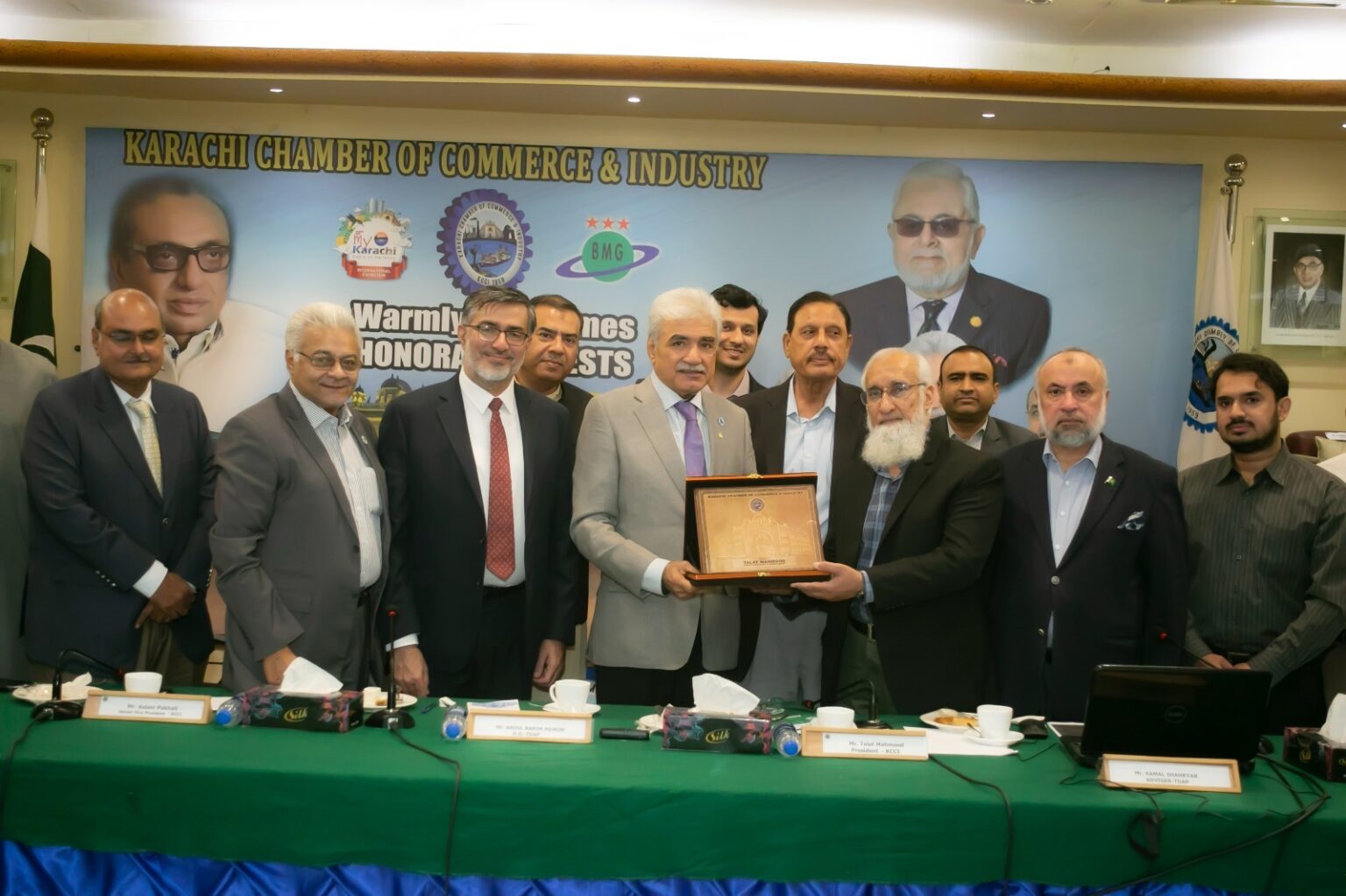
The presentation was attended by KCCI President Talat Mahmood, Senior Vice President Aslam Pakhali, Vice President Arif Jameel Ur Rahman and members of the chamber’s Executive Committee.
The TDAP delegation included Director General Abdul Karim Memon, Deputy Director Tariq Idrees, Assistant Manager Noman Badar Siddiqui and Research Associate and Helpdesk Officer Mahendar Kumar.
The presentation was organized as part of TDAP’s initiative to establish a helpdesk at KCCI to facilitate the business community and provide exporters, importers and other stakeholders with direct access to trade-related information, guidance and support.
Sheharyar urged exporters to make the PTAD portal part of their export marketing and business-development activities by sharing relevant tariff information with overseas buyers.
He also encouraged importers to use the database to examine potential sourcing opportunities, while chambers of commerce, trade associations and their research departments could help educate members about available concessions and the requirements for using them.
He said the portal could also support government institutions and trade-negotiating teams by providing consolidated tariff information to assess existing arrangements and identify opportunities for future negotiations.
For Pakistan, the broader challenge is to translate preferential market access into actual export orders. The availability of lower tariffs can improve the commercial appeal of Pakistani goods, but it does not guarantee additional sales.
Exporters must still meet international standards, maintain competitive prices, comply with rules of origin, ensure reliable delivery and understand the regulatory requirements of destination markets.
The extent to which businesses use the PTAD database will therefore be important in determining its commercial value.
If exporters routinely use the platform to identify tariff advantages and communicate them to overseas buyers, the database could become a practical tool for developing new business relationships and diversifying export destinations.
The central opportunity is to ensure that Pakistani businesses do not overlook existing trade concessions when competing for international orders. By making tariff information easier to access and verify, TDAP hopes to help exporters turn preferential market access into a stronger competitive advantage in global trade.