
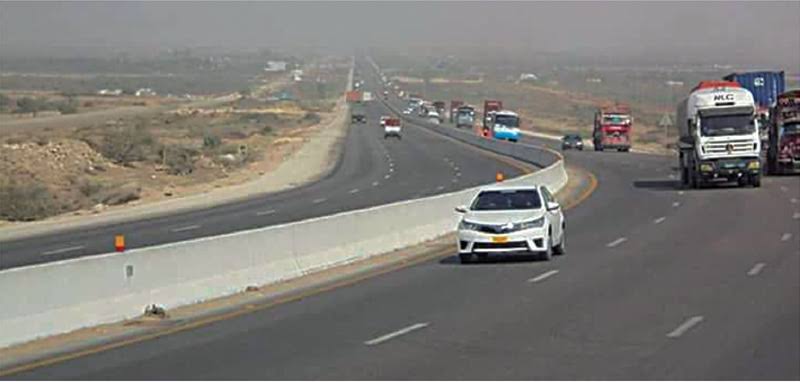
Private investors to build 121km of M-6 Motorway under 25-year toll concessions
ISLAMABAD (Staff Report): The government has approved the development of two sections of the 306-kilometre Hyderabad-Sukkur Motorway (M-6) under a public-private partnership (PPP) model, opening the door for private investors to finance, construct and operate approximately 121 kilometres of the strategic highway.
The Board of the Public Private Partnership Authority (P3A), at its 46th meeting held on Wednesday, approved Sections I and II of the motorway, which will be awarded under separate concession agreements. The decision marks progress on a long-awaited infrastructure project aimed at improving connectivity between Karachi’s ports, industrial centres and markets in northern Pakistan.
Under the proposed arrangement, private investors will develop and operate the two sections for 25 years, recovering their investments through toll collections. At the end of the concession period, the motorway will be handed over to the National Highway Authority (NHA) in good working condition.
The government will provide Viability Gap Funding (VGF) for Section I only to make the project commercially viable and ensure toll charges remain affordable for road users.
The arrangement reflects the government’s attempt to mobilize private capital for major infrastructure projects while limiting the immediate financial burden on the public exchequer. However, the commercial viability of the concessions, investor response and eventual toll structure will be important factors in determining the project’s success.
The Asian Development Bank (ADB) is serving as the NHA’s transaction adviser for both sections. Following the approval, the NHA will invite bids from qualified domestic and international investors.
The 306-kilometre, six-lane, access-controlled M-6 motorway is planned to be developed in five sections. Once completed, it is expected to reduce travel time between Hyderabad and Sukkur from approximately six hours to three hours.
Currently, traffic between the two cities primarily relies on the N-5 National Highway, where heavy freight vehicles share congested roads with local traffic passing through towns and settlements. The arrangement creates transportation bottlenecks and raises road-safety concerns.
For Pakistan’s logistics sector, the motorway carries particular significance because it is expected to improve the movement of cargo between Karachi’s seaports and industrial and agricultural markets further north. Faster transportation could reduce delays for freight operators, improve supply-chain efficiency and create opportunities for businesses operating along the route.
The remaining three sections, extending from Nawabshah to Sukkur, are being financed through sovereign loans from the OPEC Fund and the Islamic Development Bank and are currently in the procurement stage.
The financing structure therefore combines public borrowing with private-sector investment, reflecting a mixed approach to developing the country’s motorway infrastructure.
Under the PPP arrangement, the private operators will also assume responsibility for maintenance and repairs during the concession period, while the government will retain public-sector oversight and receive a share of project revenues.
Chairman of the P3A Board and Advisor to the Prime Minister on Privatisation Muhammad Ali said the M-6 was not merely a road but a critical link in completing Pakistan’s motorway network.
He said the government intended to combine public-sector oversight with private capital and expertise, focusing on attracting credible investors, ensuring transparent procurement and moving infrastructure projects from preparation to implementation.
The approval also comes amid the government’s broader efforts to attract private investment into infrastructure development by bringing privatisation and public-private partnership functions under a coordinated institutional framework.
Officials said the government’s PPP pipeline also included projects in healthcare, water, aviation and tourism.
For the business community, the M-6’s importance will ultimately depend on how effectively it improves freight movement, reduces logistics costs and strengthens connectivity between Pakistan’s southern seaports and inland commercial centres. The upcoming bidding process will be a key test of private investors’ appetite for participating in large-scale infrastructure projects in Pakistan.