
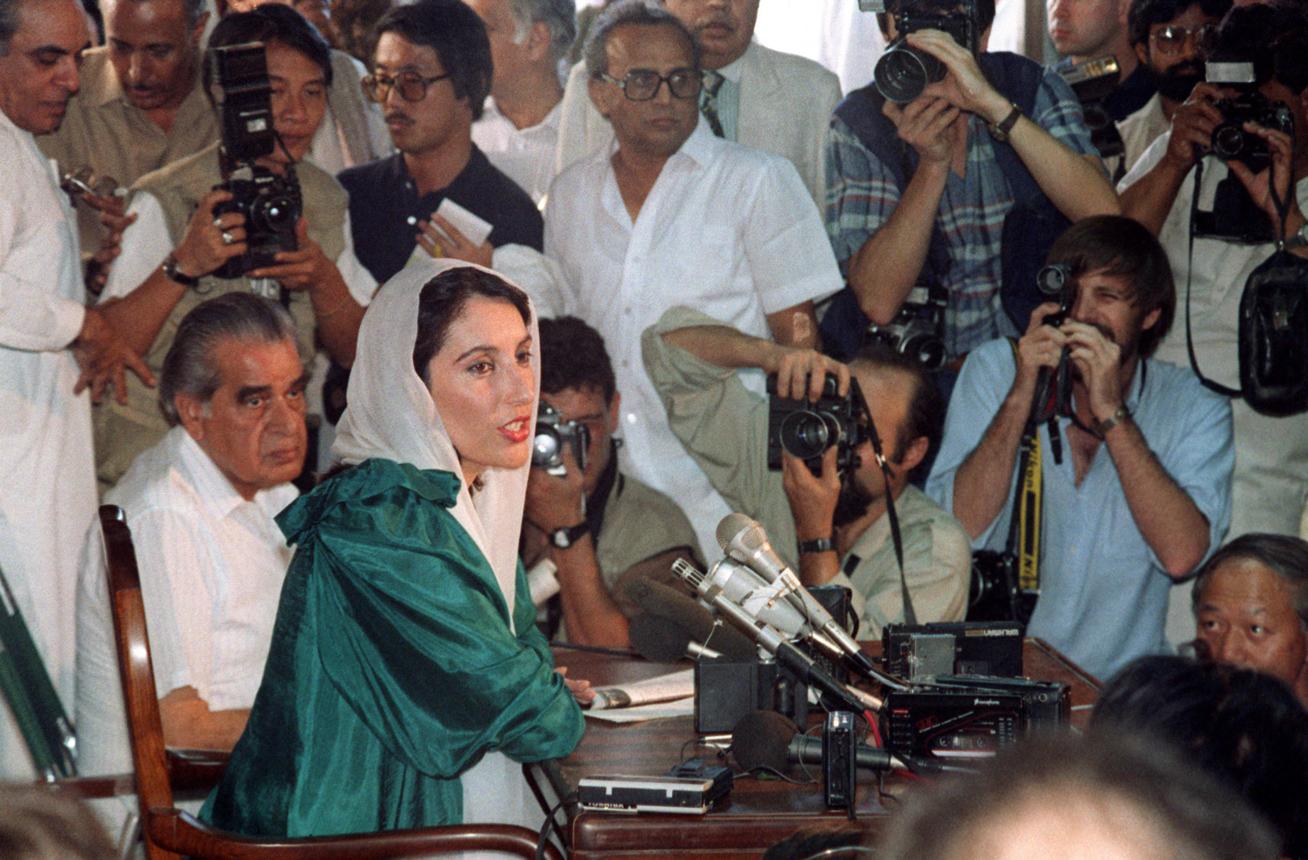
Celebrated abroad, challenged at home
KARACHI (TKP Feature): In November 16, 1988, Pakistan held a general election that produced a political moment with significance far beyond its borders. The Pakistan Peoples Party (PPP), led by 35-year-old Benazir Bhutto, emerged as the largest party in the National Assembly, opening the way for a woman to lead a country where political authority had traditionally remained in male hands.
The international significance was immediate. Benazir was on course to become the first woman to head a national government in the modern Muslim world. Her rise challenged established assumptions about women, religion and political leadership, placing Pakistan at the centre of an extraordinary political development.
The world celebrated the symbol. Pakistan was about to test the politician.
Her electoral victory, however, was not an outright parliamentary majority. The PPP secured 94 of the 207 directly elected National Assembly seats, compared with 54 for the Islami Jamhoori Ittehad (IJI), according to historical election records. Forming a government therefore required political negotiations and support from smaller parties.
That distinction would become important in understanding the limitations surrounding her premiership.
Benazir’s journey to power had already been shaped by years of political confrontation and personal tragedy. Her father, former prime minister Zulfikar Ali Bhutto, was overthrown in a military coup led by General Zia-ul-Haq in July 1977 and executed on April 4, 1979.
His execution transformed the political trajectory of his daughter. Imprisonment, detention and exile became part of her struggle against military rule. When she returned to Pakistan on April 10, 1986, she received an extraordinary public welcome in Lahore, demonstrating the political following she had built during her years away.
The death of General Zia in an aircraft crash on August 17, 1988, created an opening for the return of electoral politics. Three months later, the November 16 election brought the PPP to the forefront of national politics.
But winning the largest number of seats was only the beginning.
President Ghulam Ishaq Khan did not immediately invite Benazir to form the government. According to a historical account published by Dawn, the delay lasted nearly two weeks, during which negotiations took place over the distribution of authority and important government portfolios.
The eventual arrangement placed significant constraints on the incoming administration, particularly in areas such as Defence, Finance and Foreign Affairs.
On December 2, 1988, Benazir took the oath as prime minister. The image of a young woman assuming the highest elected executive office in a Muslim-majority country travelled across international media.
Yet the celebrations surrounding her appointment could not conceal the political realities awaiting her.
Pakistan’s constitutional framework gave the president substantial authority. Article 58(2)(b), introduced through the Eighth Amendment in 1985, allowed the president to dissolve the National Assembly under specified circumstances. The military also retained considerable influence over national security and foreign policy.
Meanwhile, the opposition controlled important provincial political spaces, particularly Punjab, creating another challenge for the federal government.
Benazir therefore entered office with an electoral mandate but without unrestricted control over the institutions that shaped national decision-making.
Her gender added another dimension to the challenge. Her rise generated debate among conservative religious circles about whether a woman could lead a Muslim country. The opposition she encountered was not exclusively gender-based, but questions about women’s political authority became part of the wider controversy surrounding her appointment.
This meant that her leadership carried an additional symbolic burden. She was not simply expected to govern Pakistan; her performance was also treated by some as a measure of whether women could successfully exercise political authority in a predominantly Muslim society.
However, the challenges facing her government extended well beyond gender.
Pakistan was dealing with economic difficulties, ethnic tensions, law-and-order problems and disagreements between federal and provincial political leadership. Her administration also struggled to maintain stable relations with coalition partners, including the MQM and the Awami National Party.
In November 1989, her government survived a no-confidence motion in the National Assembly. But the political tensions surrounding her administration continued.
On August 6, 1990, President Ghulam Ishaq Khan dismissed her government under Article 58(2)(b), bringing her first premiership to an end after approximately 20 months.
The international symbol of democratic change was once again outside the corridors of executive power.
Her political journey, however, did not end there. Following the October 1993 general election, Benazir returned to office and took the oath as prime minister for a second time on October 19.
The return demonstrated her continuing political relevance, but it did not eliminate the institutional and political difficulties that had marked her first administration.
On November 5, 1996, President Farooq Leghari dismissed her second government, again invoking Article 58(2)(b).
Her two premierships exposed a fundamental contradiction in Pakistan’s political system: electoral legitimacy did not automatically translate into unrestricted executive authority.
This is where Benazir’s story becomes more complicated than the familiar account of a woman breaking a historic barrier.
International recognition gave her a place in history, but it could not guarantee political stability at home. Her governments had to contend with constitutional constraints, institutional power struggles, political opposition and their own governance challenges.
There was also the weight of expectations. Benazir was expected to carry forward her father’s political legacy, represent democratic aspirations, challenge traditional gender barriers and demonstrate that a woman could govern Pakistan.
These expectations often placed her political identity beyond the ordinary boundaries of leadership.
On December 27, 2007, her life ended in an assassination in Rawalpindi while she was campaigning ahead of another general election. She was 54.
Nearly four decades after November 16, 1988, her election victory remains a landmark in Pakistan’s political history. It demonstrated that the country’s highest elected office was not beyond the reach of a woman and challenged assumptions that had shaped political leadership for generations.
But the significance of that day extends beyond the distinction of being first.
Benazir Bhutto’s story illustrates the distance between representation and acceptance, between winning an election and exercising power, and between becoming an international symbol and governing within a complicated domestic political system.
On November 16, 1988, the world saw a historic breakthrough. The years that followed revealed the difficult political realities behind it.
The world celebrated her arrival. Pakistan tested the limits of her authority.