
Pakistan plans nationwide SME centres, earmarks Rs300 bn for export finance
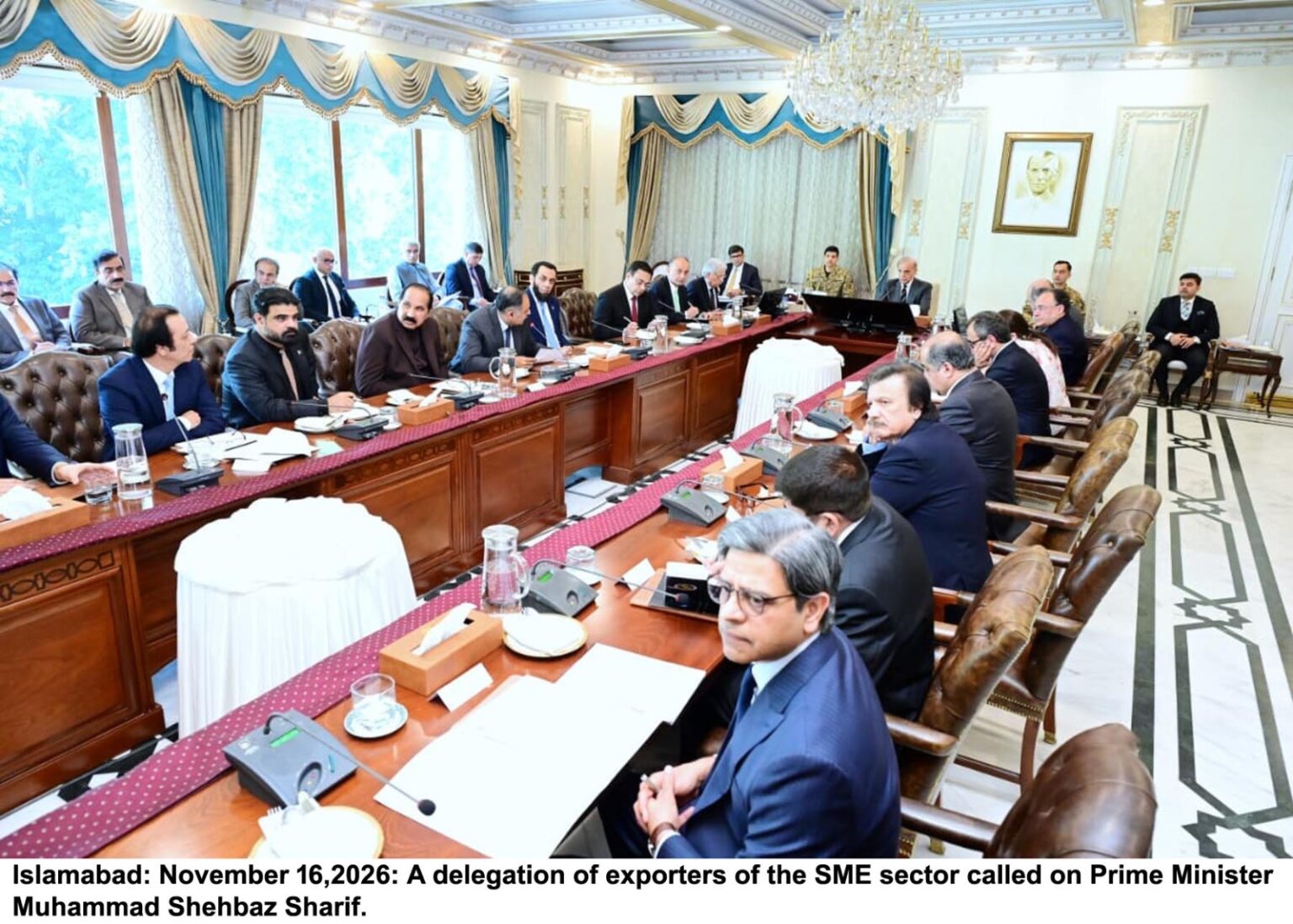
ISLAMABAD (News Desk): Prime Minister Shehbaz Sharif has approved the establishment of small and medium enterprise (SME) facilitation centres at the district level, alongside a dedicated Rs300 billion financing allocation for SMEs and new exporters, as the government seeks to broaden Pakistan’s export base and improve access to business support.
The initial pilot project will cover Karachi, Lahore, Peshawar and Quetta, with the centres expected to be expanded to other districts following an assessment of their performance.
According to a statement issued by the Prime Minister’s Office on Monday, the proposed centres will provide guidance and assistance to people seeking to establish businesses, while helping existing small enterprises navigate export-related procedures and access available government facilities.
The initiative is part of a broader effort to strengthen the SME sector, which the prime minister described as a backbone of the national economy.
Shehbaz Sharif said facilitating SMEs to increase their exports was among the government’s priorities, adding that the central objective of the meeting with business representatives was to make exporting easier for Pakistani entrepreneurs.
He directed the relevant authorities to develop a mechanism for establishing a sustainable cold-storage system to support exports of perishable commodities, with a plan to be presented at the earliest.
The proposed cold-storage infrastructure is particularly relevant to businesses dealing in agricultural and other perishable products, where inadequate storage and handling facilities can limit access to international markets.
Another major component of the government’s initiative is the allocation of Rs300 billion under the Export Finance Scheme for SMEs and new exporters.
According to the Prime Minister’s Office, the amount will be exclusively reserved for small and medium enterprises, while the Export-Import Bank of Pakistan has already issued a circular in this regard.
The financing allocation is intended to improve access to export-related financial facilities for smaller businesses that often face difficulties in securing funding and meeting the requirements of international trade.
However, the effectiveness of the scheme will depend on how efficiently eligible businesses can access the funds and whether financing reaches enterprises with the potential to enter or expand in export markets.
The prime minister has also approved the modernisation of the Trade Development Authority of Pakistan (TDAP) and the Small and Medium Enterprises Development Authority (SMEDA) to strengthen export promotion and help domestic industries align their products with international standards.
The proposed reforms are expected to involve greater coordination between federal and provincial governments and relevant institutions, with a focus on business innovation, technology adoption and access to financial resources.
Following the meeting, Lahore Chamber of Commerce and Industry President Ali Hassam Asghar said the government had demonstrated increased attention towards resolving problems faced by SMEs during the past month.
He said the prime minister wanted issues affecting smaller businesses addressed regardless of whether they fell within provincial, district-level or export-related jurisdictions.
According to Asghar, the government is working towards developing an integrated SME ecosystem involving TDAP, SMEDA, provincial administrations and federal institutions.
He also said the Lahore Chamber was planning to establish its own one-window facilitation centre to guide businesses and help resolve their operational difficulties.
Exporter Nadeem Alam and Ali Abbas Khakhu, director of Himani Group of Companies, described the meeting as constructive, saying the prime minister had listened to the concerns and recommendations of business representatives and issued instructions on several matters.
They emphasized the need to improve international marketing of Made in Pakistan products to expand their presence in global markets.
Meanwhile, Sialkot Chamber of Commerce and Industry President Khawar Hussain Sial said government attention towards SMEs and exports could create new business opportunities if the proposals presented by the private sector were translated into timely decisions.
The meeting also highlighted regional industrial development. Asfandyar Mandokhail, chief executive of Trading World, proposed establishing an industrial estate in Zhob district of Balochistan.
He said the proposed estate could support activities linked to meat, wool, olives, minerals and agriculture, creating opportunities to convert local resources into commercial and industrial activity.
Mandokhail added that industrial development could generate employment and improve livelihoods in the region.
The prime minister constituted a committee to examine actionable proposals submitted by business representatives and directed it to present recommendations on their implementation.
Federal ministers, the State Bank governor, the Securities and Exchange Commission of Pakistan chairman and senior officials of relevant institutions attended the meeting.
While the proposed facilitation centres and financing allocation represent two important components of the SME support framework, their economic impact will ultimately depend on implementation, accessibility and coordination among the institutions responsible for delivering these services.
For businesses outside major commercial centres, the proposed district-level network could provide a more accessible route to formal business guidance and export support. The challenge will be ensuring that the initiative moves beyond administrative announcements and delivers practical assistance to enterprises seeking to compete in international markets.