
Diwali in Karachi: Beyond lights, a story of faith, identity and interfaith harmony
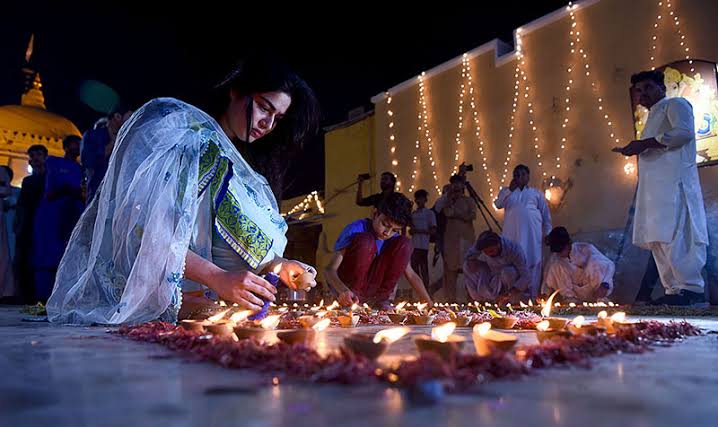
KARACHI (TKP Report): As darkness descended upon Karachi, thousands of tiny lights began illuminating homes and temples across the city, transforming familiar streets into colourful celebrations of faith, tradition and hope. The sound of firecrackers echoed through neighbourhoods, colourful decorations adorned religious sites, and families gathered to celebrate Diwali, the Hindu festival of lights.
For Karachi’s Hindu community, Diwali is much more than an annual religious occasion. It is a celebration of identity, cultural heritage, family bonds and the enduring belief that light ultimately triumphs over darkness.
At the historic Swaminarayan Temple in Karachi, the celebrations carried a particular significance. The temple, decorated with traditional oil lamps and colourful electric lights, became a focal point for worshippers and visitors who gathered to participate in the festivities.
Men, women and children dressed in new clothes, exchanged greetings, offered prayers and performed special religious rituals. The atmosphere was filled with excitement as families celebrated together, while firecrackers and illuminated decorations added to the festive spirit.
Yet, beyond the lights, colours and fireworks, another dimension of Diwali emerged in Karachi: the participation of people belonging to different religious communities.
Muslim citizens also joined their Hindu neighbours in celebrating the occasion, exchanging greetings and sharing moments of happiness. Their participation reflected a familiar yet important aspect of Karachi’s social fabric, where cultural and religious differences do not necessarily prevent communities from sharing one another’s celebrations.
In a city often characterized by its ethnic, linguistic and religious diversity, such interactions offer a reminder that coexistence is not merely a political slogan but can also be reflected in everyday relationships.
For many Hindu families, Diwali represents an opportunity to reconnect with their religious roots and pass cultural traditions to younger generations. The festival is traditionally associated with the triumph of good over evil and light over darkness. Its observance varies across regions and Hindu traditions, but lamps, prayers, family gatherings and the exchange of sweets remain central features of celebrations for many communities.
The festival also carries a strong message of hope, renewal and prosperity. Families clean and decorate their homes, light traditional earthen lamps known as diyas and seek blessings for happiness and well-being in the coming year.
In Karachi, these traditions acquire an additional social dimension as members of the Hindu community celebrate their religious identity within one of Pakistan’s largest and most diverse metropolitan centres.
Special prayers were also offered for the country’s peace, security and prosperity. Worshippers raised their hands in prayer, expressing hopes for a future marked by stability, economic opportunities and harmony among communities.
For many participants, the occasion was not simply about personal celebrations but also about wishing for a peaceful future for the country they call home.
Dr Sham Sunder Advani, Member of the Sindh Assembly and Special Assistant to the Chief Minister on Minority Affairs, also participated in the celebrations, sharing the festive spirit with members of the Hindu community.
His presence highlighted the importance of recognizing religious occasions celebrated by minority communities and maintaining engagement between public representatives and citizens.
However, the significance of Diwali extends beyond official participation and ceremonial messages. The real spirit of the festival can often be found in homes, neighbourhoods and personal relationships where people from different backgrounds come together.
For Karachi, a city shaped by generations of migration, cultural exchange and diverse communities, such occasions provide an opportunity to acknowledge its pluralistic heritage.
The Hindu community has been an integral part of the city’s social, commercial and cultural history. Its temples, festivals, businesses and traditions form part of Karachi’s broader historical identity.
Preserving this heritage is therefore not solely a matter of protecting religious institutions. It also involves recognizing the contributions of communities that have helped shape the city’s character over generations.
At the same time, celebrations such as Diwali provide an opportunity to reflect on the broader questions of religious freedom, equal citizenship and the protection of minority rights.
Festivals can bring people together, but lasting harmony requires more than occasional participation in one another’s celebrations. It also depends on equal opportunities, respect for religious beliefs, protection of places of worship and the freedom to practice one’s faith without fear or discrimination.
These considerations give Diwali a significance that goes beyond its religious symbolism.
As the celebrations continued, illuminated temples and flickering lamps offered a striking visual spectacle across Karachi. Children enjoyed the fireworks, families exchanged sweets, and worshippers continued their prayers, creating an atmosphere that blended religious devotion with collective happiness.
For a few hours, the city appeared to speak a common language of light, hope and togetherness.
Perhaps that is the deeper message of Diwali in Karachi: that the light of a festival becomes more meaningful when it reaches beyond the walls of homes and places of worship, bringing people closer regardless of their religious identities.
In a society where differences can sometimes become sources of division, the willingness to share one another’s moments of happiness carries its own significance.
The lamps may eventually fade, the fireworks may fall silent and the decorations may come down. But the message of coexistence, mutual respect and shared humanity is one that Karachi needs to keep alive throughout the year.
Because the true light of Diwali is not only found in the lamps that illuminate the night, but also in the understanding and goodwill that illuminate relationships between people.