
Korangi industrialists fear factory disruptions from yellow line project
KARACHI (News Desk): Industrialists have urged the Sindh government to address the concerns of businesses before launching construction activities under the Yellow Line Bus Rapid Transit (BRT) project in Korangi, warning that poorly planned infrastructure work could disrupt factory operations and cause significant economic losses.
Korangi Association of Trade and Industry (KATI) Deputy Patron-in-Chief Zubair Chhaya said the Yellow Line project should move forward only after taking industrial requirements and the potential impact on business activities into account.
He cautioned that the industrial sector could not afford a shutdown lasting more than a day, stressing that disruptions to transportation and access routes could affect manufacturing, supply chains and the movement of goods.
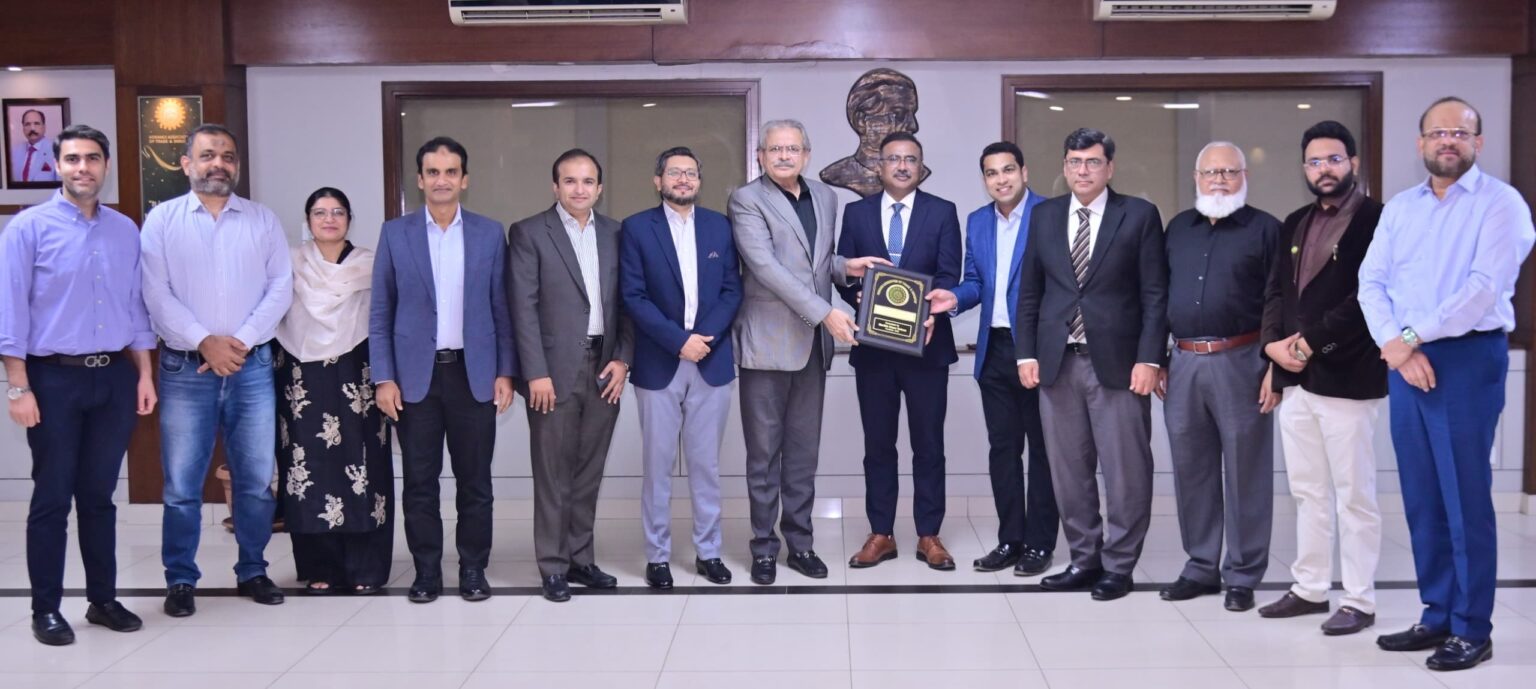
Chhaya expressed these concerns during a meeting with Sindh Planning and Development Secretary Captain (Retd.) Altaf H. Sario, who visited KATI along with other provincial officials.
The discussion highlighted the challenges facing Karachi’s industrial infrastructure, particularly the need for better coordination between government departments and industrial stakeholders before undertaking major development projects.
Chhaya also pointed out that no new project had been initiated by the Planning and Development Department in Korangi since 2023. He said KATI was willing to cooperate with the department through monthly meetings to address infrastructure-related problems, with KATI Vice President Nasir Sheikh serving as the focal person.
He also raised concerns over inadequate drainage facilities, wastewater discharge into the sea, weak coordination among relevant institutions and delays in development projects.
Responding to industrialists’ concerns, Altaf Sario said the Sindh government was committed to developing industrial areas, with more than Rs9 billion allocated in grants for industrial zones.
He emphasised that continuous consultation between KATI and the Planning and Development Department was essential for better urban planning and infrastructure development in Karachi.
Sario said development projects should be mapped while giving due consideration to proposals from the industrial community so that they could be implemented with the support of provincial, federal and international institutions.
He explained that the Planning and Development Department played a central role in planning and approving development schemes, with projects ranging from Rs1 million to Rs100 billion falling within its review and approval framework.
Providing details about development financing, Sario said the Asian Development Bank’s portfolio had declined from Rs1 trillion last year to Rs720 billion this year, including Rs250 billion allocated for BRT projects.
He added that digitalisation of departmental operations had improved standardisation and generated financial savings, while environmentally friendly initiatives were being prioritised through climate financing.
KATI Senior Vice President Farrukh Qandhari said infrastructure projects such as the Korangi Causeway Bridge and Shahrah-e-Bhutto would help improve traffic flow and strengthen industrial and commercial activities.
He stressed that industrial requirements should receive priority in development planning and called for effective coordination between the government and the business community to ensure timely completion, transparency and quality of infrastructure projects.
KITE Limited Chief Executive Officer Saleem-uz-Zaman said water shortages in Korangi Industrial Area were a complex challenge, prompting the establishment of KITE Limited under a public-private partnership model.
He said the Sindh government had provided a grant of Rs2 billion and increased the allocation for the current year in recognition of the organisation’s project performance.
Saleem-uz-Zaman also stressed the need for coordinated planning to prevent conflicts between BRT construction and KITE Limited projects. He said that after completion of the Korangi Causeway, additional planning would be required to address traffic congestion at Baloch Colony Bridge and Korangi Crossing.
The meeting underscored the need to balance Karachi’s public transport expansion with the operational requirements of its industrial areas, where uninterrupted access and transportation infrastructure remain critical to manufacturing and commercial activity.