
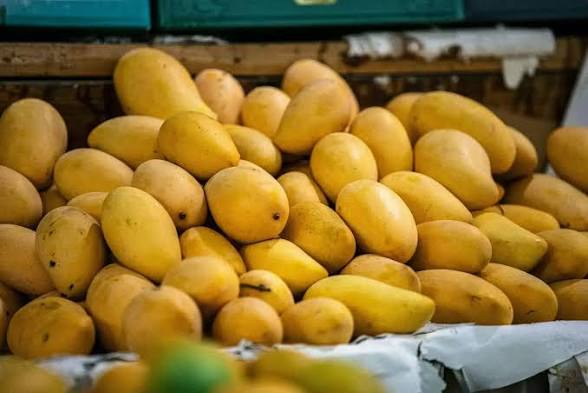
Middle East crisis cuts Pakistan’s mango exports 36%
KARACHI (News Desk): Pakistan’s mango export earnings plunged by $33.7 million during the latest season as escalating tensions in the Middle East, higher freight costs and disruptions in regional trade routes pushed export volumes down by 36%, exposing the vulnerability of the country’s agricultural exports to geopolitical developments.
According to the All Pakistan Fruit and Vegetable Exporters, Importers and Merchants Association (PFVA), Pakistan exported around 78,000 tonnes of mangoes during the season, compared with 123,000 tonnes in the previous year. The export volume also fell short of the government’s target of 80,000 tonnes.
The decline reduced foreign exchange earnings to $58.5 million from $92.2 million a year earlier, resulting in a loss of $33.7 million in export revenue.
PFVA Patron-in-Chief Waheed Ahmed attributed the decline primarily to disruptions in key Middle Eastern markets, particularly the Gulf region, where higher transportation costs and geopolitical uncertainty affected both shipments and demand.
Exports to Gulf countries, including the United Arab Emirates and Saudi Arabia, witnessed a significant decline. Shipments to the region fell to 14,500 tonnes from 36,000 tonnes in the previous season.
Country-wise figures show that mango exports to Qatar declined to 880 tonnes from 1,900 tonnes, while shipments to Oman decreased to 8,900 tonnes from 10,200 tonnes.
Exports to Saudi Arabia also dropped to 1,460 tonnes from 2,030 tonnes, reflecting the pressure on Pakistan’s traditional export destinations.
The disruption was not limited to the Middle East. Exports to Afghanistan and Central Asian markets were also affected by repeated interruptions in cross-border trade. Ahmed estimated that the closure of the Afghan border alone resulted in an export loss of around 24,000 tonnes.
The export season, which ran from June 1 to the end of September, was launched earlier in accordance with a decision taken in consultation with the Ministries of Commerce and National Food Security and Research.
Ahmed said the decision to begin exports on June 1 helped exporters come close to achieving the annual target. An earlier start in May could have triggered complaints about mango quality and made it more difficult to achieve the recorded export volume.
However, external trade disruptions are only part of the challenges confronting Pakistan’s mango industry.
Ahmed said climate change had significantly affected production, which had declined by around 35% from the industry’s potential capacity of 1.8 million tonnes. Rising cultivation costs, orchard diseases and weakening resistance to diseases among mango trees have added to the pressure on growers.
He said this was the second consecutive year of declining mango production, raising concerns about the industry’s long-term export competitiveness.
The latest figures highlight the risks of relying heavily on a limited number of export destinations, particularly when geopolitical tensions can disrupt shipping routes, raise freight expenses and weaken demand.
Ahmed urged federal and provincial governments to support mango growers through modern agricultural practices, improved disease management and measures to strengthen orchard productivity.
He expressed hope that a lasting improvement in the Middle East situation would help Pakistani mango exports recover to previous levels.
For Pakistan, however, restoring export earnings will require more than regional stability. Improving agricultural productivity, reducing logistics costs and diversifying export markets will be essential to protecting one of the country’s important horticultural export industries.