
Pakistan’s Auto Policy takes aim at protected market, CKD dependence
ISLAMABAD (Agencies): Pakistan’s proposed new Automotive Industry Policy seeks to break the longstanding dependence of the country’s automobile sector on imported vehicle kits and protected domestic assembly operations, while encouraging local manufacturing, greater market competition, electric mobility and vehicle exports.
The final draft of the policy has been approved by Prime Minister Shehbaz Sharif and will now be presented to the federal cabinet for consideration and further approval, Prime Minister’s Adviser on Industries and Production Haroon Akhtar Khan announced on Saturday.
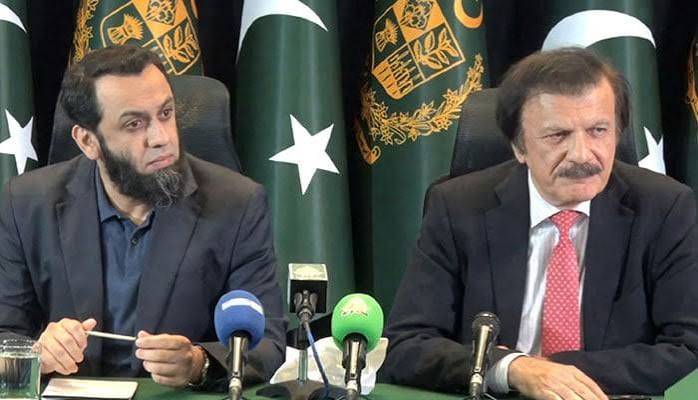
Addressing a joint press conference with Federal Minister for Information and Broadcasting Attaullah Tarar, Haroon Akhtar said the policy aims to address structural weaknesses in the automobile industry and transform it into a competitive, export-oriented manufacturing sector with stronger domestic industrial linkages.
The announcement comes amid longstanding criticism of Pakistan’s automobile industry for relying heavily on imported completely knocked-down (CKD) kits, limited domestic value addition and a relatively protected market.
Haroon Akhtar acknowledged that despite successive policy frameworks over the past decade, Pakistan had failed to achieve the desired export growth in the automotive sector. He said the government now intended to move beyond vehicle assembly towards establishing a stronger domestic manufacturing base.
Under the proposed framework, automobile manufacturers will be encouraged to increase the use of locally manufactured components and raw materials, develop domestic vendor industries and strengthen industrial supply chains. The government believes greater localisation will generate employment, support industrial development and retain more economic value within the country.
The policy also seeks to encourage manufacturers to establish production facilities in Pakistan rather than relying on imports of completely built-up (CBU) vehicles or limiting domestic operations to assembling imported CKD kits.
A major element of the proposed policy is greater market competition, with the government arguing that decades of protection for local manufacturers have not translated into sufficient innovation, improved features or better value for consumers.
Attaullah Tarar said Pakistan had maintained high import duties on vehicles for decades to protect the domestic industry, but consumers had not received the expected improvements in vehicle quality, technology and facilities despite these protections.
He said the new policy was designed to encourage additional manufacturers to enter the market, increase competition and improve consumer choice, particularly for the middle-income segment.
On affordability, Tarar said vehicles with engine capacities of up to 800cc, which are commonly used by ordinary consumers, had not been subjected to changes in their existing facilities under the proposed policy.
Consumer protection is another major component of the framework. Haroon Akhtar said automobile manufacturers would not be allowed to collect advance payments exceeding 20% of a vehicle’s price at the time of booking. The measure is intended to address the practice of charging premiums, commonly known as ‘on money’, and reduce the financial burden on consumers.
The policy also proposes third-party audits to strengthen transparency and accountability in government schemes and initiatives related to the automotive sector.
Electric mobility has been identified as another major priority, with the government seeking to reduce the country’s dependence on imported petroleum products and limit exposure to international oil price fluctuations.
Tarar said the proposed policy included special incentives for electric vehicles (EVs), including measures to encourage local manufacturing and the establishment of charging infrastructure. He said investors establishing charging stations would receive customs duty exemptions, while sales tax would also be reduced.
He highlighted the growing use of electric motorcycles and scooters, particularly among women and young consumers, and said the government wanted to expand access to affordable and environmentally friendly transportation.
Both officials linked the EV transition to Pakistan’s external account pressures, arguing that reducing petroleum consumption could lower the oil import bill and release resources for spending on infrastructure, healthcare and education.
Vehicle safety is also included in the proposed framework. Haroon Akhtar highlighted concerns over inadequate safety features in imported used vehicles, including faulty braking systems, tyre failures and the absence of seat belts. He said improving passenger safety and consumer protection would remain important policy objectives.
The government is also seeking to reduce manufacturing costs through the National Tariff Policy, which aims to make imported raw materials and intermediate industrial goods more affordable, thereby improving the competitiveness of domestic manufacturers.
However, the success of the proposed policy will ultimately depend on its implementation, particularly whether manufacturers increase genuine domestic value addition, develop competitive vendor industries and move towards actual vehicle exports.
For Pakistan’s automobile sector, the challenge is no longer simply to assemble more vehicles locally, but to develop the technological capabilities, industrial supply chains and export competitiveness required to become a meaningful manufacturing player.
The draft will be submitted to the federal cabinet for consideration and must complete the remaining approval stages before implementation.